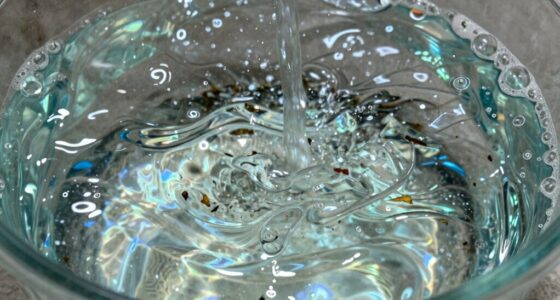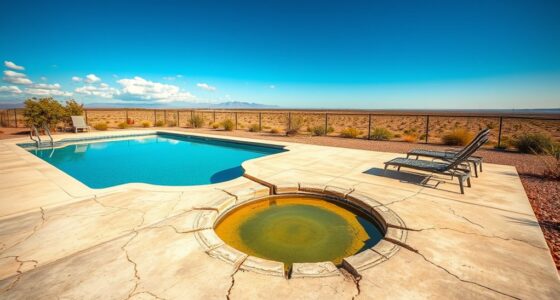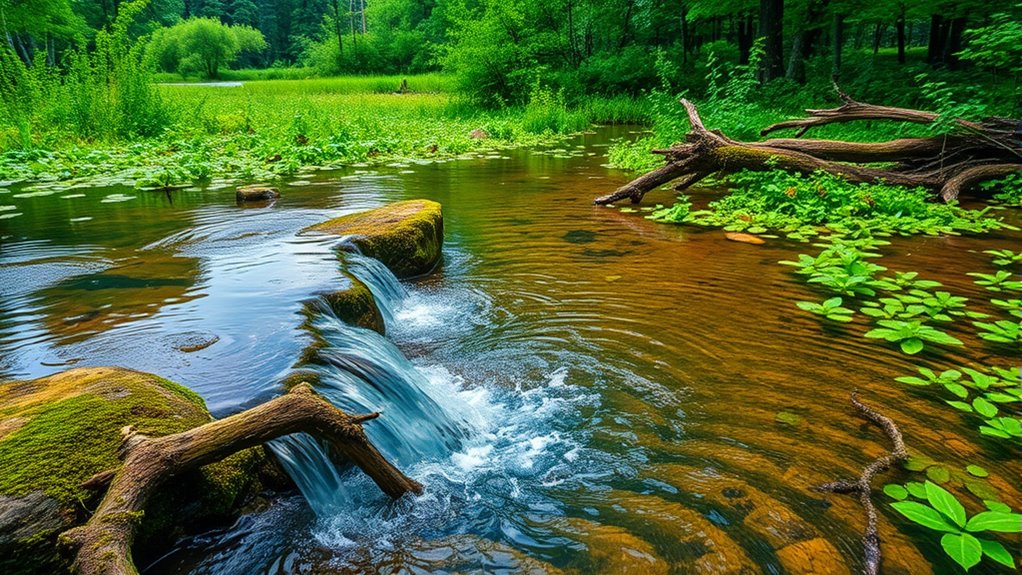

Discharging pool water into local ecosystems can harm aquatic life by introducing chemicals like chlorine, algaecides, and pH adjusters, disrupting ecosystems and reducing biodiversity. Warmer water from pools can raise surrounding temperatures, lowering oxygen levels and causing stress or death for fish and plants. This runoff may also promote algae blooms that produce toxins, further damaging ecosystems. If you stay informed, you’ll learn how responsible practices can protect your environment and prevent these impacts.

Get pool and patio gear delivered free with Prime
- Fast, free delivery on millions of items
- Prime Video, Amazon Music and more included
- Member-only deals all year
Key Takeaways
- Discharging pool water introduces chemicals like chlorine and algaecides, disrupting aquatic ecosystems.
- Warmed pool water raises local water temperatures, reducing oxygen levels and stressing aquatic life.
- Chemical runoff from pool discharge can decrease biodiversity and harm sensitive fish, plants, and microorganisms.
- Elevated temperatures and chemical contaminants promote harmful algae blooms, further degrading water quality.
- Lack of proper disposal practices can lead to long-term ecosystem damage and diminished water ecosystem resilience.

When pool owners discharge treated water into local waterways, they may unintentionally impact nearby ecosystems. This process often introduces chemical runoff into the environment, which can have serious consequences for aquatic life. Pool water typically contains a range of chemicals, including chlorine, algaecides, pH adjusters, and other treatment agents. When these chemicals enter natural water systems, they can alter the delicate balance of the ecosystem. Fish, plants, and microorganisms are particularly sensitive to chemical changes, and even small increases in chemical concentration can be harmful or lethal. This runoff can lead to a decline in biodiversity, disrupting food chains and harming species that are not adapted to handle these foreign substances. Over time, the cumulative effect of chemical runoff can weaken the resilience of local waterways, making them less capable of supporting healthy aquatic communities. Proper filtration and water treatment methods can help reduce these impacts, but many pool owners are unaware of the potential environmental risks.
In addition to chemical runoff, water temperature plays a vital role when discharged water enters natural ecosystems. Pool water is often warmer than the surrounding water bodies, especially during the summer months or after heating treatments. When this warmer water mixes with cooler streams, lakes, or rivers, it can cause a sudden increase in water temperature. Elevated water temperatures can reduce oxygen levels, stressing aquatic organisms that rely on specific temperature ranges to survive. Fish, in particular, are highly sensitive to temperature fluctuations; warmer water can cause them to become sluggish or even die if the change is abrupt or sustained. Moreover, increased water temperature can promote the growth of harmful algae blooms, which deplete oxygen and release toxins, further endangering aquatic life. It is essential for pool owners to understand water discharge regulations and adopt responsible practices to protect local ecosystems from these adverse effects.
As an affiliate, we earn on qualifying purchases.
Frequently Asked Questions
How Do Different Pool Chemicals Affect Aquatic Life?
You should know that different pool chemicals can substantially impact aquatic life through chemical toxicity. For example, chlorine and bromine can harm aquatic sensitivity, affecting fish and invertebrates even at low levels. When these chemicals leak into water bodies, they disrupt ecosystems, impairing reproduction and causing mortality. Always handle and dispose of pool chemicals carefully to minimize their harmful effects on aquatic environments and protect sensitive species.
Can Pool Discharge Harm Underground Water Sources?
You might be playing with fire if you ignore how pool discharge can harm underground water sources. Chemicals like chlorine and algaecides can seep into the ground, risking groundwater contamination. This, in turn, can cause ecosystem disruption, affecting plants and animals relying on clean water. Always manage pool discharge responsibly to prevent these unseen dangers from spreading beneath the surface and protect your local environment.
What Are Natural Methods to Treat Pool Water Before Discharge?
You can treat pool water naturally by using eco-friendly filtration systems that remove debris and contaminants without harsh chemicals. Additionally, natural dechlorination methods, such as adding vitamin C or using catalytic carbon filters, effectively neutralize chlorine before discharge. These approaches help guarantee your pool water is safer for the environment, reducing harmful chemical releases and supporting healthier local ecosystems. Always test water quality to confirm it’s suitable for discharge.
How Does Temperature Change From Pool Discharge Impact Ecosystems?
When you discharge pool water, the change in aquatic temperature can cause thermal pollution, which stresses local ecosystems. Elevated temperatures from warm pool water can disrupt fish and plant life, reducing oxygen levels and altering habitats. Conversely, cooler water can also harm species adapted to stable temperatures. To minimize these impacts, you should carefully manage the thermal pollution by gradually adjusting the aquatic temperature before discharge, protecting the health of nearby ecosystems.
Are There Regulations Governing Pool Water Discharge in Residential Areas?
You should know that pool water regulations and residential discharge policies vary by location. Many areas require you to drain pool water in a way that minimizes environmental impact, often mandating that you avoid discharging chemicals or excess chlorine into storm drains or natural bodies of water. It’s best to verify local ordinances or contact your municipal authorities to confirm you’re following the correct procedures and staying compliant with residential discharge policies.
eco-friendly pool discharge filter
As an affiliate, we earn on qualifying purchases.
As an affiliate, we earn on qualifying purchases.
Conclusion
You now see how pool discharge can tip the scales in local ecosystems. It’s like opening a floodgate that disrupts delicate balances, harming plants, animals, and water quality. If you’re not careful, you might be stirring up more trouble than you realize. So, take action and manage pool discharge responsibly. Remember, a small leak can sink a ship, so every effort counts in protecting our environment’s fragile harmony.
As an affiliate, we earn on qualifying purchases.
As an affiliate, we earn on qualifying purchases.
Halloween Picks
halloween
As an affiliate, we earn on qualifying purchases.