Sustainable sanitation with ozone and UV systems offers chemical-free, eco-friendly solutions for water safety. Ozone, a powerful oxidant, disinfects quickly without harmful byproducts, while UV uses ultraviolet light to destroy microbes without chemicals. These technologies reduce reliance on traditional disinfectants, lower environmental impact, and are easy to maintain. They’re ideal for safe water reuse in irrigation, industry, or groundwater recharge. If you keep exploring, you’ll discover how these systems can revolutionize your sanitation approach.
Key Takeaways
- Ozone and UV systems provide eco-friendly alternatives to chemical disinfection, reducing harmful byproducts.
- These technologies effectively eliminate pathogens without residual chemicals, ensuring safer water reuse.
- Ozone disinfects quickly through oxidation, while UV damages microbial DNA, both offering sustainable water treatment options.
- Both systems require low maintenance and can be integrated into existing infrastructure, supporting sustainable sanitation.
- Using ozone and UV promotes environmentally responsible sanitation by minimizing ecological impact and enhancing water safety.
Ever wondered how our waste gets safely removed and treated? The process begins with various sanitation methods designed to break down contaminants and prevent environmental harm. One of the key steps in modern sanitation involves biological treatment, where naturally occurring bacteria and microorganisms play an essential role. These tiny organisms consume organic matter in wastewater, transforming it into less harmful substances. This step is efficient and eco-friendly, reducing the load of pollutants before further treatment. After biological treatment, chemical disinfection is often employed to eliminate remaining pathogens and ensure the water is safe for discharge or reuse. Chemical disinfectants like chlorine or ozone are used to kill bacteria, viruses, and other microorganisms that biological processes might not fully eradicate.
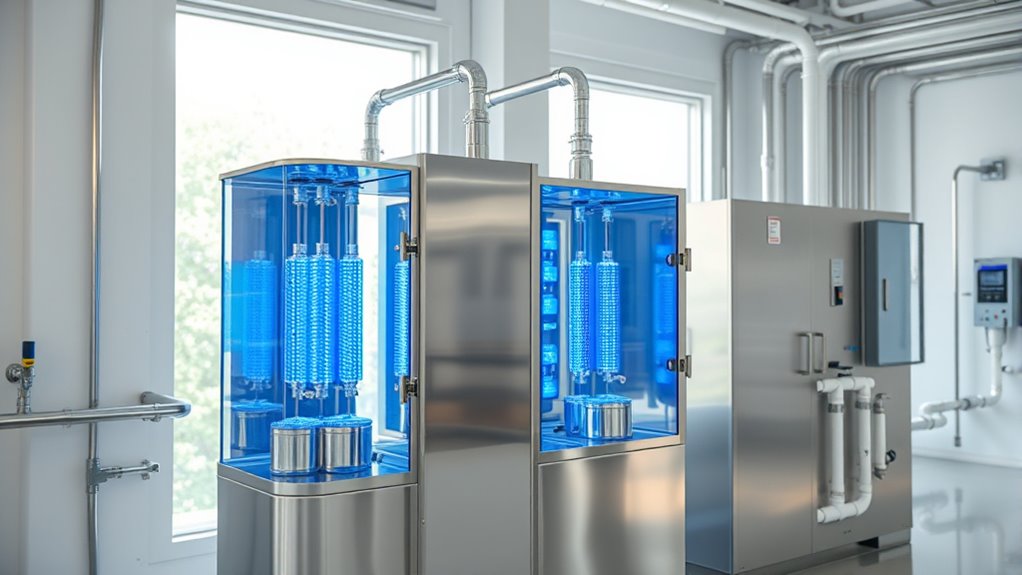
But as we aim for more sustainable solutions, ozone and UV systems are gaining popularity for their effectiveness and environmental benefits. Ozone, a powerful oxidant, can disinfect water quickly and thoroughly without the formation of harmful byproducts associated with traditional chemical disinfectants. When introduced into wastewater, ozone reacts with organic matter and microorganisms, destroying their cellular structures and rendering them inactive. This process not only disinfects but also helps in breaking down complex pollutants, enhancing the overall quality of the treated water. UV systems, on the other hand, use ultraviolet light to disinfect water without adding chemicals. When wastewater passes through a UV chamber, the high-energy light penetrates microbial cells, damaging their DNA and preventing reproduction. This method is highly effective, especially for small-scale or decentralized systems, because it requires no chemical additives and produces no residual disinfectants.
Both ozone and UV systems are considered sustainable because they reduce reliance on traditional chemicals, which can have long-term environmental impacts. They also lower the risk of chemical residuals in treated water, making it safer for reuse in irrigation, industrial processes, or even replenishing groundwater. Additionally, these systems are relatively low-maintenance and can be integrated into existing sanitation infrastructure with proper planning. Incorporating environmental benefits of ozone and UV disinfection further highlights their role in promoting sustainable sanitation. By incorporating ozone and UV disinfection into your sanitation system, you help minimize the ecological footprint while maintaining high standards of water safety. Their ability to provide rapid, chemical-free disinfection aligns perfectly with the goals of sustainable sanitation, ensuring that waste is managed effectively without compromising environmental health. In this way, modern treatment methods like ozone and UV systems are shaping a cleaner, greener future for wastewater management.
ozone water purifier system
As an affiliate, we earn on qualifying purchases.
As an affiliate, we earn on qualifying purchases.
Frequently Asked Questions
How Do Ozone and UV Systems Compare in Energy Efficiency?
Ozone systems generally consume less energy than UV systems, making them more cost-efficient for long-term use. You’ll find that ozone’s lower energy consumption translates into lower operational costs, especially in large-scale sanitation setups. While UV systems might have higher initial costs, their quick disinfection process can save energy over time. Overall, ozone offers better energy efficiency and cost efficiency, making it a practical choice for sustainable sanitation.
Are Ozone and UV Systems Safe for Long-Term Human Exposure?
You should be aware that both ozone and UV systems are generally safe for long-term human exposure when they meet regulatory standards. However, improper use or system malfunctions can pose health implications, such as respiratory irritation or eye damage. Always guarantee the equipment complies with safety guidelines, and regular maintenance is essential. Properly managed, these systems offer safe, effective sanitation without compromising your health.
What Maintenance Is Required for Ozone and UV Sanitation Units?
You’ll want to keep your ozone and UV sanitation units in tip-top shape, or they might refuse to work when you need them most. Regular maintenance frequency is key—think monthly checks and cleaning. Don’t forget system calibration to guarantee peak performance. Replacing UV bulbs annually and inspecting ozone generators periodically keeps your system running smoothly, preventing surprises and ensuring your water stays clean without turning into a science experiment.
Can These Systems Treat All Types of Wastewater Effectively?
Ozone and UV systems can effectively treat many wastewater types, but their treatment scope has limitations. They work well for disinfecting clear, low-solid wastewater but struggle with wastewater containing high solids or organic loads. You should consider wastewater limitations before choosing these systems, as they may not fully treat industrial or heavily contaminated water. Proper pretreatment or combined methods can enhance effectiveness, ensuring cleaner, safer effluent.
What Are the Initial Costs Versus Long-Term Savings?
Ever wonder if the initial costs of ozone and UV systems are worth it? While the upfront investment can be significant due to installation challenges and equipment expenses, you’ll save money long-term through reduced chemical use and lower maintenance costs. These systems offer sustainable benefits and operational savings that outweigh initial financial implications, making them a smart choice for your sanitation needs. Are you ready to invest in eco-friendly, cost-effective solutions?
UV water sterilizer for home
As an affiliate, we earn on qualifying purchases.
As an affiliate, we earn on qualifying purchases.
Conclusion
By embracing ozone and UV sanitation systems, you’re planting seeds of change in a garden of sustainability. These technologies act as vigilant guardians, tirelessly guarding your water like knights in shining armor, transforming it into a pure, crystal-clear stream. As you harness their power, you become a steward of the environment, turning the tide against pollution. Together, you and these systems weave a tapestry of health and harmony—an enduring legacy rooted in innovation and care.
sustainable water treatment system
As an affiliate, we earn on qualifying purchases.
As an affiliate, we earn on qualifying purchases.
chemical-free water disinfection
As an affiliate, we earn on qualifying purchases.
As an affiliate, we earn on qualifying purchases.