
To run your pool heater efficiently, operate it during off-peak hours like early mornings or late evenings when energy demand and rates are lower. Maximize sunlight exposure during the day to enhance solar heating, which reduces reliance on conventional energy. Schedule heating to align with weather patterns and sunlight availability for better efficiency. Using timers and smart scheduling helps conserve energy and save costs. Keep exploring for more tips on optimizing your pool heating strategy.
Key Takeaways
- Run pool heaters during off-peak hours, such as early mornings or late evenings, to lower energy costs.
- Schedule heating when sunlight is abundant to maximize solar energy use and reduce reliance on electric or gas heating.
- Use weather forecasts to adjust heating times, ensuring optimal energy use based on sunlight and temperature conditions.
- Utilize timers to heat just before swimming, avoiding unnecessary energy consumption during inactivity.
- Combine solar heating with off-peak operation to enhance efficiency and minimize environmental impact.
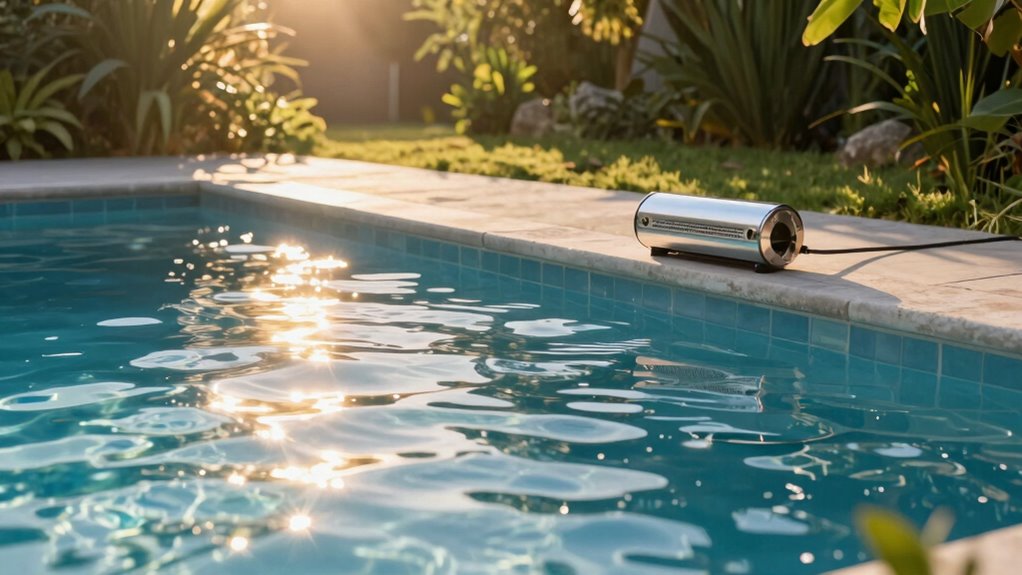
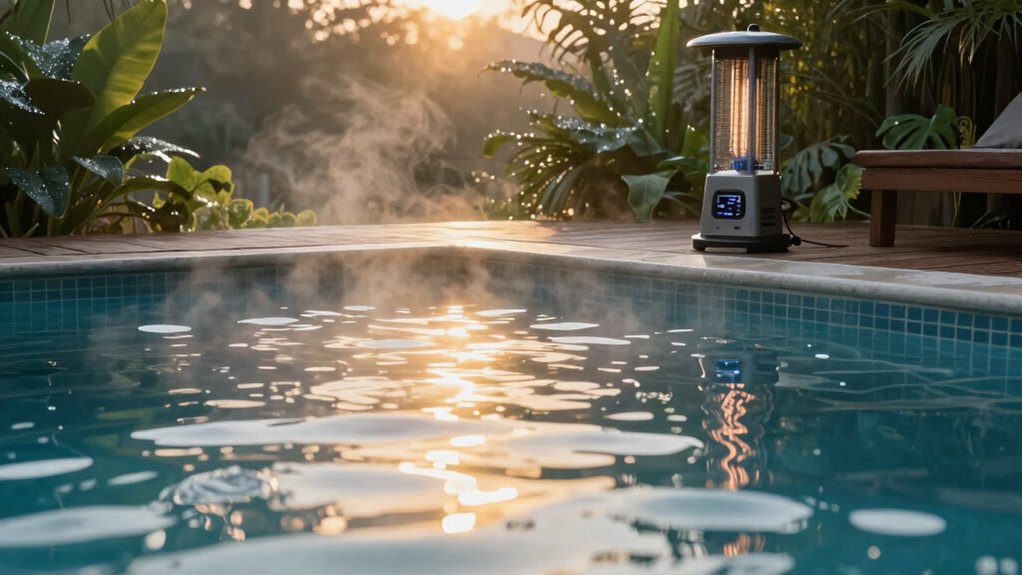
To save money and maximize energy efficiency, implementing a time-of-day strategy for your pool heater is crucial. The key is to align your heating schedule with times when energy costs are lower, and your pool can benefit most from natural resources like solar heating. By doing so, you not only reduce your utility bills but also extend the lifespan of your equipment. One effective approach is to run your pool heater during the early mornings or late evenings, when energy demand tends to be lower and utility rates often decrease. This timing allows you to take advantage of off-peak rates, which can substantially cut down your overall energy expenses.
Run your pool heater during off-peak hours to save money and boost energy efficiency.
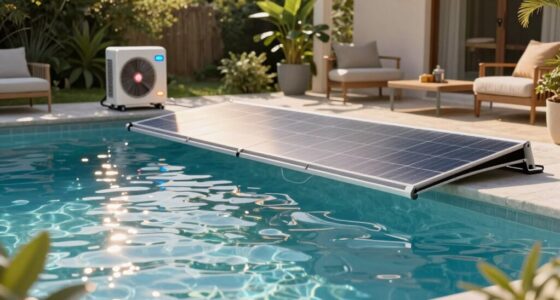
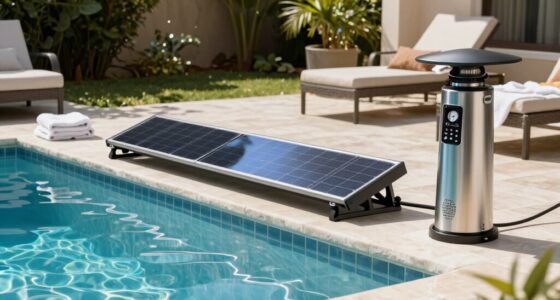
Solar heating plays an important role in this strategy because it harnesses the sun’s energy during daylight hours, naturally warming your pool without additional costs. If you have a solar pool heater, it makes sense to maximize sunlight exposure during the day. Running your traditional heater during peak daylight hours can be counterproductive, as your solar system does most of the work when the sun is shining. Instead, you might set your conventional heater to operate just before sunset or early in the morning to maintain a comfortable temperature overnight or during cloudy periods, relying on solar heating to do most of the work during the day. Additionally, scheduling your heater to align with weather patterns can help optimize energy use and temperature consistency. Incorporating weather-aware scheduling can further enhance your savings by adjusting your heating based on forecasted conditions. Being mindful of solar energy potential can also help you plan your heating times more effectively.
Timing your pool heater use based on sunlight and energy rates results in considerable energy savings. When you operate your heater during off-peak hours, you’re taking advantage of lower electricity prices. Additionally, by scheduling your heater to run when the sun is most intense, you allow solar heating to supplement your efforts naturally. This reduces the need for your electric or gas heater to work as hard, saving you money and lowering your environmental impact. Keep an eye on local utility rates and weather patterns to optimize your schedule further. Incorporating energy-efficient practices can further enhance your savings and sustainability efforts.
Furthermore, maintaining your pool’s temperature efficiently means avoiding unnecessary heating. Instead of keeping your pool constantly warm, use a timer to heat just before you plan to swim. This not only conserves energy but also ensures you don’t waste power maintaining a temperature overnight or during periods when the pool isn’t in use. Combining this approach with solar heating maximizes natural energy use, minimizes reliance on conventional energy sources, and boosts overall energy savings. Proper timing and scheduling are essential components of an effective energy-efficient pool heating strategy. With careful timing and leveraging natural sunlight, you can enjoy a warm pool while keeping your energy costs in check.

BN-LINK Pool Pump Timer, Outdoor Mechanical Timer Box, Heavy Duty 24 Hour Programmable, 2HP 40A Max, 120, 240, 277 VAC, for Pool Pump, Water Heater, Fans, SPA, ETL Listed
【Heavy Duty 40 AMP Pool Timer】Rated for 120 to 277 VAC, 40A resistive load or 1HP (120V) /…
As an affiliate, we earn on qualifying purchases.
As an affiliate, we earn on qualifying purchases.
Frequently Asked Questions
How Does Outdoor Temperature Impact the Best Time to Run Pool Heaters?
You should run your pool heater during the warmest parts of the day when outdoor temperatures are higher because it improves solar efficiency. Cooler weather variations make it harder for the heater to maintain your desired temperature efficiently. By timing your heater use during warmer periods, you reduce energy consumption and maximize heating efficiency, especially when outdoor temperatures naturally support better solar gain.
Can Running Heaters at Night Save More Energy Than During the Day?
Running your pool heater at night can save more energy, especially when outdoor temperatures drop. Studies show that nighttime heating reduces heat loss by up to 15%, as cooler air helps retain warmth. To maximize savings, guarantee your pool is well-insulated and maintain your heater regularly. Proper insulation minimizes heat escape, and heater upkeep keeps it running efficiently, making nighttime heating a cost-effective choice.
How Does Humidity Influence the Optimal Pool Heater Operating Times?
Humidity effects considerably influence when you should run your pool heater. High moisture impact, such as during humid summer mornings or evenings, can reduce heater efficiency because excess moisture cools the water faster. To optimize energy use, operate the heater during drier parts of the day, like late mornings or early afternoons, when lower humidity levels help maintain water temperature and reduce unnecessary energy consumption.
Are There Specific Seasons When Time-Of-Day Strategies Are More Effective?
You might find that spring and fall are the best seasons for time-of-day strategies, especially with solar power and energy efficiency in mind. During these months, temperatures are moderate, so running your pool heater at ideal times maximizes solar energy use and minimizes energy waste. Investigating this reveals that adjusting heater operation based on seasonal sunlight patterns can considerably improve efficiency, saving you money while maintaining a comfortable pool temperature.
What Are the Long-Term Cost Savings of Adjusting Heater Operation Times?
Adjusting your pool heater’s operation times can lead to significant long-term cost savings by improving solar efficiency and reducing maintenance costs. When you run your heater during ideal times, you minimize energy waste and lessen strain on the system, which extends its lifespan. This approach helps you save on energy bills over time and reduces the need for repairs, making your pool maintenance more affordable and environmentally friendly.
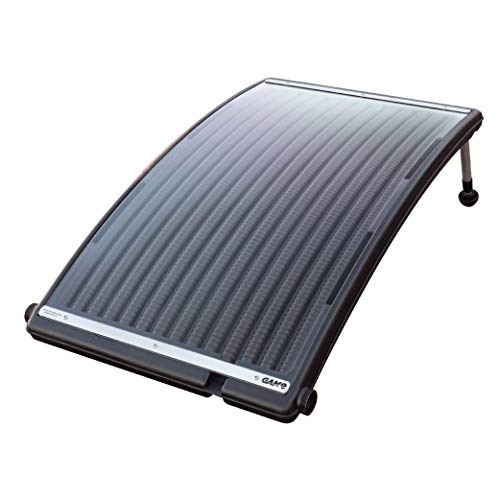
GAME 4721-BB SolarPRO Curve Solar Pool Heater, Made for Intex & Bestway Above-Ground and Inground Pools, Includes Intex Adapters, 2 Hoses & Clamps
SOLAR POOL HEATER: The GAME SolarPRO Curve Solar Pool Heater has been designed for above-ground and most inground…
As an affiliate, we earn on qualifying purchases.
As an affiliate, we earn on qualifying purchases.
Conclusion
By simply timing your pool heater’s operation during the coolest parts of the day, you can save enough energy to power a small city. It’s like revealing a secret superpower for your pool! Not only will you cut costs, but you’ll also keep your pool perfectly warm without wasting a single drop of energy. Embrace this strategy, and watch your savings skyrocket faster than a rocket to the moon!
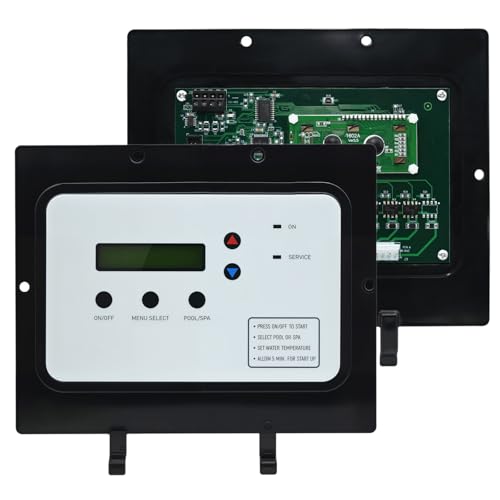
472734 Auto Heat Control Board Assembly for Pentair Pool and Spa Heat Pump
Compatibility: This 472734 automatic heating control board assembly is a replacement compatible with Pentair UltraTemp, thermalflo Titanium, and…
As an affiliate, we earn on qualifying purchases.
As an affiliate, we earn on qualifying purchases.

AQUASTRONG Swimming Pool Heat Pump,High Energy Efficient Pool Heater for Above Ground and Inground Pool, Heating and Cooling Pool Heater, for 6500 Gallons
All-Season Pool Comfort:Featuring innovative dual-mode temperature control, this heat pump precisely heats water between 59–104°F or cools it…
As an affiliate, we earn on qualifying purchases.
As an affiliate, we earn on qualifying purchases.