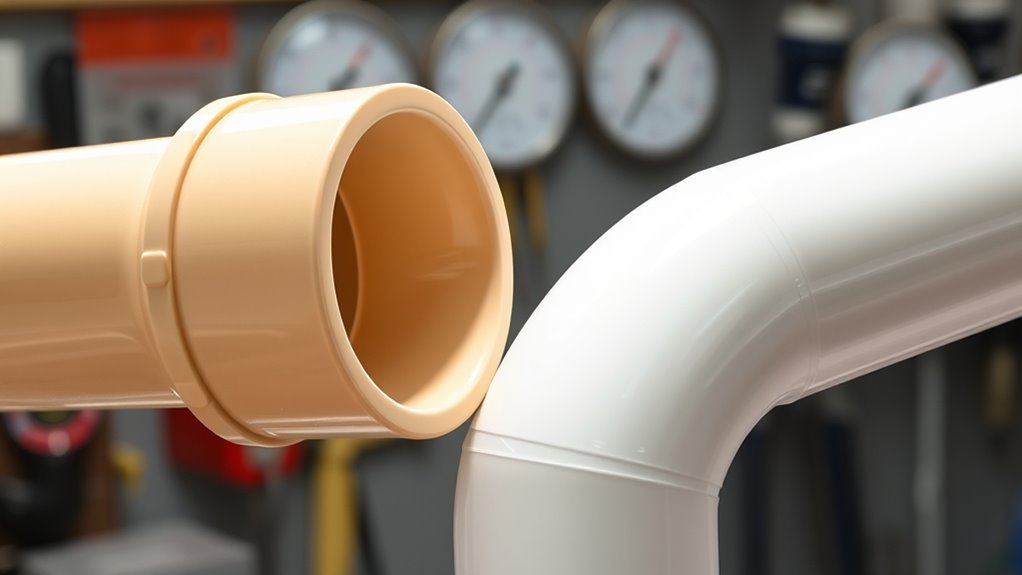

When choosing between CPVC and PVC piping, consider their temperature and chemical resistance. CPVC handles higher temperatures—up to 180°F—making it suitable for hot water and harsh chemicals. PVC is limited to around 140°F and is best for cold water, but it’s less resistant to aggressive chemicals. Your environment’s temperature and chemical exposure influence the right choice. Stay tuned to discover how these factors impact long-term pipe performance and durability.
Key Takeaways
- CPVC has a higher maximum continuous temperature (~180°F) than PVC (~140°F), making it suitable for hot water applications.
- CPVC offers superior chemical resistance, especially against acids, alkalis, and chlorinated solvents, compared to PVC.
- PVC is more vulnerable to degradation from aggressive chemicals and organic solvents, limiting its use in harsh environments.
- Both materials expand with temperature, but CPVC’s higher thermal expansion requires design considerations for thermal movement.
- Proper material selection based on chemical exposure and operating temperature ensures durability and long-term pipe integrity.

1/2 Inch FlowGuard Gold CPVC Pipe, Copper Tubing Size, Hot Water Chemical Resistant, For Residential Commercial Plumbing (0.5, 1/2" (0.625" OD / 0.489" ID), Inches, 12, Inches)
MATERIAL: FlowGuard Gold CPVC pipe designed for both residential and commercial plumbing applications with superior durability and reliability
As an affiliate, we earn on qualifying purchases.
As an affiliate, we earn on qualifying purchases.
Composition and Material Properties of CPVC and PVC
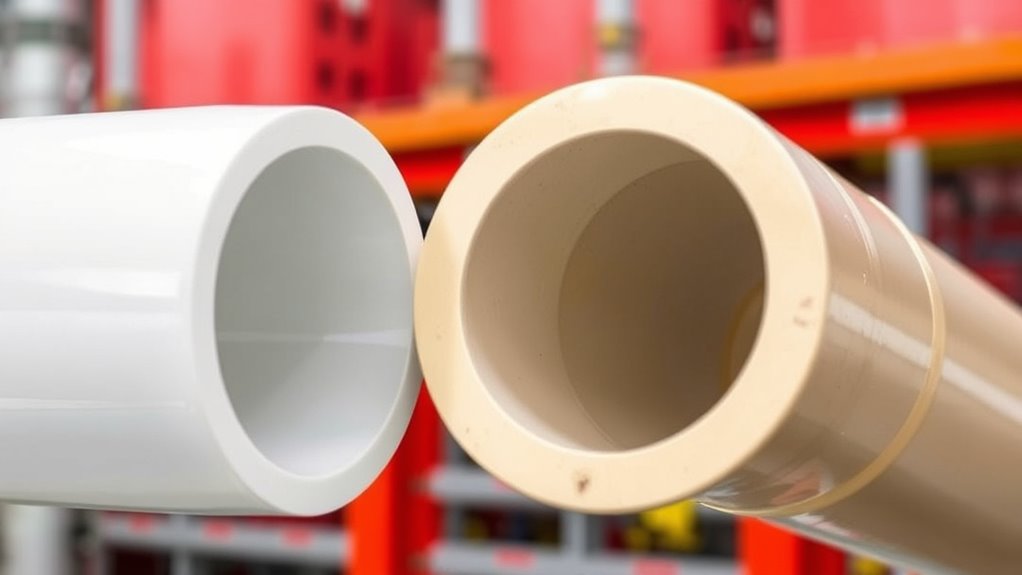
CPVC and PVC are both types of chlorinated polyvinyl chloride, but they differ considerably in their composition and material properties. PVC, or polyvinyl chloride, is made from polymerizing vinyl chloride monomers, resulting in a rigid, durable plastic used widely in plumbing and construction. CPVC, or chlorinated polyvinyl chloride, undergoes a chlorination process that adds chlorine atoms to the PVC backbone. This modification increases its chlorine content and enhances its chemical resistance and thermal stability. As a result, CPVC is more resistant to heat and aggressive chemicals than PVC. While both materials are lightweight and easy to install, CPVC’s added chlorine makes it stiffer and more capable of handling higher temperatures, setting it apart from the more flexible, lower-temperature PVC. Additionally, the increased chemical resistance of CPVC allows it to be suitable for more demanding applications involving corrosive substances.

GF Piping Systems PVC Pipe Fitting, Close Nipple, Schedule 80, Gray, 1/2" NPT Male, 1-1/8" Length
Close nipple fitting for connecting two threaded pipes
As an affiliate, we earn on qualifying purchases.
As an affiliate, we earn on qualifying purchases.
Temperature Resistance and Operating Limits
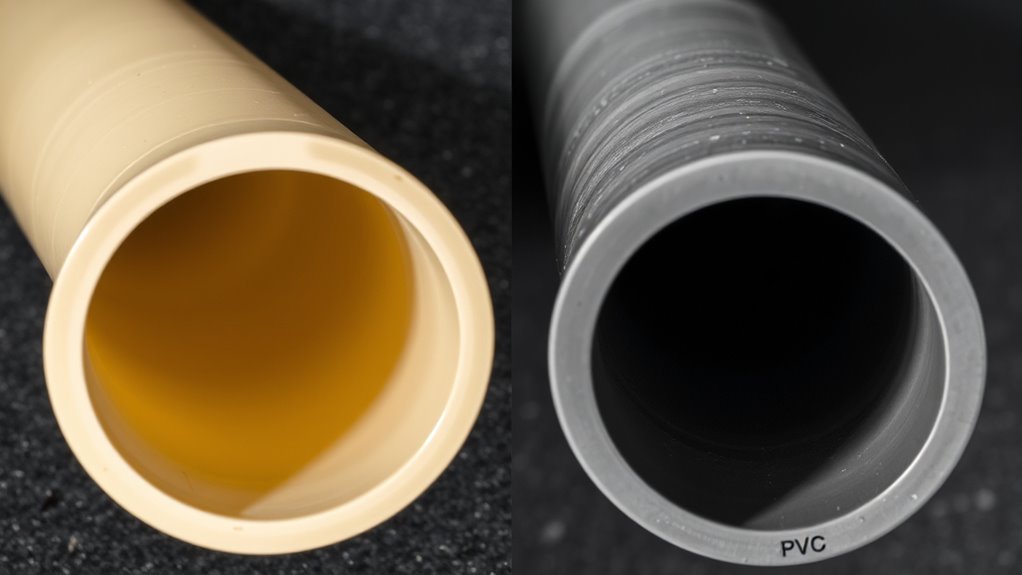
Understanding the temperature resistance of CPVC and PVC helps you choose the right material for your application. You need to take into account their maximum continuous temperatures, as well as how thermal expansion can affect performance. Knowing their operating temperature ranges ensures you avoid failures caused by overheating or temperature fluctuations.
Max Continuous Temperature
Have you ever wondered how well CPVC and PVC can handle high temperatures over long periods? CPVC can typically withstand continuous temperatures up to 180°F (82°C), making it suitable for hot water systems. PVC, on the other hand, has a lower max continuous temperature, around 140°F (60°C). Exceeding these limits can cause material degradation, loss of strength, and potential failure. CPVC’s higher temperature tolerance allows it to operate reliably in more demanding environments. Keep in mind that sustained exposure to temperatures near or above these limits can shorten the pipe’s lifespan. If your application involves consistently high temperatures, CPVC is generally the better choice to guarantee durability and safety over the long term. Additionally, understanding the chemical properties of these materials is crucial, as they influence their resistance to various substances and environmental conditions.
Thermal Expansion Effects
When pipes are exposed to high temperatures, they expand, which can impact their integrity and fit within plumbing systems. This thermal expansion means that as temperature rises, both CPVC and PVC pipes lengthen and slightly thicken. If not guaranteed for, this expansion can cause stress on joints, fittings, and connections, leading to leaks or cracks over time. CPVC generally has a higher coefficient of thermal expansion than PVC, meaning it expands more with temperature changes. To prevent damage, you need to include expansion loops or joints in your system design. Ignoring these effects can compromise the pipe’s strength, cause misalignments, or lead to system failures. Proper planning and installation ensure your plumbing remains reliable despite temperature fluctuations. Additionally, understanding the temperature resistance of these materials helps in selecting the appropriate pipe for specific environments.
Operating Temperature Range
CPVC and PVC pipes are designed to operate within specific temperature ranges to guarantee durability and safety. PVC typically handles temperatures up to 140°F (60°C), making it suitable for cold water applications. In contrast, CPVC can withstand higher temperatures, up to 200°F (93°C), allowing it to serve in hot water systems. Exceeding these limits risks material degradation, warping, or failure. Keep in mind that operating outside the recommended temperature range can compromise pipe integrity and safety. If your project involves higher temperatures, CPVC is the better choice. Always check manufacturer specifications to ensure your piping system remains within safe operating limits, preventing damage and ensuring long-term performance. Proper temperature management is essential for maintaining the temperature resistance of your pipes.

Supply Giant TTDQN300 Male x CPVC Adapter Transition Pipe Fitting; Durable Over Molded One-Piece Design; 1 in Stainless Steel
Everflow Supplies part number SSCPM100-NL
As an affiliate, we earn on qualifying purchases.
As an affiliate, we earn on qualifying purchases.
Chemical Compatibility and Resistance
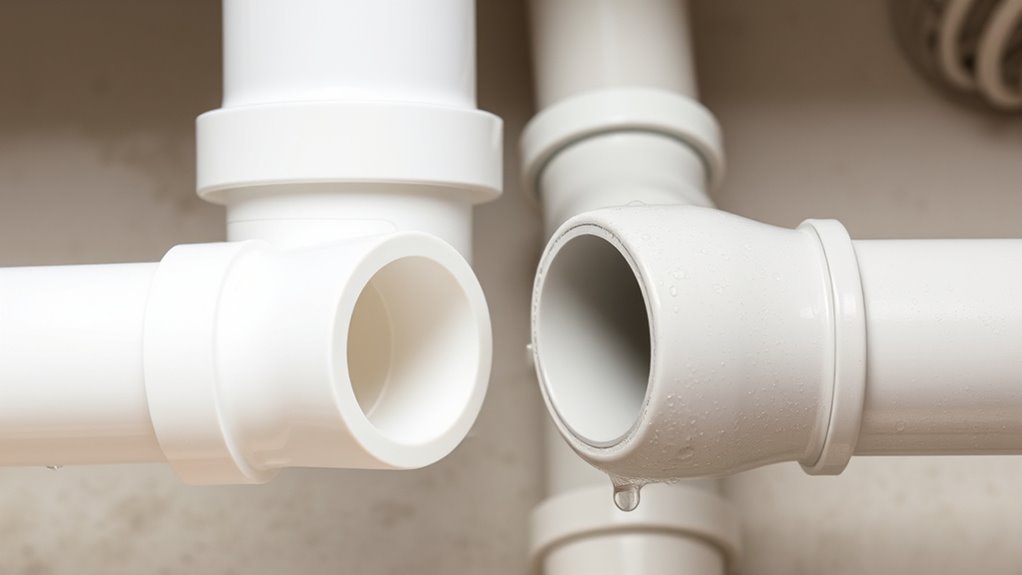
Understanding chemical compatibility helps you choose the right material for your application. CPVC and PVC each have different resistance spectra and solvent limits that can affect performance. Knowing their corrosion resistance properties guarantees you select the best option for handling specific chemicals safely. Additionally, market developments such as new regulations and innovations can influence material selection choices.
Chemical Resistance Spectrum
Chemical resistance is a crucial factor to consider when evaluating CPVC and PVC for your applications, as it determines how well these materials withstand exposure to various substances. CPVC generally offers superior resistance to a broader range of chemicals, including acids, alkalis, and chlorinated solvents. PVC, while resistant to many acids and bases, may struggle with certain organic solvents and harsh chemicals. The chemical resistance spectrum helps you understand which material is better suited for specific environments. For example, CPVC’s enhanced resistance makes it ideal for industrial applications involving aggressive chemicals. PVC works well in less demanding chemical environments but may deteriorate when exposed to more aggressive substances. Matching your chemical exposure profile with the material’s resistance spectrum guarantees the best durability and safety.
Solvent Compatibility Limits
While both CPVC and PVC are widely used in piping systems, their solvent compatibility limits differ considerably. PVC tends to resist many solvents but can be dissolved or weakened by aromatic hydrocarbons, ketones, and chlorinated solvents. CPVC, with its higher temperature tolerance, also faces restrictions with certain solvents but generally offers better chemical resistance. You should be aware of these limits to avoid system failure. Key solvent compatibility considerations include:
- Aromatic hydrocarbons like benzene and toluene can degrade PVC pipes.
- Ketones such as acetone may cause PVC to swell or crack.
- Chlorinated solvents like dichloromethane can weaken both materials.
- Alcohols and esters typically have minimal effect on CPVC but may impact PVC over time.
Understanding these limits helps ensure your piping system remains durable and safe.
Additionally, material properties such as temperature and chemical resistance influence the longevity and safety of piping systems made from CPVC and PVC.
Corrosion Resistance Properties
Both CPVC and PVC are highly resistant to many corrosive substances, making them popular choices for various piping applications. They resist chemicals like acids, bases, and salts, reducing corrosion risks over time. However, their resistance varies with specific chemicals. For example, PVC handles most acids well but struggles with certain solvents, while CPVC can withstand higher temperatures and aggressive chemicals better. To compare, consider this table:
| Chemical Type | PVC Resistance | CPVC Resistance | Notes |
|---|---|---|---|
| Acids | Good | Very good | CPVC handles stronger acids |
| Bases | Excellent | Excellent | Both perform well |
| Solvents | Limited | Moderate | PVC is more vulnerable |
| Salts | Good | Good | Both resist salt solutions |
| Organic Solvents | Poor | Moderate | CPVC is more resistant |
Understanding these differences helps you select the right material for your chemical environment. Additionally, chemical resistance plays a crucial role in determining the longevity of piping systems in various applications.

CKVIHAV 2Pcs 2 Inch PVC Pipe 17" Long White Sch40 Industrial PVC Pipes for Home DIY, Greenhouse, Garden, Farm, Workshop, Furniture Grade(2" x 17"L)
Size – Length of each: 17";The 2 inch Schedule 40 PVC pipe has an outer diameter of 2.375…
As an affiliate, we earn on qualifying purchases.
As an affiliate, we earn on qualifying purchases.
Impact of Temperature on Durability and Performance
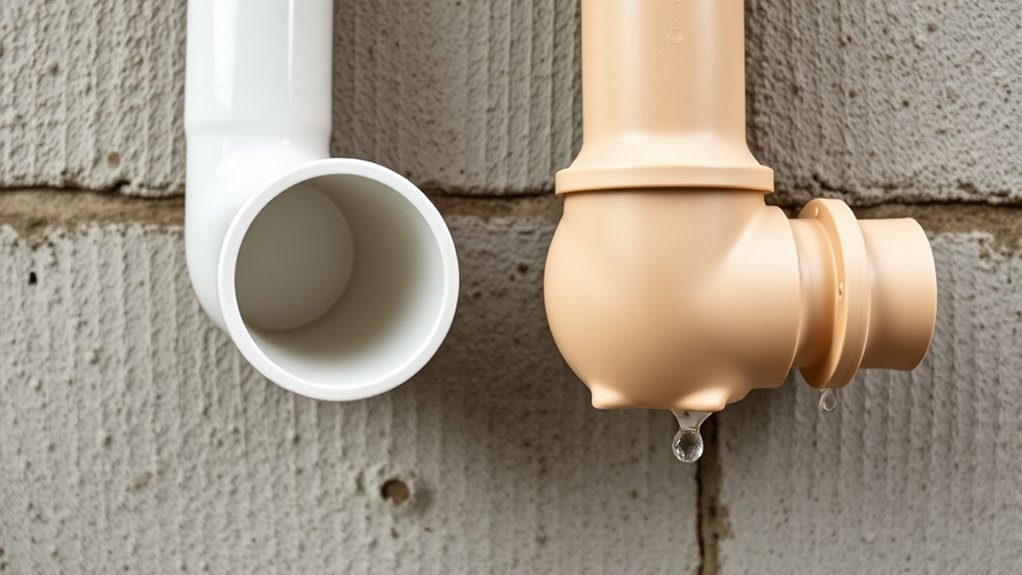
Temperature plays an essential role in determining the durability and performance of CPVC and PVC pipes. As temperatures rise, PVC becomes more susceptible to softening, warping, and eventual failure, especially beyond 140°F. PVC’s impact strength decreases markedly at elevated temperatures. CPVC, designed for higher temperature applications, maintains its structural integrity better under heat stress. You’ll notice that:
- PVC’s impact strength decreases markedly at elevated temperatures.
- CPVC withstands higher temperatures without compromising performance.
- Excessive heat can cause PVC to become brittle over time.
- Proper temperature management extends the lifespan of both pipe types.
- Additionally, thermal expansion can affect the fit and sealing of piping systems, emphasizing the importance of considering temperature effects in installation and maintenance.
Understanding these effects helps you select the right material for your application, ensuring safety and longevity. Staying within recommended temperature ranges is essential for ideal pipe performance and avoiding costly repairs.
Chemical Exposure and Long-term Stability
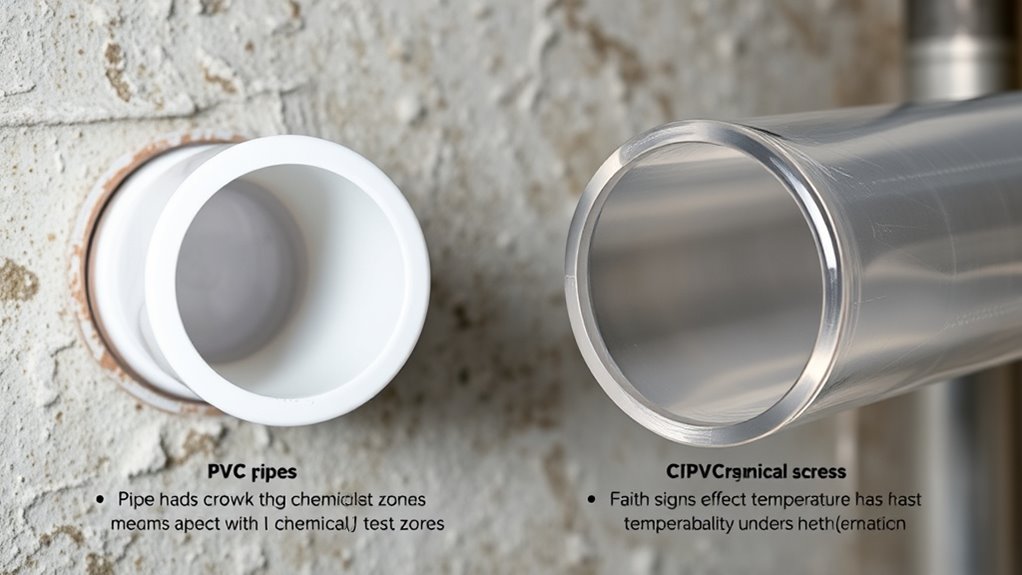
Chemical exposure considerably impacts the long-term stability of CPVC and PVC pipes. When exposed to aggressive chemicals, PVC tends to degrade faster due to its lower chemical resistance, especially with solvents and oils. CPVC, on the other hand, offers better resistance because of its higher chlorine content, making it more stable in harsh chemical environments. Over time, prolonged contact with certain chemicals can cause cracks, brittleness, or leaks, reducing pipe lifespan. You need to contemplate the specific chemicals involved in your application and choose the material accordingly. Proper compatibility testing ensures your pipes won’t deteriorate prematurely. Keep in mind that chemical exposure isn’t just about immediate reactions but also about long-term effects that compromise pipe integrity and safety.
Applications and Suitability Based on Temperature and Chemicals
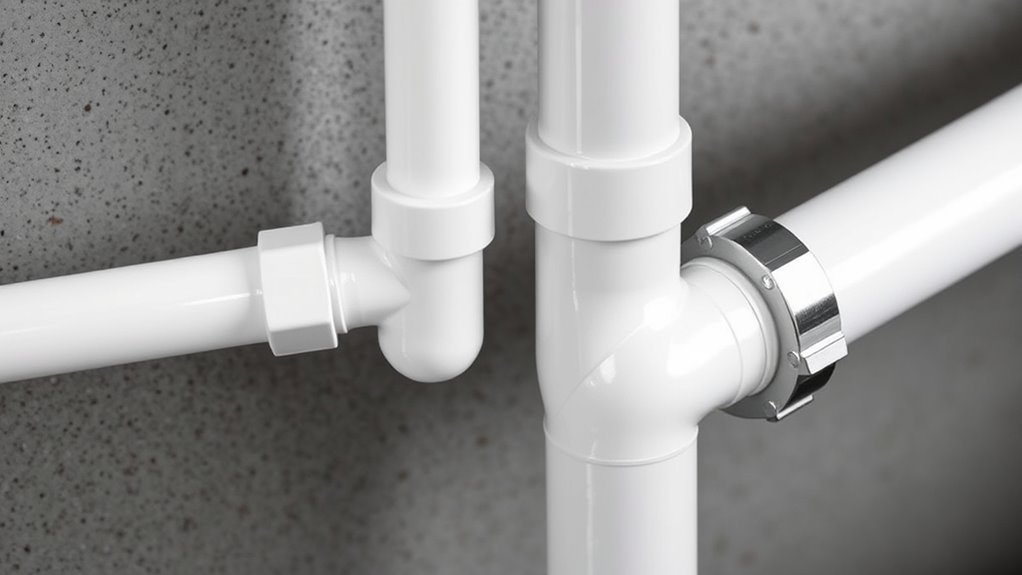
Choosing the right piping material depends heavily on the specific temperature range and chemical environment of your application. CPVC and PVC each excel in different scenarios. CPVC is suitable for hot water systems and aggressive chemicals due to its high-temperature resistance and chemical stability. PVC performs well in cold water lines and less corrosive environments, offering durability and cost-effectiveness. Consider these factors:
Choosing the right piping material depends on temperature and chemical conditions.
- Temperature limits: CPVC withstands higher temperatures comfortably, while PVC is limited to colder applications.
- Chemical compatibility: CPVC resists acids and solvents better than PVC.
- Pressure tolerance: Both materials handle pressure, but CPVC’s strength improves with temperature.
- Cost considerations: PVC is generally cheaper but less versatile for high-temperature or aggressive chemicals.
Matching these attributes to your application’s demands ensures excellent performance and longevity.
Handling and Installation Considerations Under Varying Conditions
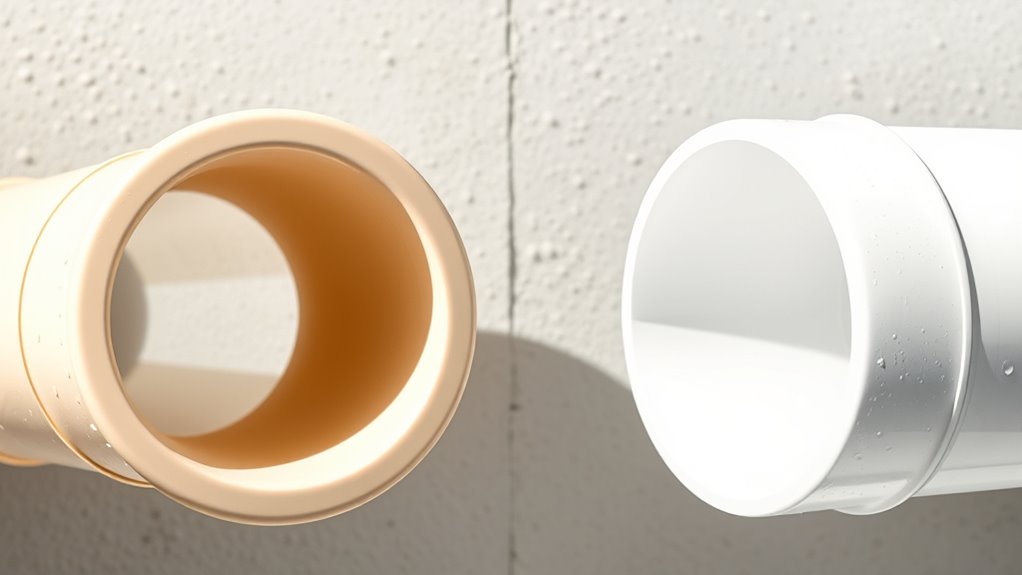
Proper handling and installation of CPVC and PVC pipes require attention to specific conditions to guarantee safety and durability. Always check the temperature and chemical environment before installation, as extreme heat can soften the pipes, making them more susceptible to damage. When working in hot conditions, avoid excessive bending or forcing pipes into tight spaces, which could cause cracks. During cold weather, keep pipes warm and avoid abrupt temperature changes to prevent cracking. Use the correct tools, such as pipe cutters and solvent welders, to ensure clean cuts and secure joints. Support pipes properly to prevent sagging or stress on fittings, especially over long runs. Additionally, understanding retirement planning can help anticipate future financial needs, ensuring that your plumbing investments are sustainable over the long term. By considering these factors, you ensure a reliable installation that withstands varying conditions over time.
Safety Precautions and Regulatory Standards
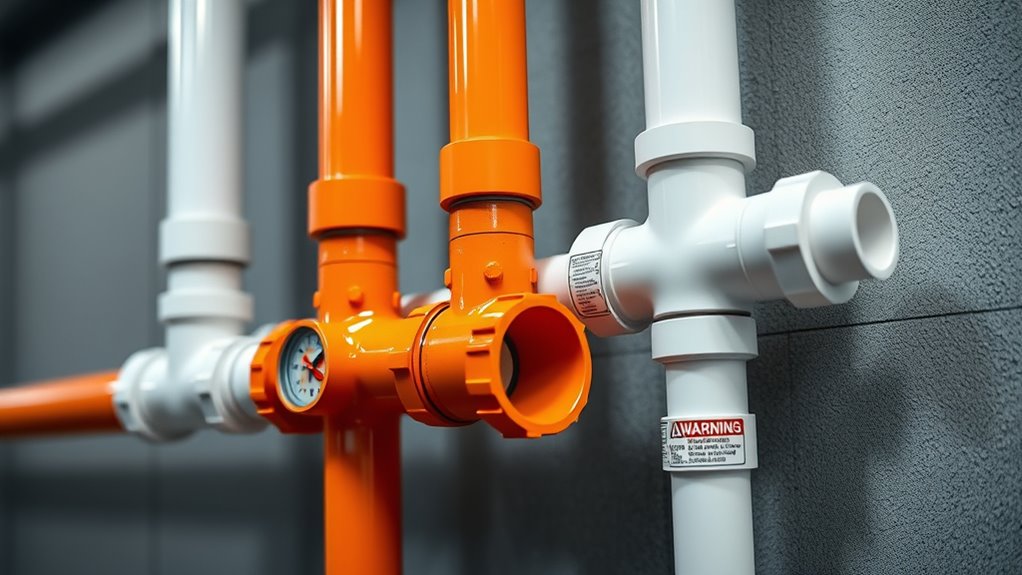
To guarantee safe and compliant installation, you must adhere to relevant safety precautions and regulatory standards when working with CPVC and PVC pipes. Always wear appropriate protective gear, including gloves, goggles, and masks, to prevent exposure to harmful fumes and chemicals. Confirm proper ventilation during cutting, welding, or heating. Follow manufacturer guidelines and local building codes for installation and handling. Be aware that certain chemicals and high temperatures can weaken pipes or cause hazards if mishandled.
- Use approved tools and techniques for cutting and joining pipes
- Verify material certifications and compliance with local codes
- Store pipes properly to prevent damage or deformation
- Conduct inspections to ensure secure fittings and leak prevention
Frequently Asked Questions
How Do Temperature Fluctuations Affect CPVC and PVC Pipe Lifespan?
Temperature fluctuations can considerably impact the lifespan of your CPVC and PVC pipes. When exposed to extreme cold, your pipes may become brittle and crack, while excessive heat can cause them to soften or deform. Rapid temperature changes stress the pipe material, increasing the risk of leaks or failure over time. To guarantee longevity, you should insulate your pipes and avoid subjecting them to sudden temperature shifts.
Can CPVC Withstand Industrial Chemical Spills Better Than PVC?
Think of CPVC as a sturdy shield, better equipped to handle industrial chemical spills than PVC. It resists a wider range of aggressive chemicals and higher temperatures, making it more resilient in hazardous environments. You’ll find CPVC withstands chemical leaks longer without degrading, ensuring safety and durability. So, if you’re concerned about chemical spills, choosing CPVC gives you a more reliable barrier against corrosive substances.
Are There Specific Chemicals That Cause PVC to Degrade Faster?
Yes, certain chemicals cause PVC to degrade faster. You should be cautious around strong acids like hydrochloric acid and sulfuric acid, which can weaken or break down PVC over time. Also, solvents such as benzene, acetone, and ketones can attack PVC’s structure, leading to cracks or leaks. To prevent damage, avoid exposing PVC to these chemicals or ensure proper protective measures when handling them.
How Does UV Exposure Impact the Chemical Stability of Both Plastics?
Sunlight acts like a relentless artist, gradually fading the vibrant colors of your plastics. UV exposure breaks down both PVC and CPVC’s chemical bonds, causing brittleness and discoloration over time. PVC’s less resistant structure succumbs quicker, turning brittle and cracking, while CPVC fares better but still weakens. Protect your pipes with UV-resistant coatings or coverings to preserve their integrity and keep them standing strong against the sun’s harsh brushstrokes.
What Are the Maintenance Requirements for High-Temperature Chemical Applications?
For high-temperature chemical applications, you need to regularly inspect your piping for signs of wear, corrosion, or deformation. Guarantee joints are tight and check for leaks frequently. Keep the system clean and avoid exposing it to incompatible chemicals. Follow manufacturer guidelines for temperature limits and chemical compatibility. Performing scheduled maintenance and replacing worn components promptly helps maintain system integrity and prevents costly failures.
Conclusion
Choosing between CPVC and PVC depends on your specific temperature and chemical needs. Remember, “a chain is only as strong as its weakest link,” so select the material that best withstands your conditions. By understanding their properties, you ensure your piping system remains durable and reliable. When you make informed decisions, you build a foundation that lasts—just like a sturdy bridge, strong and steadfast over time.