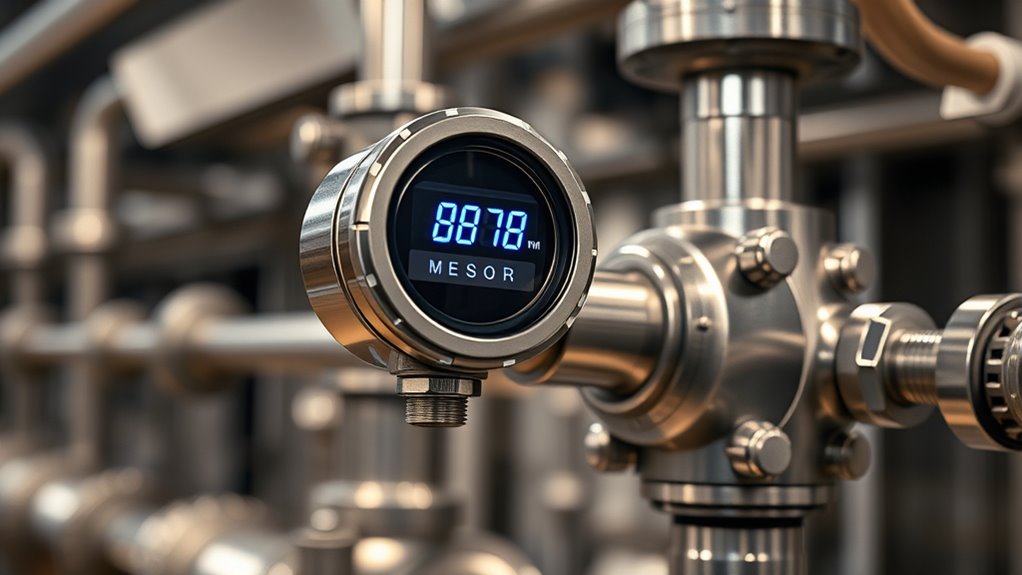
Flow meters are essential tools that give you real-time data on fluid flow, helping you monitor and optimize circulation systems for maximum efficiency. By ensuring proper calibration, you can maintain measurement accuracy and detect issues like blockages or leaks early on. Analyzing flow data allows you to identify trends and prevent costly problems, extending equipment life and improving system performance. Keep exploring to discover how precise monitoring can transform your operations.
Key Takeaways
- Flow meters provide real-time data essential for monitoring and optimizing circulation system performance.
- Regular calibration of flow meters ensures measurement accuracy, supporting reliable circulation efficiency assessments.
- Data analysis detects flow anomalies, such as blockages or leaks, enabling early intervention to maintain system health.
- Proper calibration and monitoring help identify wear or environmental effects impacting circulation efficiency.
- Using flow meter data facilitates predictive maintenance, reducing downtime and improving overall system reliability.
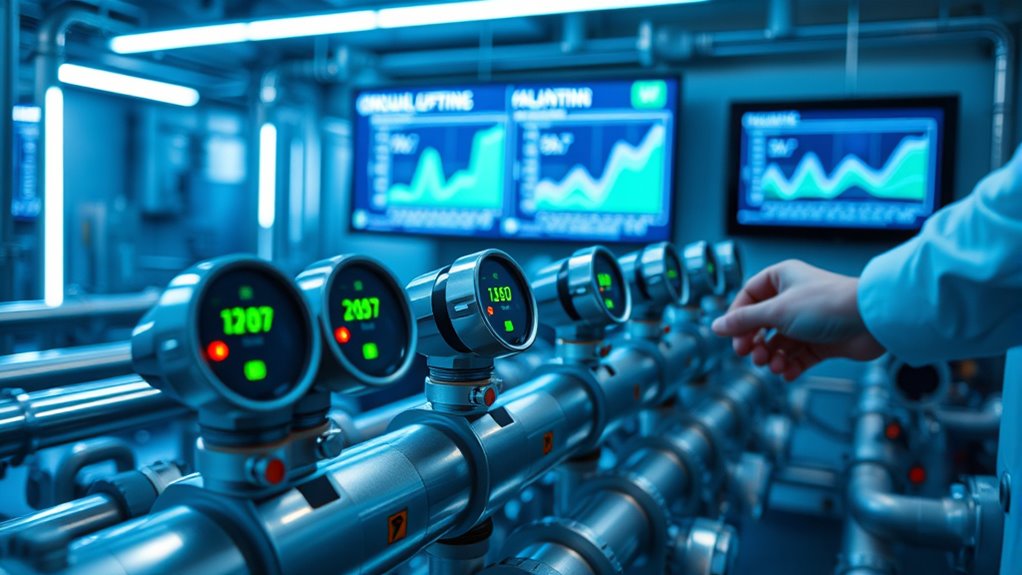
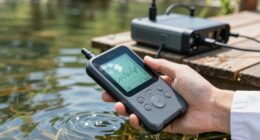
Flow meters play a essential role in ensuring efficient circulation systems by providing real-time data on fluid flow rates. When you rely on flow meters, you’re able to monitor how fluids move through pipes, ducts, or channels, which is fundamental for optimizing performance and preventing issues like blockages or leaks. To keep these devices working accurately, calibration becomes indispensable. Calibration techniques involve comparing the flow meter’s readings against a known standard or reference, ensuring measurements stay precise over time. Regular calibration helps you identify any drift or inaccuracies that might occur due to wear, environmental conditions, or mechanical fatigue. You might use methods such as volumetric calibration, where you measure the volume of fluid passing through over a set period, or electronic calibration, adjusting the device’s signal output to match standard values. Proper calibration techniques are essential because they directly influence the reliability of the data you collect, and ultimately, your ability to make informed decisions about system performance.
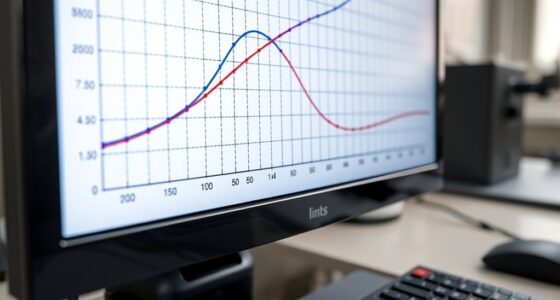
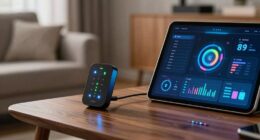
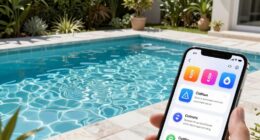
Once your flow meters are calibrated, the next critical step is data analysis. The data you gather from these meters isn’t valuable on its own; it’s what you do with that information that counts. Analyzing flow data helps you identify trends, detect anomalies, and diagnose potential issues before they escalate into costly failures. For example, a sudden drop or spike in flow rates could indicate a blockage or a leak. By continuously analyzing data patterns, you can implement predictive maintenance strategies, scheduling repairs before equipment fails. Data analysis also aids in optimizing system operations, such as adjusting pump speeds or valve positions to maintain ideal flow rates, reducing energy consumption, and improving efficiency. Modern flow meters often come with integrated software that simplifies data analysis, providing visual dashboards or alerts that highlight deviations from normal operating ranges. This immediate insight enables you to act swiftly, minimizing downtime and maintaining circulation effectiveness. Additionally, calibration accuracy**** plays a crucial role in ensuring the data’s trustworthiness, especially when detecting subtle changes in flow patterns.
In essence, calibration techniques ensure the accuracy of your flow meters, while diligent data analysis allows you to interpret that data to enhance system performance. When both elements are in place, you gain an all-encompassing understanding of your circulation system’s health and efficiency. This proactive approach helps you catch issues early, optimize operations, and extend the lifespan of your equipment. So, investing time in proper calibration and thorough data analysis isn’t just about maintaining measurement precision; it’s about empowering yourself to run a safer, more efficient, and reliable circulation system.
Top picks for "flow meter monitor"
Open Amazon search results for this keyword.
As an affiliate, we earn on qualifying purchases.
Frequently Asked Questions
How Do Flow Meters Adapt to Extreme Temperature Conditions?
You can rely on flow meters that adapt to extreme temperatures through built-in temperature compensation, which adjusts readings for thermal variations. Additionally, choosing models made from durable materials like stainless steel or special composites guarantees they withstand harsh conditions. By combining these features, your flow meter maintains accuracy and longevity, even in extreme environments, giving you confidence in your circulation monitoring regardless of temperature fluctuations.
What Maintenance Is Required for Long-Term Accuracy?
Maintaining your flow meter is like tending a garden; regular care keeps it thriving. You should follow calibration schedules diligently to guarantee accurate readings. Keep an eye out for wear and tear, which can skew results over time. Clean the device periodically to prevent buildup. Checking connections and replacing worn parts promptly will help sustain long-term accuracy, so your measurements stay reliable and precise over the years.
Can Flow Meters Be Integrated With Iot Systems?
Yes, you can integrate flow meters with IoT systems through wireless integration, allowing real-time data transfer. This setup enables you to monitor circulation efficiency remotely and collect valuable data analytics. By connecting flow meters to your IoT network, you gain insights that help optimize performance, detect issues early, and improve maintenance schedules. This seamless integration enhances overall system management and guarantees more accurate, timely information for decision-making.
What Are Common Causes of Flow Measurement Errors?
You should watch out for calibration accuracy issues, which can cause your flow measurements to be off. Signal interference from nearby electrical devices or other sensors can also distort readings, leading to errors. Additionally, improper installation, wear and tear, or dirty sensors can affect accuracy. Regular calibration, proper shielding from interference, and routine maintenance help guarantee your flow meter provides precise measurements and minimizes errors.
How Do Flow Meters Impact Overall System Energy Efficiency?
Flow meters directly impact your system’s energy efficiency by accurately measuring flow rates, allowing you to optimize pump and valve operation. When flow rates are precisely monitored, you can reduce unnecessary energy consumption, leading to significant energy savings. Properly calibrated flow meters help you identify inefficiencies, prevent over-pumping, and guarantee your system runs smoothly. This proactive approach minimizes waste and maximizes energy efficiency, ultimately lowering operational costs.
Conclusion
By using flow meters to monitor circulation, you’re like a skilled conductor guiding an orchestra, ensuring every instrument plays in harmony. When you keep a close eye on flow rates, you prevent disruptions and keep your system running smoothly. Think of it as tuning your engine for ideal performance. With consistent monitoring, you’ll maintain peak efficiency, much like a well-orchestrated symphony, where every note matters. Stay vigilant, and your circulation will always perform at its best.