
Flow rate tells you how much fluid passes a point over time, while velocity shows how fast it moves at a specific spot. Both are key to understanding how systems work and avoid issues like energy waste or pipe erosion. Larger pipes have lower velocity but higher flow rate, and vice versa. To optimize circulation, you need to balance these two numbers. Keep exploring to uncover how measuring and adjusting these can improve your system’s performance.
Key Takeaways
- Flow rate measures the volume of fluid passing a point per unit time, while velocity indicates the fluid’s speed at a specific point.
- Flow rate depends on both velocity and the cross-sectional area of the pipe or channel.
- Smaller pipes with high velocity can have low flow rates; larger pipes may have high flow but lower velocity.
- Understanding and balancing both numbers optimize system efficiency and prevent issues like erosion or sediment buildup.
- Accurate measurement of flow rate and velocity allows for proper system design, control, and energy savings.

GRYVOZE 1 Inch Digital Turbine Fuel Flow Meter, 2.6-26 GPM Inline NPT Thread Flowmeter with 3/4 in Adapters for Water, Diesel, Gas Oil, Gasoline, and Other Liquids – Supports Gallon, QTS, PTS, L, m³
Accurate Measurements – Our digital turbine flow meter provides precise readings with a high accuracy of ±1%, ensuring…
As an affiliate, we earn on qualifying purchases.
As an affiliate, we earn on qualifying purchases.
Defining Flow Rate and Velocity

Flow rate and velocity are fundamental concepts in fluid dynamics that describe how fluids move. Flow rate measures the volume of fluid passing a point per unit time, usually in liters per second or gallons per minute. It tells you how much fluid flows through a pipe or channel. Velocity, on the other hand, indicates how fast the fluid moves at a specific point, typically in meters per second or feet per second. It describes the speed of the fluid’s movement rather than the amount. Understanding these definitions helps you grasp how fluids behave in different systems. While they’re related, they serve different purposes: flow rate focuses on quantity, while velocity emphasizes speed. Both are essential for analyzing and designing fluid systems effectively. Proper measurement techniques are crucial for accurate assessment of either parameter.
water velocity flow sensor
As an affiliate, we earn on qualifying purchases.
As an affiliate, we earn on qualifying purchases.
The Relationship Between Flow Rate and Velocity

Your flow rate directly influences how fast the fluid moves through a pipe. When the cross-sectional area is smaller, the velocity increases for the same flow rate. Understanding this relationship helps you predict how changes in one factor affect the other. Using appropriate measurement tools ensures accurate tracking of flow parameters and optimal system performance.
Flow Rate Determines Speed
When considering fluid movement through a pipe or channel, the flow rate directly influences the speed at which the fluid travels. If you increase the flow rate, the velocity must also increase, assuming the cross-sectional area stays constant. This relationship is fundamental because it shows that higher flow rates result in faster-moving fluids. For example, doubling the flow rate doubles the velocity in a fixed area. The table below summarizes this relationship:
| Flow Rate (Q) | Velocity (V) |
|---|---|
| Low | Slow |
| Moderate | Moderate |
| High | Fast |
| Very High | Very Fast |
| Maximum | Maximum Speed |
Understanding this connection helps control fluid speed in various applications, from plumbing to industrial processes. Additionally, flow dynamics play a crucial role in optimizing system performance and efficiency.
Cross-Sectional Area Impact
The cross-sectional area of a pipe or channel substantially influences the relationship between flow rate and velocity. When the area increases, the velocity decreases if the flow rate stays constant. Conversely, narrowing the cross-section causes the velocity to rise. This inverse relationship means that even small changes in the pipe’s diameter can markedly impact flow speed. For example, a wider pipe allows more volume to pass through with less speed, while a narrower pipe forces the fluid to accelerate. Understanding this connection helps you control and optimize fluid movement in systems like plumbing, irrigation, or industrial processes. By adjusting the cross-sectional area, you can effectively manage flow velocity, ensuring efficiency and preventing issues like pressure drops or turbulence. Additionally, awareness of road signs and their significance can aid in safe and effective navigation of fluid systems and traffic environments alike.
industrial flow measurement device
As an affiliate, we earn on qualifying purchases.
As an affiliate, we earn on qualifying purchases.
How to Calculate Flow Rate and Velocity
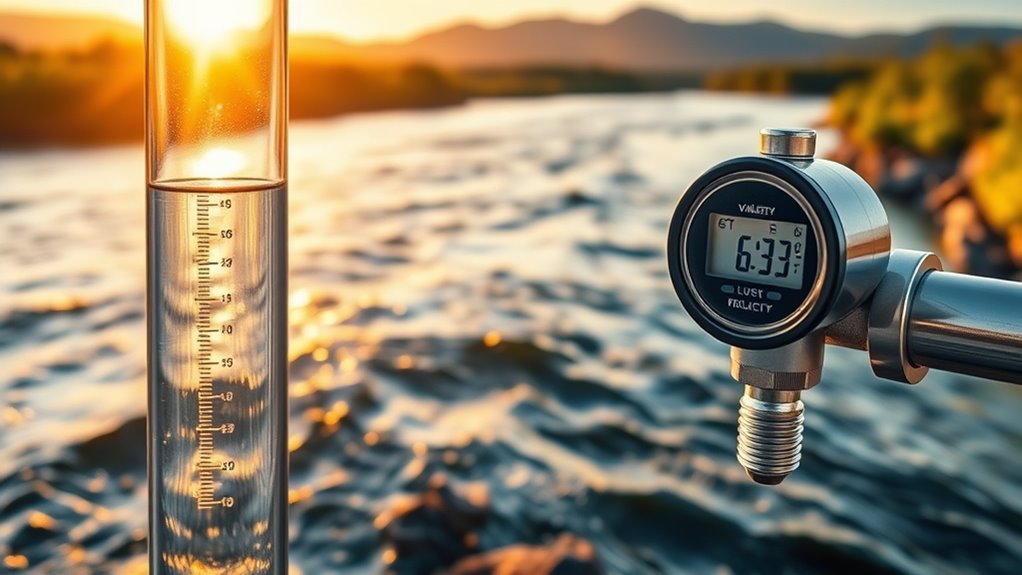
Calculating flow rate and velocity involves understanding how much fluid moves through a given point over a specific period. To find the flow rate, multiply the cross-sectional area of the pipe or channel by the velocity of the fluid. The formula is Q = A × V, where Q is the flow rate, A is the cross-sectional area, and V is the velocity. To determine velocity, divide the flow rate by the cross-sectional area: V = Q ÷ A. Make sure your units are consistent—using meters for area and seconds for time. Properly calculating these values is essential for optimizing water chemistry and ensuring safe, efficient pool operation. If you know two of these variables, you can easily calculate the third. This process helps you quantify how fast fluid moves and how much volume passes through a point, essential for controlling and optimizing circulation systems.
pipe flow rate monitor
As an affiliate, we earn on qualifying purchases.
As an affiliate, we earn on qualifying purchases.
Practical Examples of Flow Rate and Velocity
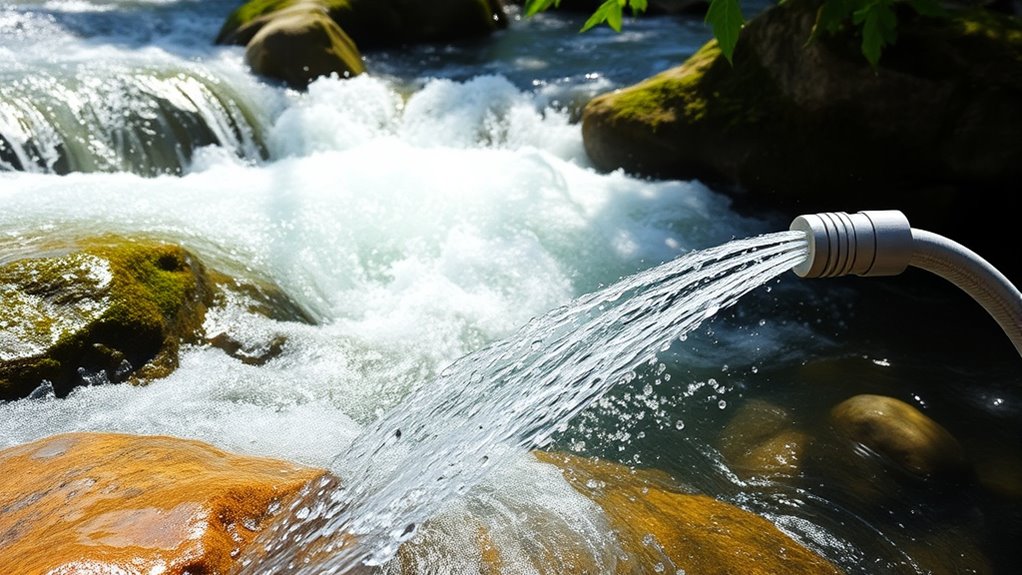
Have you ever wondered how flow rate and velocity apply in real-world scenarios? Imagine water flowing through different pipes. In a narrow garden hose, the flow rate might be low, but the velocity high. Conversely, a large pipe handles a high flow rate with lower velocity. Here’s a quick visualization:
| Pipe Type | Flow Rate (GPM) | Velocity (ft/sec) |
|---|---|---|
| Small Hose | 2 | 15 |
| Large Pipe | 50 | 3 |
| Fire Hose | 100 | 50 |
| Drain Pipe | 10 | 4 |
These examples show how different setups affect flow rate and velocity, depending on the application. Understanding this helps you assess system performance and optimize fluid movement efficiently. Additionally, grasping these concepts can improve your ability to analyze fluid dynamics in various engineering and environmental contexts.
Why Understanding Both Is Important in System Design

Understanding both flow rate and velocity helps you design systems that run smoothly and efficiently. If you ignore these factors, you risk system failures or wasting energy. Balancing them guarantees ideal performance and longevity. Additionally, monitoring world clock functionality can assist in coordinating international system operations seamlessly.
Ensuring Efficient Flow Dynamics
To design efficient flow systems, grasping both flow rate and velocity is essential because they directly influence how fluids move through pipes and channels. Balancing these factors guarantees ideal performance and minimizes problems like pressure loss or turbulence. Here are three key points to contemplate: 1. Maintaining proper flow rate prevents under- or over-pressurization, protecting system components. 2. Controlling velocity avoids erosion and noise, extending pipe lifespan. 3. Adjusting both allows you to maximize energy use, reducing operational costs. Additionally, understanding dog names can be helpful when designing systems that involve pet-related products or environments, ensuring user-friendly and appealing designs.
Preventing System Failures
Properly managing flow rate and velocity is essential because neglecting either can lead to system failures such as pipe erosion, pressure drops, or equipment damage. Excessive velocity can cause pipe wear and fatigue, risking leaks or bursts. Conversely, too low a velocity may lead to sediment buildup, clogging, or stagnation. An improper flow rate can overload pumps or reduce system efficiency, while incorrect velocity can cause turbulence that damages components. By understanding the relationship between flow rate and velocity, you can design systems that operate smoothly and reliably. Regular monitoring and adjustments prevent unexpected failures and extend equipment lifespan. Ensuring proper flow dynamics helps maintain steady pressure, avoid erosion, and protect your infrastructure from costly repairs. Additionally, understanding fluid dynamics principles is crucial for optimizing system design and preventing operational issues. Proper management keeps your system functioning safely and efficiently.
Optimizing Energy Consumption
Managing flow rate and velocity effectively can substantially reduce energy consumption in your system. When you optimize these parameters, you minimize unnecessary energy waste and improve efficiency. To achieve this, consider these key points:
- Adjust flow rates to match system demand, avoiding excess that causes added energy costs.
- Control velocity to prevent turbulence and friction losses, which increase power consumption.
- Regularly monitor system performance to identify inefficiencies and fine-tune flow parameters accordingly.
- Incorporate vertical storage solutions and other organization strategies to maintain system balance and prevent overloads.
Common Mistakes When Interpreting Flow Rate and Velocity

A common mistake when interpreting flow rate and velocity is confusing the two concepts or assuming they are interchangeable. Flow rate measures the volume of fluid passing a point per unit time, while velocity indicates how fast the fluid moves through a specific area. If you mix these up, you might misjudge system performance or energy needs. For example, thinking a high velocity always means a high flow rate can lead to incorrect conclusions about circulation efficiency. Remember, a small pipe can have a high velocity but low flow rate, whereas a large pipe might have a high flow rate with lower velocity. Understanding the distinction helps you accurately analyze fluid dynamics and avoid costly errors in system design or troubleshooting.
Tools and Techniques to Measure Circulating Fluids

Measuring circulating fluids accurately requires the right tools and techniques to capture flow rate and velocity effectively. You need reliable methods to ensure your data reflects real conditions. First, use flow meters, like electromagnetic or ultrasonic types, which provide direct, real-time measurements without disrupting flow. Second, employ pitot tubes or velocity probes to gauge velocity at specific points, helping you understand flow patterns. Third, leverage computational tools such as flow modeling software to analyze data and predict behaviors under different scenarios. These tools are essential for precision, enabling you to monitor and optimize circulation systems. By selecting the appropriate instruments and techniques, you can get accurate insights into your circulating fluids, improving system efficiency and preventing issues.
Frequently Asked Questions
How Do Temperature and Pressure Affect Flow Rate and Velocity Measurements?
Temperature and pressure critically impact flow rate and velocity measurements. When temperature rises, fluids expand, reducing density and potentially increasing velocity if flow rate stays constant. Higher pressure can boost flow rate through a system by overcoming resistance. You should monitor both factors because changes can lead to inaccurate measurements. Adjust your calculations accordingly, considering the fluid’s properties under varying temperature and pressure conditions to ensure precise flow and velocity assessments.
Can Flow Rate and Velocity Be the Same in Complex Piping Systems?
No, flow rate and velocity can’t be the same in complex piping systems because they measure different things. Flow rate is the volume of fluid passing a point per unit time, while velocity is how fast the fluid moves through the pipe’s cross-section. In complex systems, varying pipe diameters and bends change velocity even if the flow rate remains constant, so they usually differ.
What Is the Impact of Pipe Diameter Changes on Flow Rate and Velocity?
Changing the pipe diameter directly affects flow rate and velocity. When you increase the diameter, the flow rate tends to stay the same or increase slightly, but the velocity decreases because the fluid has more space to move through. Conversely, narrowing the pipe increases velocity but reduces flow rate. You need to contemplate these effects carefully to maintain efficient circulation and prevent issues like pressure loss or pipe damage.
How Do Viscosity and Fluid Properties Influence Flow Rate and Velocity?
Viscosity and fluid properties substantially impact your flow rate and velocity. Higher viscosity makes it harder for the fluid to move, reducing both flow rate and velocity. Conversely, low-viscosity fluids flow more easily, increasing these values. Your fluid’s density and temperature also influence flow behavior; denser or colder fluids tend to resist movement more, affecting how quickly and efficiently your system circulates.
Are There Industry Standards for Acceptable Flow Rate and Velocity Ranges?
Yes, industry standards exist for acceptable flow rate and velocity ranges, but they vary depending on the application and industry. You should consult relevant codes, regulations, and best practices specific to your field, such as ASME, API, or OSHA guidelines. These standards help guarantee safety, efficiency, and compliance, so always verify the appropriate ranges for your system and follow recommended practices to avoid issues like erosion, noise, or system failure.
Conclusion
Think of flow rate and velocity as the heartbeat and pulse of a circulation system. Mastering both guarantees your system runs smoothly, like a well-orchestrated dance. When you understand their rhythm, you can troubleshoot issues before they escalate and optimize performance effortlessly. Remember, ignoring one can be like missing a beat—disrupting the entire flow. Keep these two numbers in sync, and your system will dance seamlessly through every challenge.