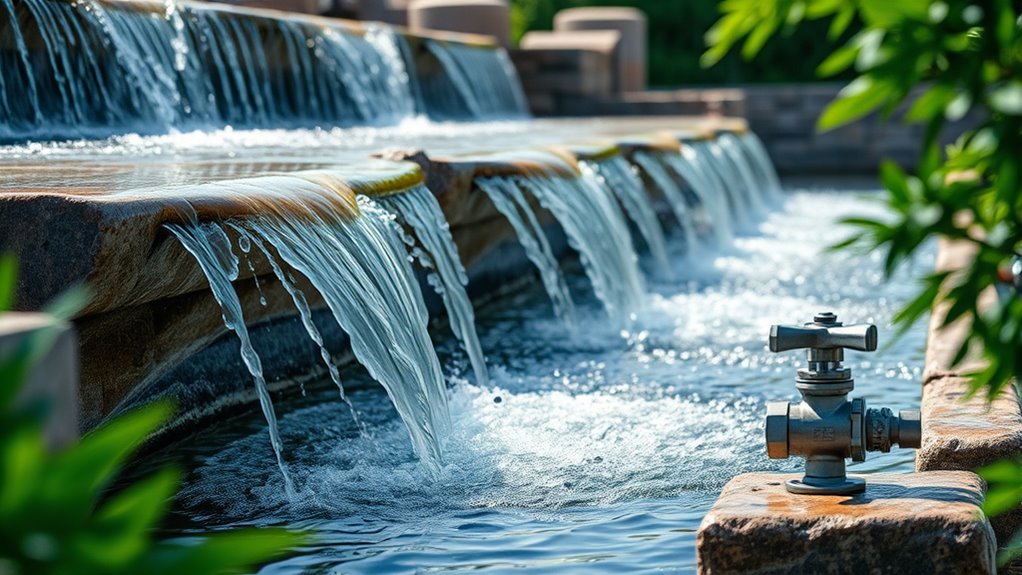

When designing a water feature, focus on hydraulic considerations like flow rate and pump selection to guarantee smooth operation and visual appeal. You should match the pump’s capacity to the water flow needed, accounting for pipe friction, elevation, and restrictions. Properly balancing these factors prevents issues like noise, stagnation, and pump stress. Pay attention to hydraulic efficiency to save energy and extend equipment life. Keep going—you’ll discover how to optimize your system for long-lasting beauty and performance.
Key Takeaways
- Proper pump selection ensures adequate flow rate and head height, preventing system stress and inefficiency.
- Hydraulic head includes pipe friction, elevation, and restrictions, affecting overall water flow.
- Balancing flow rate with system resistance avoids noise, splashing, and stagnation issues.
- Hydraulic efficiency optimization reduces energy consumption and prolongs equipment lifespan.
- Proper system design maintains consistent water movement, enhances aesthetics, and ensures long-term reliability.
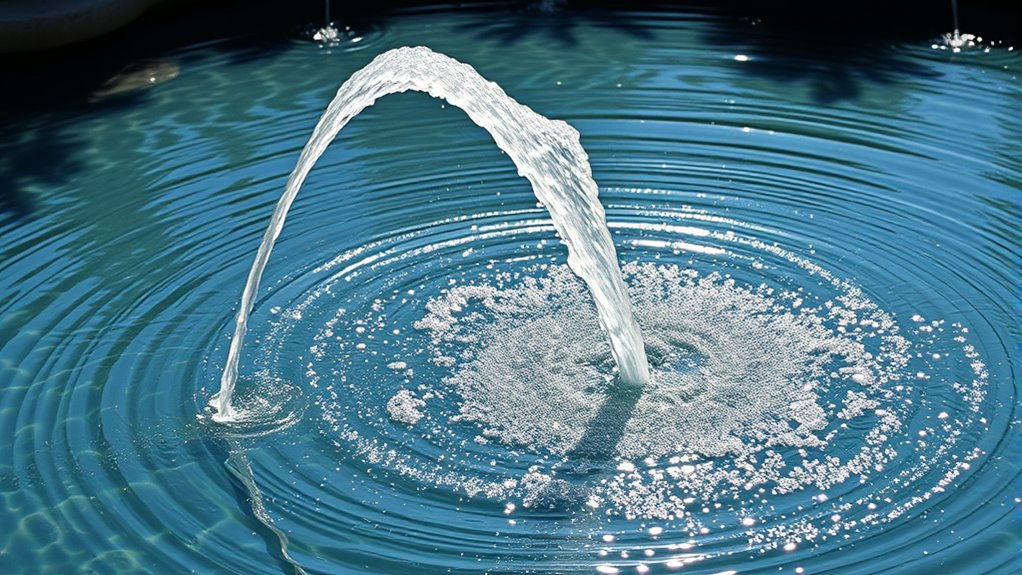
Have you ever wondered what makes a water feature function smoothly and reliably? The key lies in understanding the hydraulic principles that keep water flowing seamlessly through the system. Two critical factors you need to focus on are the flow rate and pump selection. These elements work together to ensure your water feature operates efficiently, looks beautiful, and avoids common issues like noise, vibration, or poor circulation.
First, consider the flow rate, which measures how much water moves through the system over a specific period, usually expressed in gallons per minute (GPM) or liters per hour (LPH). Finding the right flow rate is essential because too high a rate can cause excessive splashing, noise, and stress on the pump and plumbing. Conversely, too low a flow rate might result in stagnant water, poor aeration, and insufficient circulation, leading to algae growth and water quality problems. To determine the appropriate flow rate, think about the size of your water feature and the desired aesthetic effect. For example, a gentle waterfall might need a lower flow rate, while a fountain with a prominent spray demands a higher one. Maintaining the proper flow rate ensures the water moves smoothly, maintains clean circulation, and enhances the overall visual appeal.
Next, pump selection is vital because it directly influences the flow rate and overall hydraulic performance. When choosing a pump, you need to match its capacity with your desired flow rate, but also consider factors like head height, plumbing size, and energy efficiency. The pump must provide enough power to push water through pipes, filters, and nozzles without overworking or causing unnecessary noise. An undersized pump won’t generate adequate flow, while an oversized one may consume more energy than needed and cause unnecessary wear. Carefully evaluate the pump’s specifications—such as its maximum head height and flow rate at different resistances—to ensure it aligns with your water feature’s design. Proper pump selection also involves considering the system’s total dynamic head, which encompasses pipe friction, elevation changes, and any restrictions caused by nozzles or filters. Additionally, paying attention to hydraulic efficiency can help optimize performance and conserve energy. By matching the pump’s capabilities to your system’s hydraulic demands, you prevent stress on the equipment and ensure consistent, dependable operation.

VIVOSUN 800GPH Submersible Pump(3000L/H, 24W), Ultra Quiet Water Fountain Pump with 10ft. High Lift with 6.5ft. Power Cord, 3 Nozzles for Fish Tank, Pond, Aquarium, Statuary, Hydroponics Green
Specs & Dimensions: 4.33*3.5*4.1 inches; Max flow rate: 800 GPH (3000L/H); Max lift height: up to 10 ft.;…
As an affiliate, we earn on qualifying purchases.
As an affiliate, we earn on qualifying purchases.
Frequently Asked Questions
How Do Temperature Changes Affect Water Flow in Features?
Temperature changes cause water flow in your features to fluctuate due to thermal expansion. When water warms, it expands, potentially reducing flow rate and causing flow rate fluctuations. Conversely, cooler temperatures contract water, increasing flow and pressure. You should monitor these variations and adjust pumps or valves accordingly to maintain consistent flow. Managing thermal effects guarantees your water feature operates smoothly despite temperature shifts.
What Are the Best Materials for Minimizing Hydraulic Noise?
If you’re seeking quiet water features, choose materials like rubber or foam-lined pipes, as they provide excellent sound insulation and reduce hydraulic noise. These materials also boast high durability, ensuring long-lasting performance. Imagine the soothing sound of flowing water without disruptive rattles or hums—these materials help you achieve that tranquility. By selecting the right options, you create a peaceful, durable feature that minimizes noise and enhances your outdoor experience.
How Can I Prevent Algae Buildup in Water Features?
To prevent algae buildup in your water feature, you should focus on algae prevention and water treatment. Regularly clean the feature, remove debris, and maintain proper water circulation. Use an algae inhibitor or water treatment with algaecide to inhibit growth. Make certain the water’s pH levels stay balanced, and consider installing a UV sterilizer. These steps keep your water clear and healthy, reducing algae without harsh chemicals.
What Is the Optimal Pump Size for Different Water Feature Types?
You should select a pump with a capacity that matches your water feature’s size and type. For small ponds, a pump with a lower flow rate works best, while larger waterfalls need higher flow rate pumps for proper circulation. Focus on flow rate optimization to prevent over or under-pumping, which can cause issues like noise, wear, or algae buildup. Always choose a pump that provides adequate capacity without overworking your system.
How Does Water Pressure Influence Fountain Spray Patterns?
Water pressure directly affects fountain spray patterns by controlling pressure dynamics, which determine how high and wide the spray can go. Higher pressure results in more dynamic, expansive sprays, while lower pressure produces gentle, controlled flows. You can adjust pressure settings to refine spray control, ensuring your fountain achieves the desired visual effect and performance. Properly managing pressure is essential for maintaining consistent, beautiful water displays.

Portable Transfer Pump Battery Operated Electric Siphon Pump for Gas, Fuel, Diesel, Water Transfer 2.4 GPM Flow Oil Extractor, 47 Inches Hose-Easy to Use Hand Fuel Pump, Multi-Use Siphon Transfer Pump
【Portable Electric Pump】:This transfer pump With a battery-powered design, this gas siphon pump is perfect for on-the-go fuel…
As an affiliate, we earn on qualifying purchases.
As an affiliate, we earn on qualifying purchases.
Conclusion
By understanding hydraulic considerations, you can master the flow of your water feature like a skilled conductor guiding an orchestra. Proper planning ensures smooth circulation, efficient water use, and a stunning visual effect. Remember, neglecting these principles can turn your beautiful fountain into a chaotic splash zone. So, approach your project with care and knowledge—think of it as tuning an instrument for perfect harmony. With attention to detail, your water feature will flow effortlessly and captivate everyone who sees it.

MARSTEK IP65 Automatic Water Pump Controller,Water Pump Pressure Switch Water Flow Sensor Switch Electronic Pump Pressure Regulator for Self-priming Pump,110V-120V~50/60Hz
【Automatic Water Pump Control Switch】: It can turn an ordinary water pump into an automatic water pump, which…
As an affiliate, we earn on qualifying purchases.
As an affiliate, we earn on qualifying purchases.
VIVOSUN 800GPH Submersible Pump(3000L/H, 24W), Ultra Quiet Water Fountain Pump with 10ft. High Lift with 6.5ft. Power Cord, 3 Nozzles for Fish Tank, Pond, Aquarium, Statuary, Hydroponics Green
Specs & Dimensions: 4.33*3.5*4.1 inches; Max flow rate: 800 GPH (3000L/H); Max lift height: up to 10 ft.;…
As an affiliate, we earn on qualifying purchases.
As an affiliate, we earn on qualifying purchases.