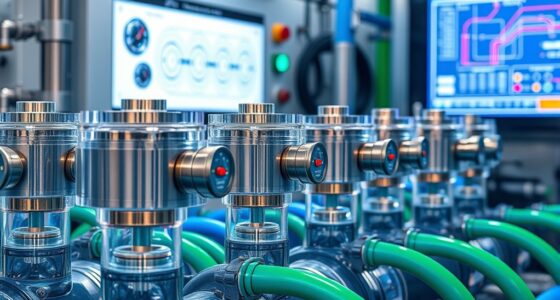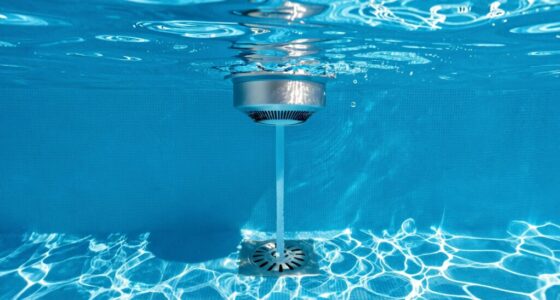

To maximize hydraulic efficiency and minimize head loss, focus on reducing resistance caused by friction. Choose smooth pipe materials, avoid unnecessary bends or obstructions, and maintain proper pipe sizing with gentle changes. Keep flow velocities within ideal ranges to prevent turbulence and excessive friction. Planning your layout to reduce fittings and sharp turns can markedly lower energy losses. To discover more about effective head loss reduction techniques, keep exploring these strategies and approaches.
Key Takeaways
- Use smooth pipe materials and maintain proper lubrication to reduce internal surface roughness and friction.
- Design piping with gentle curves, longer straight runs, and gradual transitions to minimize turbulence and head loss.
- Select appropriate pipe diameters to optimize flow velocity and decrease resistance.
- Limit the number of fittings, joints, and sharp bends to reduce energy dissipation.
- Maintain optimal flow velocities within recommended ranges to balance efficiency and minimize turbulence.
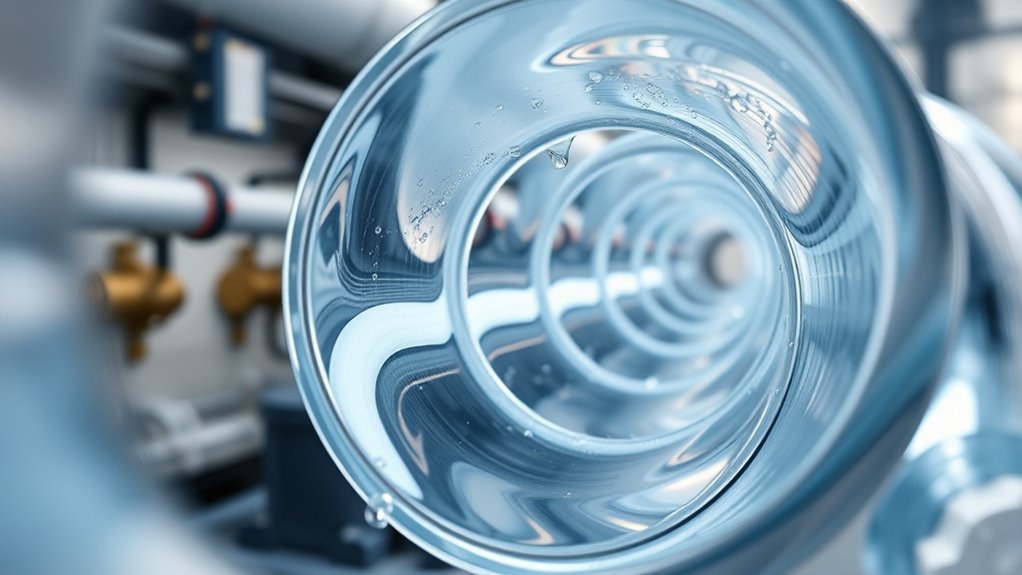
Have you ever wondered how efficiently a hydraulic system converts energy into useful work? The key lies in minimizing head loss, which can considerably impact system performance. One of the most effective ways to achieve this is through friction reduction. Friction occurs when hydraulic fluid flows through pipes and components, creating resistance that wastes energy. By reducing this resistance, you allow more of the input energy to be transformed into productive work rather than lost as heat. To do this, you want to focus on selecting pipe materials with smooth internal surfaces, such as polished steel or certain plastics, which minimize surface roughness. Additionally, maintaining proper lubrication and avoiding unnecessary bends or obstructions in the piping can help keep friction levels low.
Another critical aspect is pipe design, which directly influences how fluid moves through your system. Proper pipe sizing is essential; pipes that are too narrow increase velocity, leading to higher friction losses, while overly large pipes may be inefficient and costly. The goal is to find the ideal diameter that balances flow rate with minimal resistance. When designing the piping layout, keep in mind that long, straight runs with gentle bends are preferable. Sharp elbows and sudden expansions or contractions create turbulence, increasing head loss. Using gradual transitions instead of abrupt changes helps maintain smooth flow and reduces energy dissipation.
Furthermore, pay attention to the overall system layout. Proper pipe routing minimizes the number of fittings and turns, which are notorious for adding to head loss. Incorporating streamlined fittings and avoiding unnecessary valves or joints can make a notable difference in efficiency. When you plan your pipe network, consider the flow velocity; keeping it within recommended ranges prevents excessive friction and turbulence. Too high a velocity boosts frictional losses, while too low may decrease throughput and system efficiency.

2Pcs Compression Bulkhead Fitting, 316 Stainless Steel Double Ferrule Connector, High Pressure Bulkhead Hydraulic Fitting with Smooth Polish for Water Gas Oil Pipe Wall (F8)
High-Pressure Resistance: This 316 stainless steel compression bulkhead fitting delivers reliable sealing under high pressure, ideal for demanding…
As an affiliate, we earn on qualifying purchases.
As an affiliate, we earn on qualifying purchases.
Frequently Asked Questions
How Does Pipe Material Affect Head Loss?
You’ll notice that pipe material greatly impacts head loss because rougher pipe surfaces, due to higher pipe roughness, increase friction and reduce efficiency. Materials prone to corrosion, like cast iron, can develop roughness over time, raising head loss further. Choosing smoother, corrosion-resistant materials like PVC or HDPE helps minimize head loss, ensuring better flow efficiency and less energy needed to pump fluids through your system.
What Role Does Fluid Viscosity Play in Hydraulic Efficiency?
Fluid viscosity impacts hydraulic efficiency by increasing flow resistance, which leads to higher head loss. When the fluid is more viscous, it resists movement within the pipe, making it harder for the flow to maintain its velocity. This additional resistance reduces overall efficiency, requiring more energy to pump the fluid through the system. To optimize efficiency, you should consider using less viscous fluids or minimizing viscosity effects through temperature control.
Can Head Loss Be Completely Eliminated in Piping Systems?
You can’t completely eliminate head loss in piping systems, as even minor imperfections matter. Did you know that increased flow velocity can raise head loss exponentially? To minimize it, focus on reducing pipe roughness and controlling flow velocity. While perfect efficiency is impossible, optimizing these factors substantially improves hydraulic performance and reduces energy costs, making your system more effective and sustainable over time.
How Does Pipe Diameter Influence Energy Consumption?
You can substantially reduce energy consumption by increasing pipe diameter because it lowers flow velocity, which reduces head loss. When flow velocity decreases, the energy needed to pump fluid drops. Additionally, a larger diameter minimizes the impact of pipe roughness, further decreasing resistance. This means less power is required to move the same amount of fluid, making your system more efficient and saving operational costs over time.
What Maintenance Practices Reduce Head Loss Over Time?
You should regularly perform corrosion prevention measures and debris removal to reduce head loss over time. Corrosion prevention keeps pipe walls smooth, minimizing friction, while debris removal ensures flow isn’t obstructed. Schedule inspections and cleanings, use protective coatings, and address any corrosion promptly. These practices maintain ideal pipe condition, lowering head loss, and improving overall hydraulic efficiency, saving energy and reducing operational costs.

Drip Irrigation Adapter 1/2-inch 90-Degree Elbow NPT Pipe Fitting (1/2 Female to 1/2 male Elbow)
10pc 1/2-inch 90-Degree Elbow NPT pipe Fitting .Fit perfectly for your connector and tubing .
As an affiliate, we earn on qualifying purchases.
As an affiliate, we earn on qualifying purchases.
Conclusion
By understanding hydraulic efficiency, you can reduce head loss, improve system performance, and save energy. Focus on minimizing friction, optimizing pipe design, and maintaining equipment to keep water flowing smoothly. Remember, every effort you make to enhance efficiency leads to lower costs, longer system life, and greater reliability. Keep these principles in mind, stay proactive, and you’ll guarantee your hydraulic systems operate at their best—maximizing performance and minimizing losses every step of the way.

Calculated Industries 4095 Pipe Trades Pro Advanced Pipe Layout and Design Math Calculator Tool for Pipefitters, Steamfitters, Sprinklerfitters and Welders | Built-in Pipe Data for 7 Materials , White
GET INSTANT ANSWERS for all your pipe layout and design problems so you can get to building; when…
As an affiliate, we earn on qualifying purchases.
As an affiliate, we earn on qualifying purchases.

VEVOR Hydraulic Exhaust Pipe Expander, 1-5/8 to 4-1/4 Inch, 10 T Manual Hydraulic Pipe Stretcher, w/4 Dies and 2 Case, for Copper Aluminum Tubes in Car Repairing
As an affiliate, we earn on qualifying purchases.
As an affiliate, we earn on qualifying purchases.