
In pool plumbing, laminar flow is smooth and steady, with water moving in parallel layers, which helps systems run quietly and efficiently. Turbulent flow, on the other hand, is chaotic with swirling movements, causing noise and wear on pipes. Maintaining laminar flow minimizes pressure drops and maximizes filtration. If you want to keep your system operating smoothly, understanding how to control these flow types can make all the difference—you’ll find out more as you continue.
Key Takeaways
- Laminar flow is smooth and orderly, while turbulent flow is chaotic with mixing and eddies.
- Laminar flow reduces pressure loss and noise, benefiting filtration and circulation.
- Turbulent flow occurs at high velocities or with rough pipe surfaces, increasing resistance.
- Proper pipe sizing and material choice help maintain laminar flow and system efficiency.
- Excessive turbulence can cause wear, noise, and energy loss in pool plumbing systems.
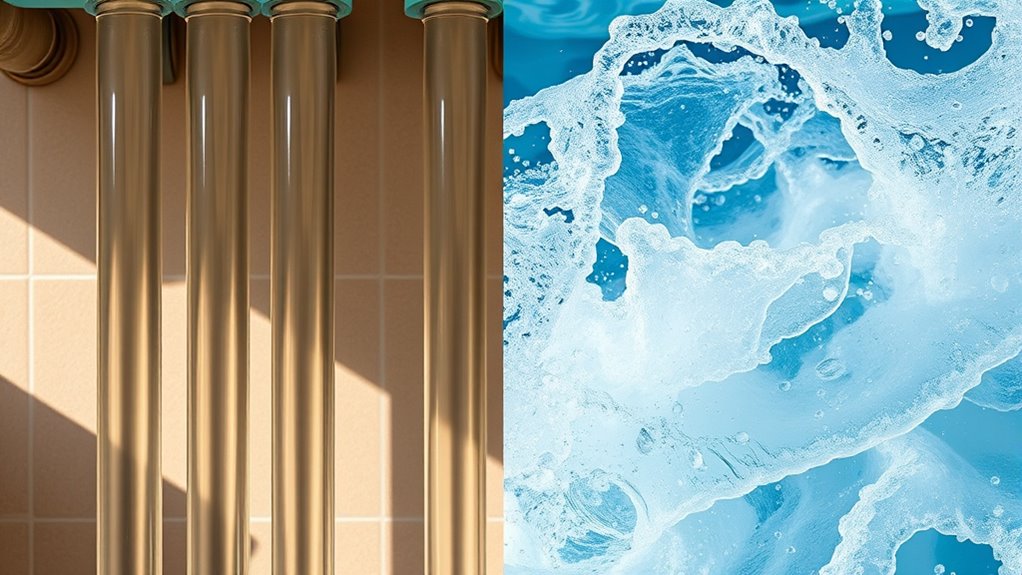
Understanding flow in pool plumbing is essential for maintaining an efficient and properly functioning system. When you’re setting up or troubleshooting your pool’s plumbing, it’s important to grasp how water moves through the pipes and what factors influence that movement. Two key concepts to consider are the pipe material and the flow rate, both of which directly impact whether the flow remains smooth and controlled or becomes chaotic and inefficient.
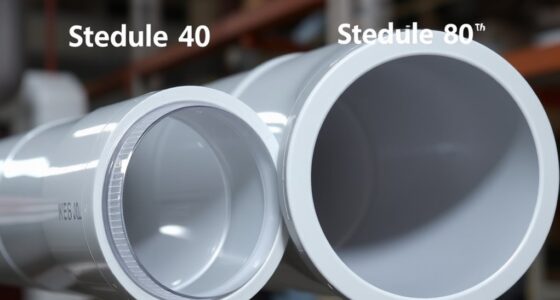
Your choice of pipe material plays a significant role in how water flows through your system. Different materials, such as PVC, copper, or flexible hoses, have varying levels of internal smoothness and resistance. PVC pipes are popular because they offer a smooth interior surface, which helps maintain a steady flow and reduces friction losses. Copper pipes are durable but may have slightly different flow characteristics due to their material properties. The flow rate, which measures how much water moves through a pipe per unit of time, is also affected by the pipe’s diameter and material. A larger diameter allows for a higher flow rate with less resistance, while smaller pipes can restrict flow and increase pressure.
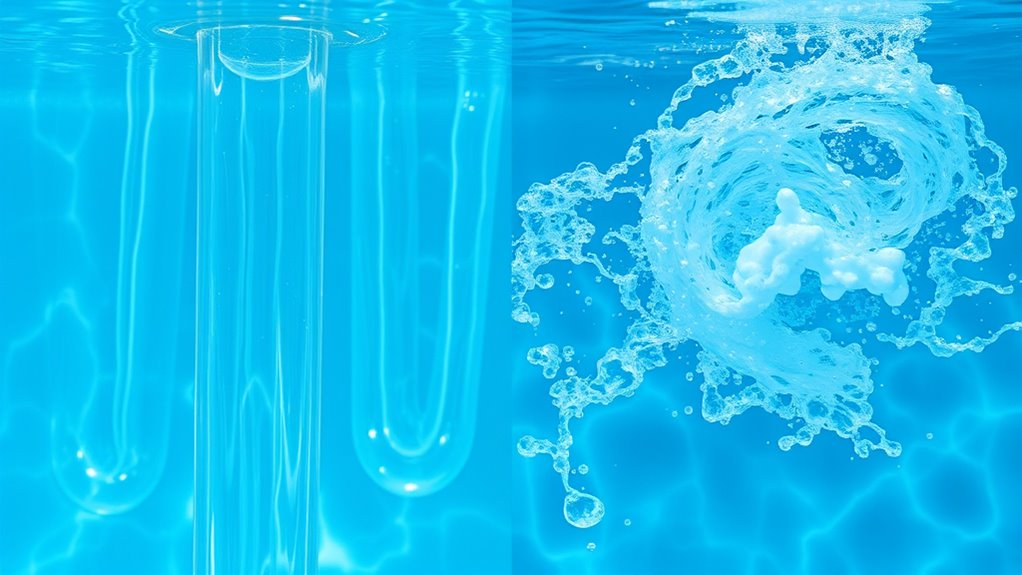
When water moves through your pool plumbing, it can do so in different ways, mainly classified as laminar or turbulent flow. Laminar flow occurs when water moves in smooth, parallel layers, with little mixing between them. In this state, the flow is steady, quiet, and predictable, which is ideal for efficient filtration and circulation. You want to encourage laminar flow in your system because it minimizes energy loss and reduces wear on components. On the other hand, turbulent flow is characterized by chaotic, swirling motion, with multiple eddies and mixing. This usually happens when flow rates are high or when pipe roughness and obstructions disturb the water’s smooth movement. Turbulent flow can cause increased pressure drops, noise, and wear on pipes and fittings, ultimately making your system less efficient.
To keep your pool’s plumbing operating at its best, you need to manage the flow rate carefully. Too high a flow rate can shift your system into turbulent flow, leading to noise and inefficiencies. Conversely, too low a flow rate might hinder proper filtration and circulation. The goal is to strike a balance where flow remains mainly laminar, ensuring smooth operation without unnecessary strain on your pump and pipes. Adjustments like increasing pipe diameter, choosing smoother pipe materials, or controlling pump speed can help maintain the desired flow characteristics. By understanding how pipe material and flow rate influence the type of flow, you can design and maintain a pool plumbing system that runs efficiently, quietly, and reliably. Additionally, flow resistance can be minimized by selecting pipe materials with smoother surfaces and appropriate sizing, contributing to overall system efficiency.
Top picks for "laminar turbulent flow"
Open Amazon search results for this keyword.
As an affiliate, we earn on qualifying purchases.
Frequently Asked Questions
How Does Pipe Material Affect Flow Type?
You’ll notice pipe material greatly influences flow type through pipe roughness and corrosion. Smooth materials like PVC promote laminar flow, reducing friction and energy use. Conversely, rougher materials like metal increase turbulence, especially as roughness accumulates from corrosion. Corrosion can roughen surfaces over time, pushing flow toward turbulence. Choosing corrosion-resistant, smooth pipes helps maintain consistent flow and minimizes energy costs in your pool plumbing system.
Can Flow Type Change Over Time?
Flow type can change over time due to flow stability and shift triggers. Slight alterations in water velocity, pipe roughness, or pressure can disrupt the stable laminar flow, causing it to become turbulent. Conversely, smooth conditions or reduced flow rates may restore laminar flow. External factors like debris buildup or pipe corrosion also act as transition triggers, making flow type dynamic and subject to change based on operating conditions.
What Tools Diagnose Flow in Pool Plumbing?
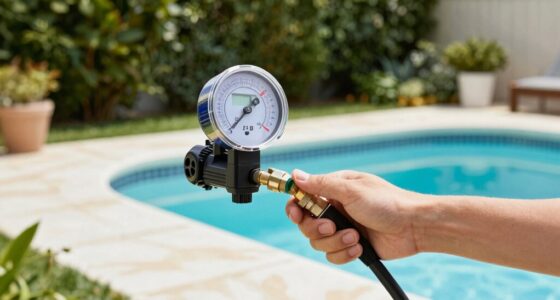
To diagnose flow in your pool plumbing, you can use flow sensors and pressure gauges. Flow sensors measure the actual water movement, helping you identify if flow is laminar or turbulent. Pressure gauges monitor pressure differences throughout the system, indicating blockages or flow issues. By checking these tools regularly, you can detect changes in flow, troubleshoot problems, and guarantee your pool’s plumbing operates efficiently and safely.
Does Flow Type Impact Pool Chemical Distribution?
Think of your pool’s water flow as a dance—smooth or chaotic, it affects how well chemicals mix. Yes, flow type impacts chemical distribution; turbulent flow stirs the water like a whirlpool, promoting better water circulation and chemical mixing. Laminar flow, on the other hand, moves gently, potentially leaving chemicals unevenly spread. Ensuring a proper flow type guarantees your pool stays clean, balanced, and inviting.
How Do External Factors Influence Flow Regime?
External factors like pressure fluctuations and temperature effects substantially influence your flow regime. When pressure fluctuates, it can cause shifts between laminar and turbulent flow, affecting how water moves through your pool system. Higher temperatures tend to increase water velocity, promoting turbulence. You should monitor these factors closely, as they impact flow consistency, chemical distribution, and overall pool performance, helping you maintain ideal conditions and prevent issues.
Conclusion
Understanding laminar and turbulent flow helps you keep your pool’s plumbing running smoothly. Think of laminar flow as a gentle stream, quietly gliding along without fuss, while turbulent flow is like a lively river, bubbling and churning with energy. By recognizing these behaviors, you can better manage flow rates and prevent potential issues. When you tune into these currents, your pool system stays calm and clear, much like a peaceful pond after a gentle rain.