Understanding pump curves helps you choose a pool pump that fits your needs, runs efficiently, and lasts longer. These curves show how flow rate relates to pressure, helping you prevent issues like under- or over-pumping. By knowing key terms and what to look for, you can compare models confidently. Continue exploring this guide to learn how to select the right pump and keep it running at peak performance.
Key Takeaways
- Understand how pump curves display flow rate versus head pressure to select the right pump for your pool size.
- Learn key terms like flow rate, head height, and operating point to interpret performance data accurately.
- Match pump performance curves with your pool’s needs to ensure efficient circulation and prevent system strain.
- Consider system head losses, pipe size, and length, as they impact the pump’s performance and selection.
- Regularly review pump curves and maintenance signs to ensure optimal operation and extend your pump’s lifespan.
What Is a Pool Pump Curve and Why Should You Care?
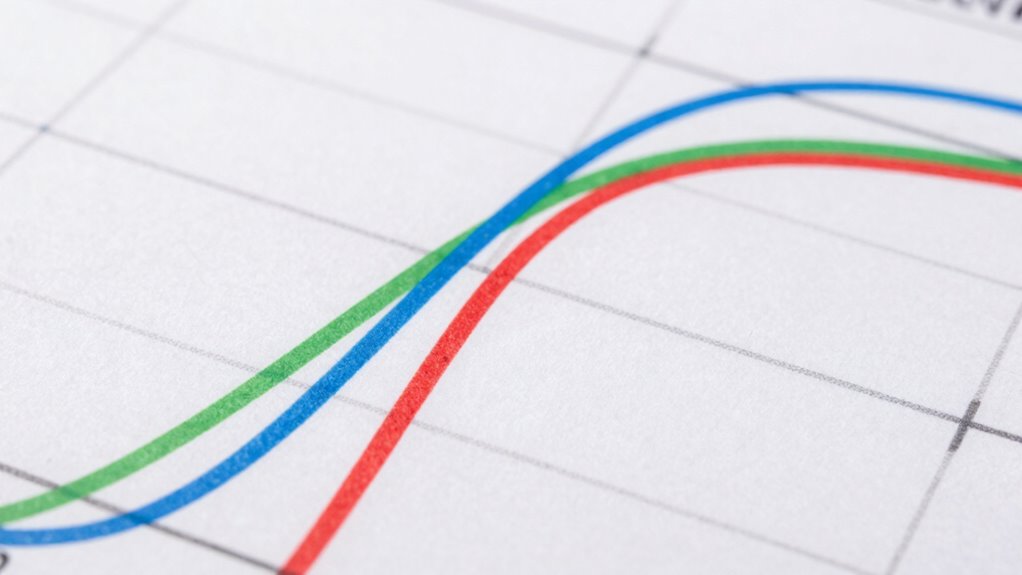
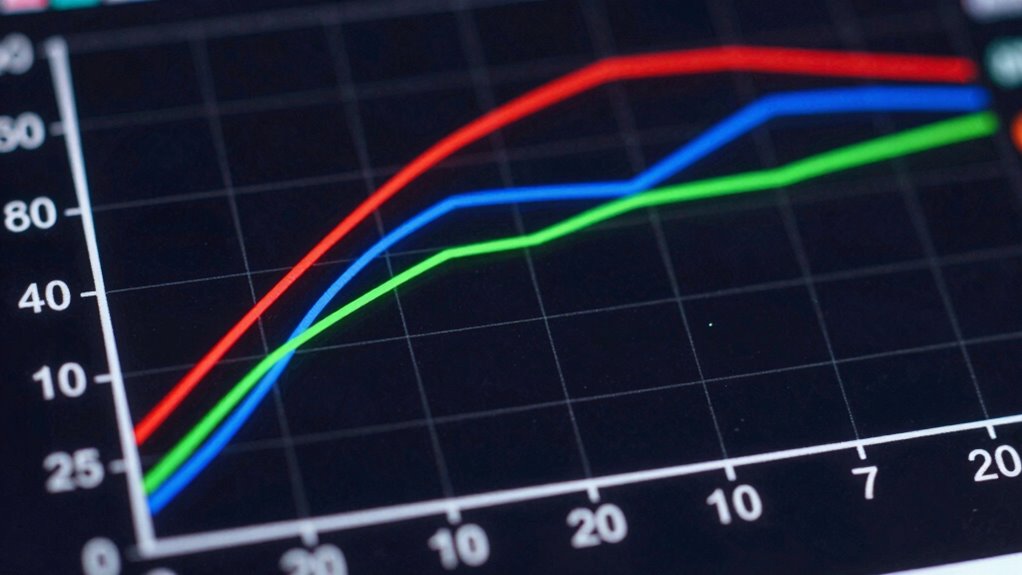
A pool pump curve is a graph that shows how a pump performs at different flow rates and pressures. Understanding this helps you with pool maintenance by ensuring your pump operates efficiently and effectively. Proper pump performance maintains clear water and balanced water chemistry, preventing issues like algae growth or cloudy water. When you know your pump’s capabilities, you can avoid under- or over-pumping, which can affect water quality. A good grasp of the pump curve also helps you troubleshoot problems and select the right pump for your pool’s size and plumbing. Additionally, appropriate pump selection based on the curve prevents unnecessary wear and tear on your equipment. Recognizing the performance characteristics of your pool pump allows for more precise adjustments, optimizing overall pool system efficiency. Being familiar with pump curves also aids in system troubleshooting, making it easier to identify and resolve issues quickly. Understanding pump performance further enhances your ability to match the pump with your pool’s specific needs, ensuring longevity and reliable operation. Moreover, understanding how different system variables affect pump performance can help you fine-tune your setup for optimal results. Ultimately, paying attention to the pump curve ensures your pool stays clean, safe, and inviting—saving you time and money on repairs and chemical imbalances.
Reading a Pump Curve: Key Terms You Need to Know
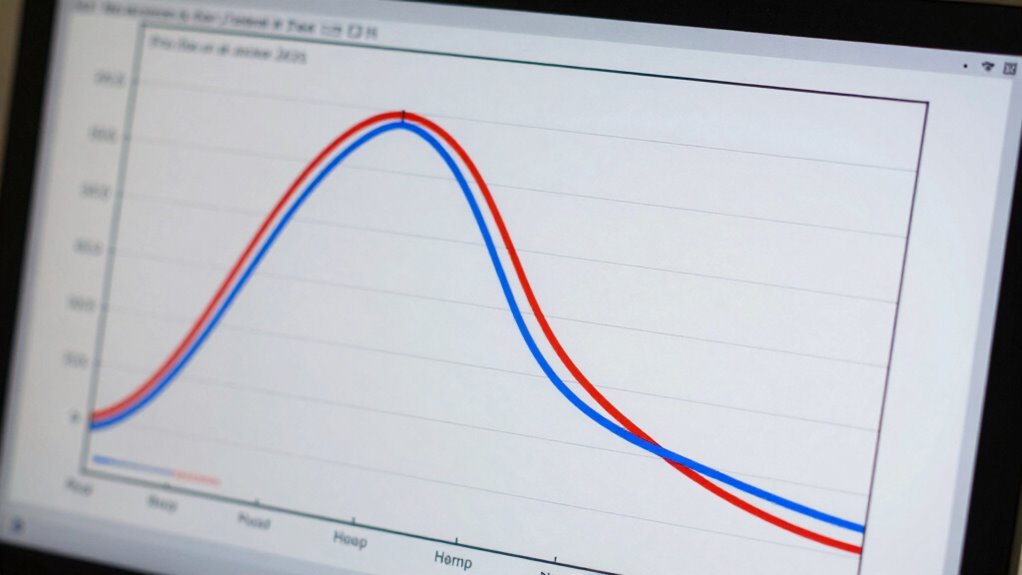
Understanding a pump curve requires knowing some key terms that describe how your pool pump performs. These terms help you interpret the graph and make informed decisions. For example, the flow rate indicates how much water your pump moves, while head height shows the resistance it can overcome. Familiarity with pump specifications ensures you select the right model, and knowing these terms guides proper installation tips. Additionally, comprehending how Free Floating influences the water movement can assist in optimizing your pool system’s efficiency.
Knowing how Hydrotherapy techniques can complement your pool setup can also enhance your experience, especially if relaxation and recovery are priorities. Key terms to understand include:
- Flow Rate
- Head Height
- Pump Efficiency
- Shut-off Head
- Operating Point
Mastering these concepts allows you to match your pump to your pool’s needs, optimize performance, and avoid common installation pitfalls. Clear understanding of these terms supports smarter choices when reading pump curves and selecting the best pump for your setup.
What Do Head and Flow Rate Tell You About Your Pump?
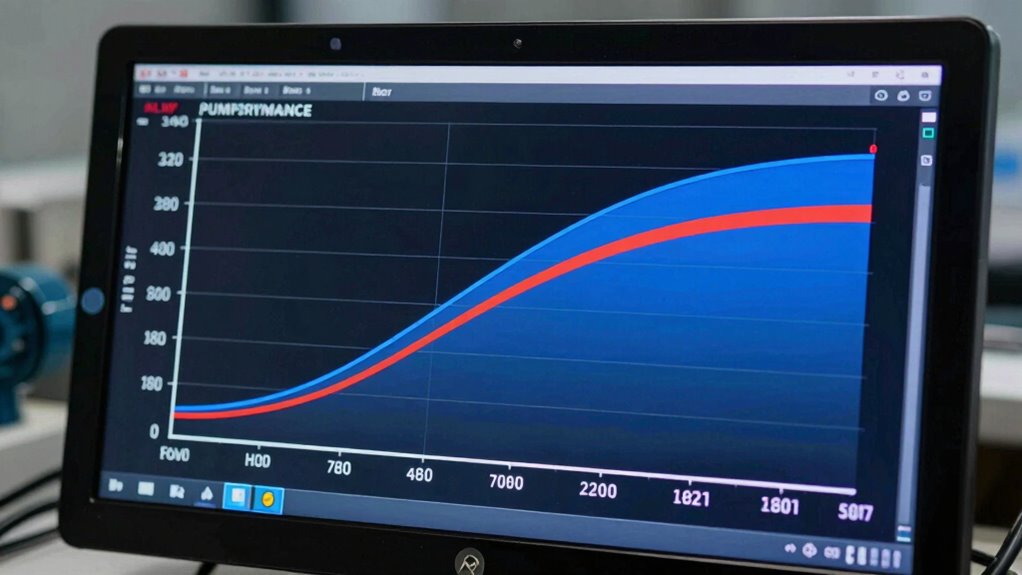
Knowing what head and flow rate reveal about your pump helps you evaluate its performance and suitability for your pool. Head indicates the pressure your pump generates to push water through your filter, affecting filter maintenance and overall clarity. A higher head means more pressure, which can lead to increased pump noise and wear if it’s too high for your system. Flow rate shows how much water the pump moves per minute, directly impacting circulation and cleanliness. If the flow rate is too low, your pool may not filter properly; too high, and it could strain the system. Understanding these two factors helps you choose a pump that balances performance, efficiency, and quiet operation, reducing unnecessary filter maintenance and noise issues. Additionally, pump performance can be optimized by selecting a pump with the appropriate head and flow rate for your pool size and system design. Properly matching these specifications ensures system longevity and efficient operation, saving you time and money on repairs and energy costs. When selecting a pump, considering system compatibility can further enhance overall efficiency and reduce operational noise. Moreover, paying attention to these parameters can help prevent system strain, which may otherwise lead to premature equipment failure.
How to Use Pump Curves to Find the Perfect Pool Pump for Your Backyard
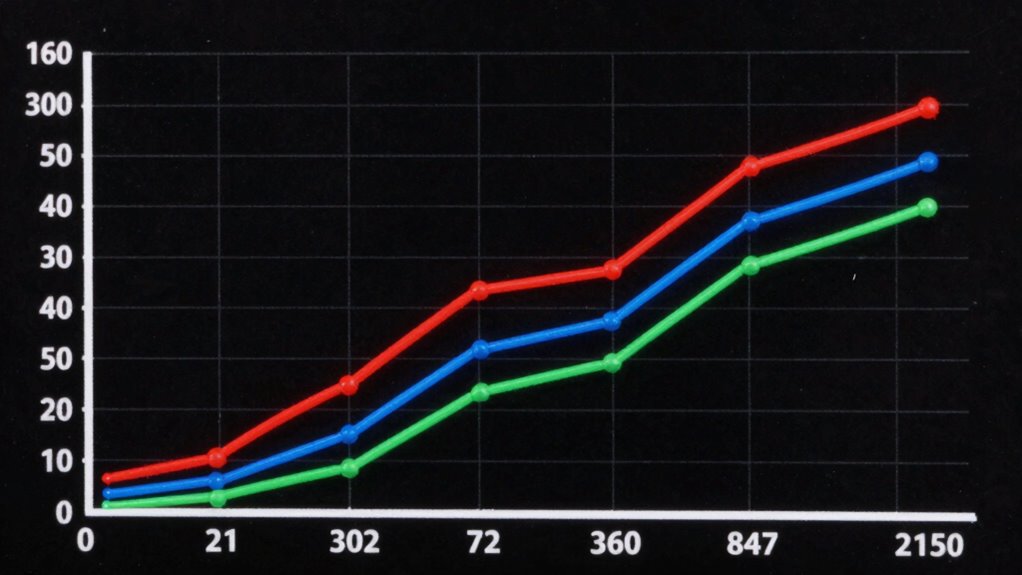
Understanding pump curves helps you choose the right pool pump by showing how different models perform at various flow rates. By matching the curve to your pool’s size and needs, you make certain of efficient circulation and energy savings. Interpreting performance data allows you to pick a pump that keeps your backyard pool crystal clear without wasting power.
Understanding Pump Curves
Pump curves are essential tools that help you determine which pool pump will best meet your backyard’s needs. They display the relationship between flow rate and pressure, guiding you to select a pump with ideal pump durability and easy access to replacement parts. Understanding how to read these curves allows you to compare models effectively and avoid over- or under-pumping, which can impact your system’s efficiency. Look for curves that match your desired flow rate at a specific head height. Keep in mind that a pump with higher durability often comes with readily available replacement parts, ensuring longevity. Additionally, analyzing the hydraulic performance of pump curves can help optimize energy efficiency and system reliability. By analyzing pump curves carefully, you can make an informed choice, saving money and hassle in the long run. Pay attention to the body jewelry measurements when considering pump components that require precise fitting to prevent leaks or damage. Recognizing the importance of pump durability can also guide you toward models that withstand regular use and environmental factors. Considering system compatibility ensures that the selected pump integrates smoothly with your existing pool setup. For optimal results, understanding the performance characteristics of different pump models can further assist in selecting a system that meets your specific needs.
Matching Pump to Pool
Choosing the right pool pump starts with matching its performance to your backyard’s specific needs. To do this, use pump curves to determine the flow rate and head height that suit your pool size and plumbing setup. A pump that’s too powerful can cause unnecessary strain, increasing the risk of pump repairs and complicating pool maintenance. Conversely, an undersized pump won’t circulate water effectively, leading to algae growth and poor water quality. By analyzing pump curves, you can select a model that offers ideal flow at the required head, ensuring efficient operation. This precise match reduces strain on your system, minimizes future repairs, and keeps your pool properly maintained, saving you time and money in the long run.
Interpreting Performance Data
Interpreting performance data from pump curves is essential for selecting the right pool pump. It helps you understand how a pump will perform at various flow rates and pressures, guaranteeing ideal circulation. When examining curves, focus on the flow rate needed for your pool size, considering chemical compatibility to prevent corrosion or damage. Pay attention to the head loss, which affects the pump’s efficiency, and verify installation requirements like plumbing size and space. Additionally, check if the pump’s performance aligns with your pool’s filtration needs. Proper interpretation ensures you avoid over- or under-pumping, saving energy and prolonging equipment life. Reviewing pump specifications can further ensure compatibility with your setup and needs. Understanding battery inverter generator capacity can also help you plan for backup power during maintenance or outages. Being aware of pump performance curves enables you to select a model that optimizes energy use while maintaining effective filtration.
Signs Your Pump Might Be Underperforming Based on Its Curve
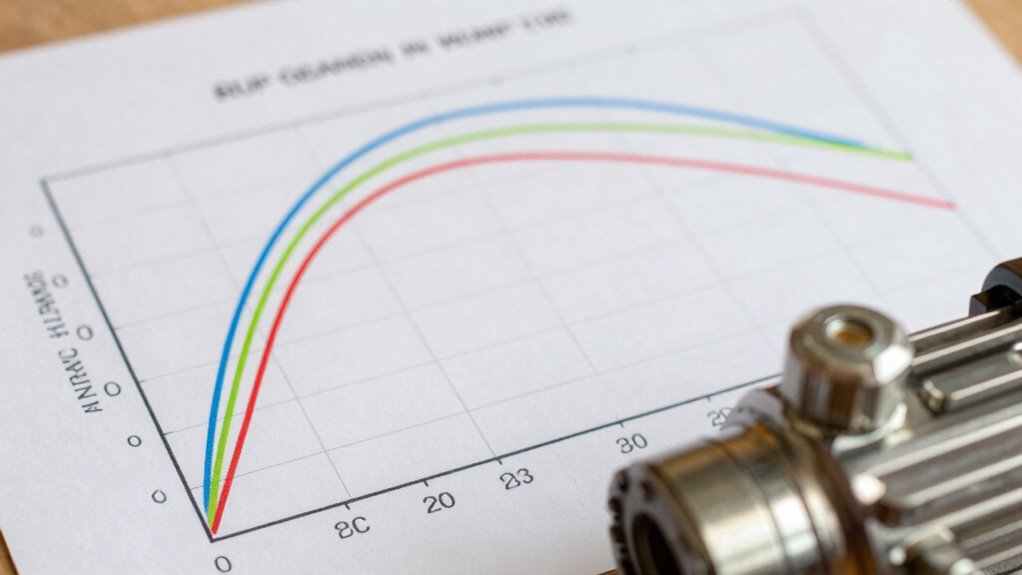
If you notice your pump’s flow rate is dropping unexpectedly, it could be a sign it’s underperforming. Unusual noise levels, like grinding or rattling sounds, also indicate something might be wrong. Paying attention to these signs helps you catch issues early before they cause more damage.
Flow Rate Drops
Have you noticed a sudden drop in your pump’s flow rate? This could indicate your pump isn’t performing ideally. Common signs include:
- Reduced water circulation, slowing pool cleaning
- Increased pump noise or vibration
- Decreased pressure readings on your gauge
- Visible water leaks around valves or fittings
- Persistent filter clogging despite regular cleaning
Flow rate drops often point to issues like filter clogging or valve leaks that restrict water flow. These problems can cause your pump to work harder, decreasing efficiency. Regularly inspecting and maintaining filters, ensuring valves are sealed properly, and monitoring flow rates can help catch these signs early. Addressing these issues promptly keeps your system running smoothly and prolongs the lifespan of your pump.
Unusual Noise Levels
Unusual noise levels from your pump can be a clear sign that it’s not performing ideally. If you notice excessive vibration or strange sounds, it may indicate vibration issues or worn components. Noise troubleshooting involves listening carefully to pinpoint the source, such as bearings or impellers. Common causes include misalignment, debris, or cavitation. Addressing these early prevents further damage and efficiency loss. Here’s a quick overview:
| Noise Type | Possible Cause | Action Needed |
|---|---|---|
| Rattling or banging | Loose parts or debris | Tighten fittings, clear debris |
| High-pitched whine | Worn bearings | Lubricate or replace bearings |
| Vibrations | Misalignment or imbalance | Check alignment, balance impeller |
Stay attentive to noise troubleshooting signs to keep your pump running smoothly.
How to Avoid Over- or Under-Pumping Using Pump Curves
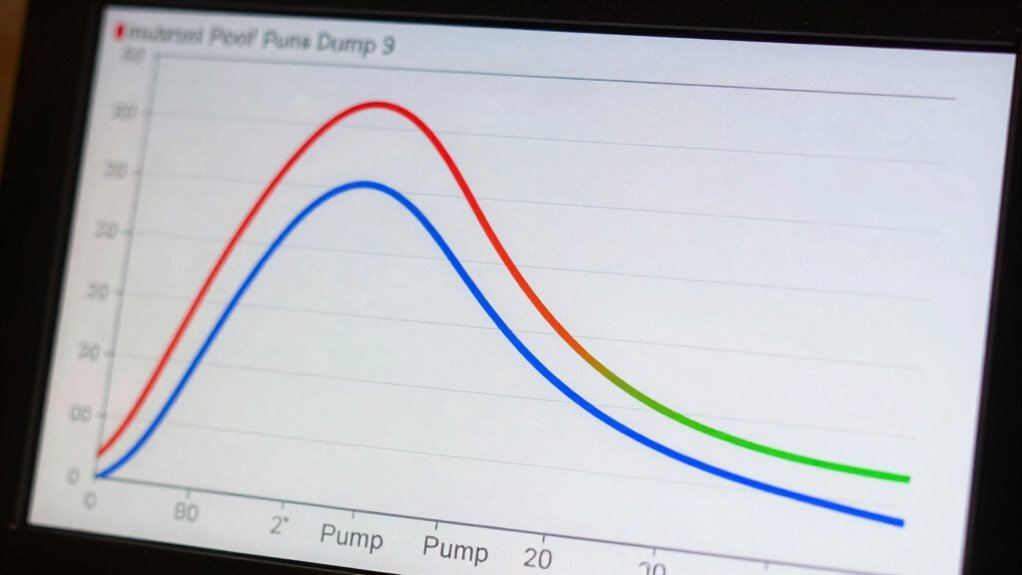
Understanding how to interpret pump curves is essential for preventing over- or under-pumping. To match your pool size with the right pump capacity, focus on the pump’s performance at different flow rates. Proper selection guarantees the pump delivers sufficient circulation without wasting energy or causing damage.
Interpreting pump curves ensures proper flow and prevents over- or under-pumping.
- Match pump capacity to your pool size for ideal flow.
- Use the pump curve to identify the perfect operating point.
- Avoid pumps that are too powerful, which can cause unnecessary wear.
- Steer clear of underpowered pumps that won’t circulate water effectively.
- Consider system head losses when evaluating the curve to maintain proper flow.
What Can Change Your Pump Curve Over Time? Common Factors to Watch For
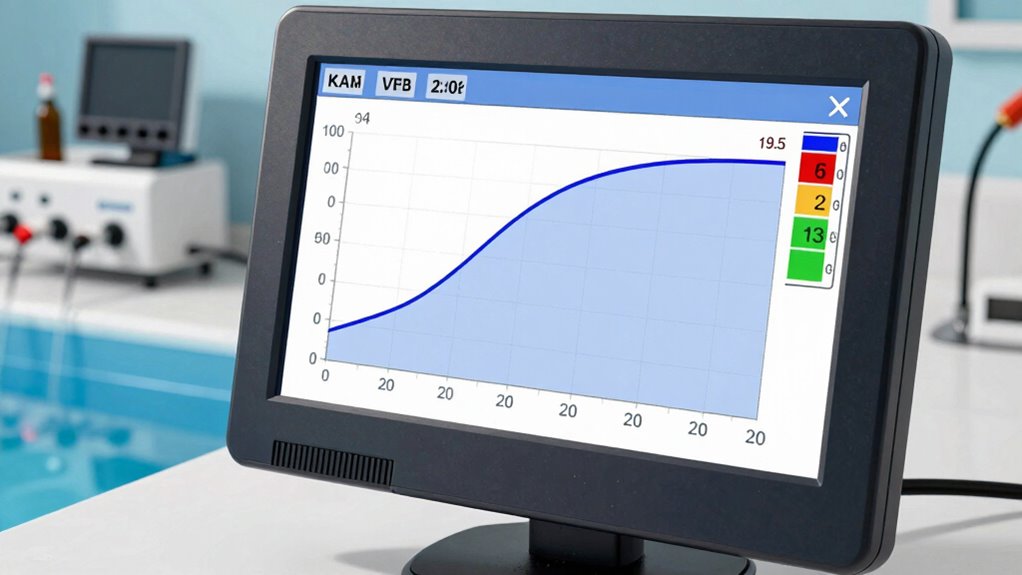
Over time, various factors can cause your pump curve to shift, affecting its performance and efficiency. One common issue is corrosion, which can develop if you neglect corrosion prevention measures. Corrosion inside the pump or its components can reduce flow and pressure, skewing the curve. Additionally, inadequate motor maintenance can lead to worn bearings or overheating, diminishing pump performance. Regularly inspecting and servicing your motor helps maintain prime operation and prevents performance drops. Sediment buildup or debris in the impeller also impacts flow characteristics, altering the pump curve over time. By staying proactive with corrosion prevention and motor maintenance, you can ensure your pump continues to operate close to its original curve, maximizing efficiency and lifespan.
Comparing Different Pool Pumps by Their Curves: What Matters Most
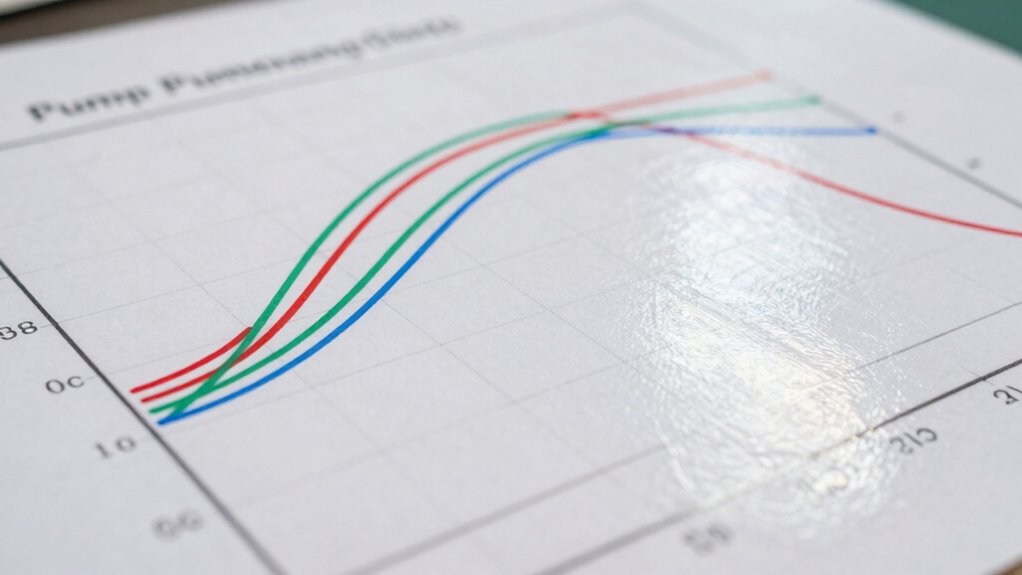
When comparing different pool pumps, examining their pump curves provides valuable insights into how they perform under various conditions. Focus on the following factors to choose the best option:
- Flow rate and head height: Verify the pump meets your pool’s circulation needs.
- Energy consumption: Look for pumps with higher efficiency to save on electricity.
- Curve shape: A flatter curve indicates consistent performance across different flows.
- Maintenance requirements: Choose pumps with accessible parts and clear maintenance tips.
- Durability and warranty: Consider build quality and manufacturer support for long-term reliability.
Tips for Reading Pump Curves at the Store or Online
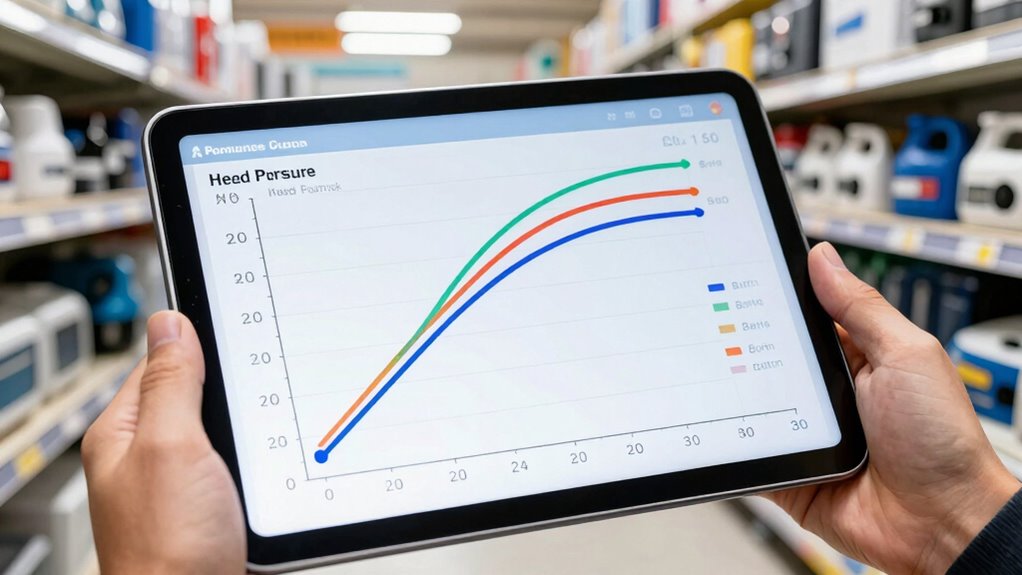
To effectively read pump curves at the store or online, start by focusing on the key data points they display. Look at the flow rate (GPM) and head pressure (feet) to understand how the pump will perform in your pool. Pay attention to the pump’s efficiency range and consider how it aligns with your pool size and usage. Check for any notes on pump maintenance and installation tips, which can impact performance and longevity. When comparing models, verify you’re reading curves at similar horsepower levels for accurate comparison. Keep in mind that a pump’s performance curve can change with different installation setups, so ask about proper installation to optimize flow. Being detail-oriented helps you choose a pump that’s both effective and easy to maintain.
Final Checklist: Using Pump Curves to Make an Informed Pool Pump Purchase
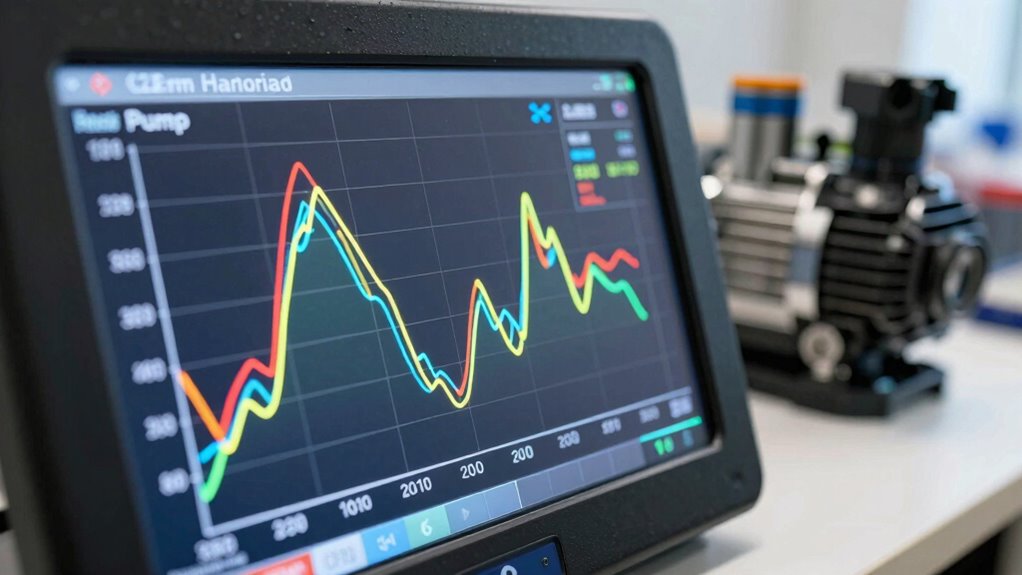
Before buying a pool pump, make sure it’s compatible with your system and fits your needs. Check the head pressure range on the pump curve to guarantee it can handle your pool’s setup. Also, consider the pump’s energy efficiency to save costs and reduce environmental impact.
Verify Pump Compatibility
Ensuring your chosen pump matches your pool’s specific needs is crucial for peak performance and energy efficiency. Verify that the pump capacity aligns with your pool size to avoid under- or over-pumping. Check that the pump’s flow rate supports your filtration system without exceeding recommended limits. Confirm compatibility with your existing plumbing, ensuring fittings and pipe diameter match. Consider the motor horsepower to match the required flow without unnecessary energy use. Finally, verify that the pump’s specifications align with your pool’s volume and intended usage, preventing strain on the system.
- Confirm pump capacity aligns with pool size
- Match flow rate to filtration requirements
- Ensure plumbing fittings are compatible
- Check motor horsepower for efficiency
- Validate specifications against pool volume
Analyze Head Pressure Range
Analyzing the head pressure range is essential for selecting a pump that operates efficiently within your pool’s system. You need to understand how your pool’s filter maintenance and pipe sizing influence head pressure. A pump with the right pressure range ensures proper water flow without overworking the system or causing damage. Too high a head pressure can strain the pump and increase energy costs, while too low may result in inadequate circulation. Check the pump’s curve against your pool’s current setup, considering pipe diameter and length, which directly affect head pressure. Guaranteeing your pump operates within the optimal head pressure range will help maintain system efficiency, prolong equipment life, and keep your pool water clean and clear.
Assess Energy Efficiency
Evaluating energy efficiency is a key step when using pump curves to select the right pool pump. You want a model that maximizes energy savings while reducing operational costs. Look for pumps with high efficiency ratings and variable speed options, which often consume less power. Consider eco friendly options that are designed to operate at lower energy levels without sacrificing performance. Check the pump’s power consumption relative to flow rate to guarantee superior efficiency. Also, review certifications like ENERGY STAR, indicating the pump meets strict energy-saving standards. By prioritizing energy efficiency, you not only cut costs but also lessen environmental impact. Making informed choices based on pump curves guarantees you select a model that’s both powerful and eco-conscious.
Frequently Asked Questions
How Often Should I Check My Pool Pump’s Curve Performance?
You should check your pool pump’s curve performance at least once a season as part of your maintenance schedule. Regular inspections help you catch issues early, ensuring peak flow and preventing strain on the pump. Keeping an eye on performance not only maintains efficient operation but also extends your pump’s lifespan. Make this a routine to avoid costly repairs and keep your pool clean and clear all season long.
Can a Pump’s Curve Change With Water Temperature Variations?
Water viscosity varies with temperature, so yes, a pump’s curve can change with water temperature. As water warms, it becomes less viscous, allowing the pump to operate more efficiently at higher flows. Conversely, colder water increases viscosity, potentially lowering flow rates. You should monitor your pump’s performance during seasonal shifts, as temperature effects can subtly influence flow and pressure, impacting overall pool circulation and efficiency.
What Is the Impact of Pipe Size on the Pump Curve?
Your pipe diameter directly impacts the pump curve by affecting flow rate. Smaller pipes increase resistance, reducing flow and causing the pump to work harder, which shifts the curve. Larger pipes decrease resistance, allowing a higher flow rate at a given head, shifting the curve accordingly. Choosing the right pipe size guarantees ideal flow, efficiency, and pump performance, preventing strain and potential damage to your pool system.
How Do I Interpret Multiple Curves for Different Pool Setups?
Imagine you’re faced with multiple pump curves, each representing a different pool setup—how do you choose? Focus on pump efficiency and energy consumption at your desired flow rate. The best curve balances high efficiency and lower energy use, meaning you save money and keep your pool running smoothly. Compare these curves carefully; the right one ensures ideal performance tailored to your pool’s unique needs.
Is It Better to Choose a Pump With a Higher or Lower Head Capacity?
Choosing a pump with a higher head capacity isn’t always better, as it can lead to decreased pump efficiency and higher energy consumption. You should select a pump that matches your pool’s specific needs, balancing head capacity with efficiency. A pump with the right head capacity guarantees peak flow, reduces energy costs, and maintains efficient operation, ultimately saving you money and prolonging your pump’s lifespan.
Conclusion
Understanding pump curves is like having a map to your perfect pool pump journey. By knowing what to look for, you can avoid surprises and find a pump that fits your backyard just right. Keep these tips in mind, and you’ll be equipped to make a smart choice—saving you time, money, and headaches. With this knowledge, your pool’s circulation will run smoothly, like a well-choreographed dance, giving you more time to relax and enjoy your backyard oasis.