
To stop guessing your pool pump size, focus on calculating your pool’s total volume and desired turnover rate accurately. Measure your pool’s dimensions, determine the flow rate needed, and account for system resistance with Total Dynamic Head (TDH). Using these details, select a pump that matches your calculated flow and head requirements. This approach guarantees efficient circulation, saves energy, and extends equipment life—continue exploring to learn the precise steps pros recommend.
Key Takeaways
- Measure pool dimensions accurately (length, width, average depth) to calculate precise water volume in gallons.
- Determine desired turnover rate (typically 8 hours) and divide total volume by hours of operation for flow rate.
- Calculate Total Dynamic Head (TDH) by accounting for lift height and friction losses to match pump capacity with system resistance.
- Select a pump with a flow rate that aligns with the required turnover and can handle the calculated TDH efficiently.
- Use hydraulic principles and system curves to verify pump sizing, ensuring optimal performance and energy efficiency.
pool pump size calculator
As an affiliate, we earn on qualifying purchases.
As an affiliate, we earn on qualifying purchases.
Why Proper Pool Pump Sizing Matters for Your Pool’s Performance

Choosing the right pool pump size is essential because an undersized pump won’t circulate water effectively, leading to poor filtration and water quality. When your pump isn’t powerful enough, the pool heater struggles to maintain the desired temperature, making heating less efficient. Inadequate circulation also disrupts chemical balance, causing algae growth and cloudy water. Properly sizing your pump ensures consistent water flow, improving filtration and maintaining ideal chemical levels. Additionally, correct pump sizing helps prevent equipment strain, which can cause costly repairs and reduce the lifespan of your pool components. Proper sizing ensures optimal energy efficiency, which reduces ongoing operational costs. When you select the right size, you promote healthier water, extend equipment lifespan, and enjoy a clearer, more inviting pool. Proper pump sizing is critical for safeguarding your investment and ensuring your pool stays clean, comfortable, and safe year-round.
pool pump flow rate and head
As an affiliate, we earn on qualifying purchases.
As an affiliate, we earn on qualifying purchases.
What Is Pool Turnover and Why Is It Important?
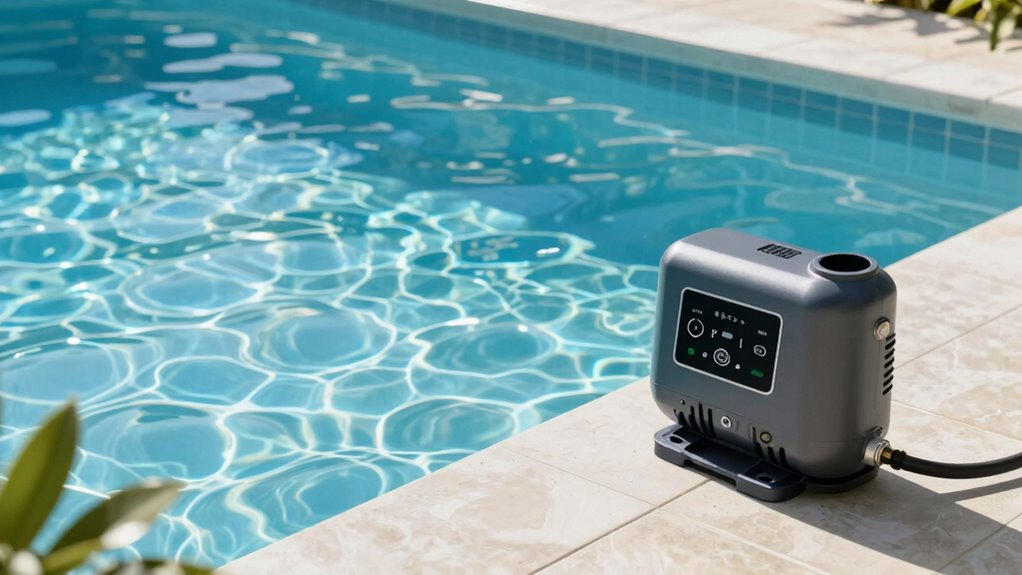
Pool turnover refers to the amount of time it takes for your pump to circulate the entire volume of water in your pool once. This cycle is vital because proper turnover guarantees your pool’s chemical balance stays consistent, preventing issues like algae growth or cloudy water. When your pump runs efficiently, it helps maintain pool safety by reducing bacteria and contaminants. A good understanding of sauna safety tips can also be applied to pool maintenance, ensuring safe and effective operation. Regularly monitoring your system can help detect equipment issues early before they lead to larger problems. A proper filter maintenance schedule is essential for maintaining optimal turnover rates and water clarity. A turnover rate that’s too slow can lead to stagnant water, risking health concerns and unbalanced chemicals. Additionally, understanding the different pump types can help you choose the most efficient system for your needs. An overly rapid turnover may waste energy and strain equipment. Knowing your pool’s turnover rate helps you set your pump to operate at its best, keeping your water clean, balanced, and safe for swimming. Ultimately, understanding turnover is key to effective pool maintenance and safety.
best energy efficient pool pump
As an affiliate, we earn on qualifying purchases.
As an affiliate, we earn on qualifying purchases.
How to Calculate Your Pool’s Flow Rate
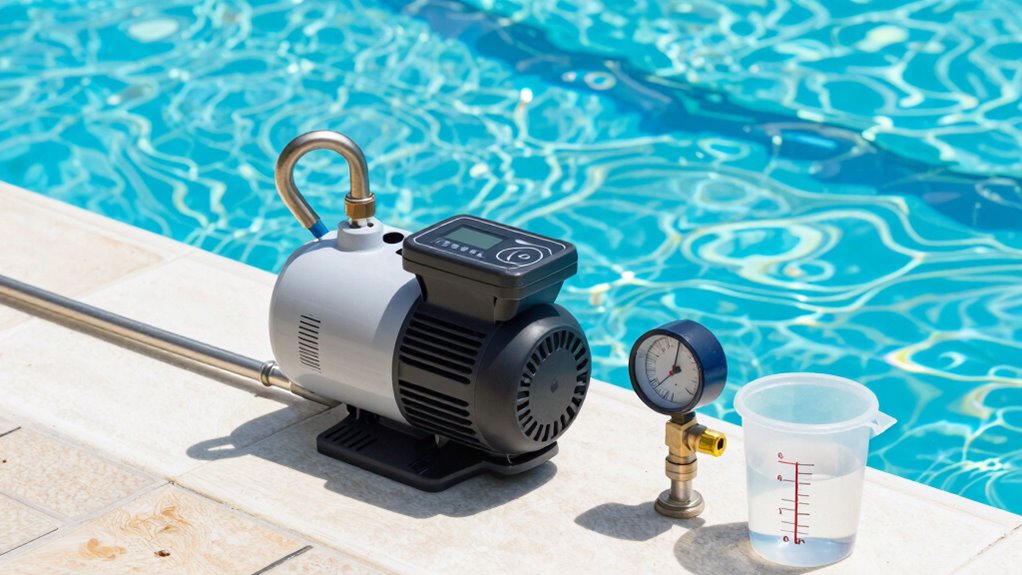
To calculate your pool’s flow rate, start by measuring its length, width, and average depth. Then, determine the total water volume based on these measurements. You can find detailed formulas and pool volume calculations in our technical references to ensure accuracy. Finally, use this volume and the desired turnover time to figure out the necessary flow rate for your pump. Proper pump sizing ensures efficient circulation and helps maintain water quality.
Measure Pool Dimensions
Measuring your pool’s dimensions accurately is the first step in calculating the flow rate needed for your pump. To do this, determine the length, width, and average depth of your pool. Use a tape measure for precise measurements, especially for irregular shapes. Knowing these measurements helps you estimate the total water volume, which is essential for proper pool maintenance and maintaining water chemistry. Keep in mind that accurate dimensions prevent over- or under-pumping, saving energy and prolonging equipment life. When measuring, double-check your numbers to avoid mistakes. Remember, a well-sized pump ensures ideal water circulation, which is key for keeping your pool clean, balanced, and safe for swimmers. Accurate measurements form the foundation of effective pool management. Proper sizing of your pump based on these measurements ensures optimal circulation and efficiency.
Determine Water Volume
Once you’ve gathered your pool’s dimensions, the next step is to determine the total water volume. This helps guarantee your pump can handle the necessary flow rate for proper circulation and chemical balance. To do this:
- Calculate your pool’s volume using its length, width, and average depth.
- Convert that volume into gallons for accuracy.
- Consider your pool accessories—like skimmers or heaters—that may affect water turnover needs.
- Be aware of emerging trends in digital publishing that can help you access tools and resources for precise measurements and calculations.
Knowing your water volume helps you select a pump that maintains a healthy chemical balance and supports your pool’s equipment. Proper sizing prevents algae growth and ensures your filter keeps water crystal clear. Informed decisions keep your pool running smoothly and save you money in the long run.
Calculate Flow Rate
Ever wondered how to determine the right flow rate for your pool pump? Calculating it accurately guarantees proper circulation, which helps maintain chemical balance and promotes pool safety. To start, measure your pool’s water volume in gallons. Then, decide how many turnovers you want each day—generally, 1-2 turnovers are sufficient. Divide the total volume by the number of hours you want the pump to run daily to find the flow rate in gallons per hour (GPH). For example, a 20,000-gallon pool running two turnovers a day needs a flow rate of about 1,667 GPH. This calculation assures your pump’s flow rate matches your pool’s needs, preventing under- or over-circulation, which can disrupt chemical balance and compromise safety.
pool filter and pump combo
As an affiliate, we earn on qualifying purchases.
As an affiliate, we earn on qualifying purchases.
How to Determine Your Pool’s Total Dynamic Head (TDH)
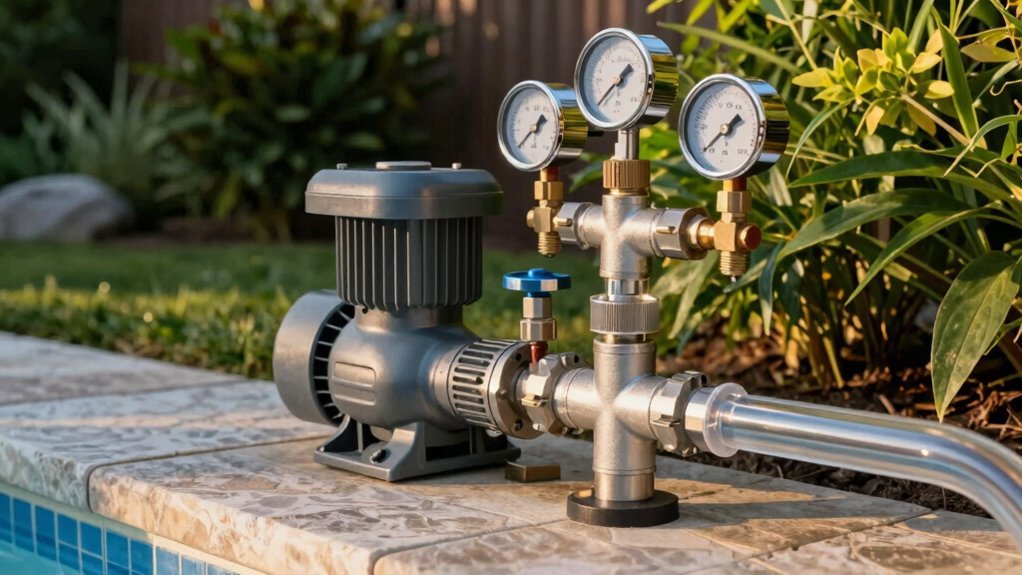
Determining your pool’s Total Dynamic Head (TDH) is essential for selecting the right pump, as it measures the total resistance the pump must overcome to circulate water effectively. Understanding hydraulic dynamics helps you grasp how water moves through your system, influencing pump performance. To find your TDH, focus on these key elements:
- Lift height: Measure how high the water must be pushed vertically.
- Friction losses: Account for pressure loss due to pipes, fittings, and accessories.
- Additional resistance: Include returns, valves, and any pool features affecting flow.
- Hydraulic calculations: Accurately estimating these factors requires understanding hydraulic principles to ensure proper pump sizing. Properly calculating these factors also involves considering flow resistance, which impacts overall system efficiency and pump selection. Additionally, understanding the system curve helps predict how your pump will perform under different conditions.
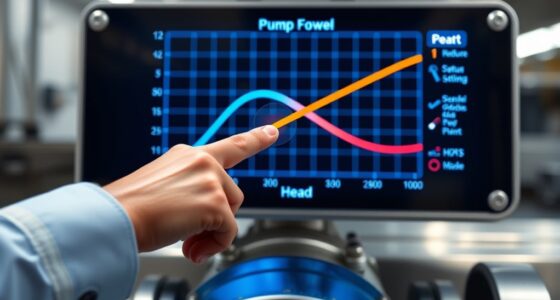
Furthermore, reviewing pump curves carefully is crucial, as they show how head and flow rate relate. Properly calculating TDH ensures your pump handles the system’s demands without overworking or underperforming, giving you peace of mind.
How to Size Your Pool Pump Based on Volume and Turnover
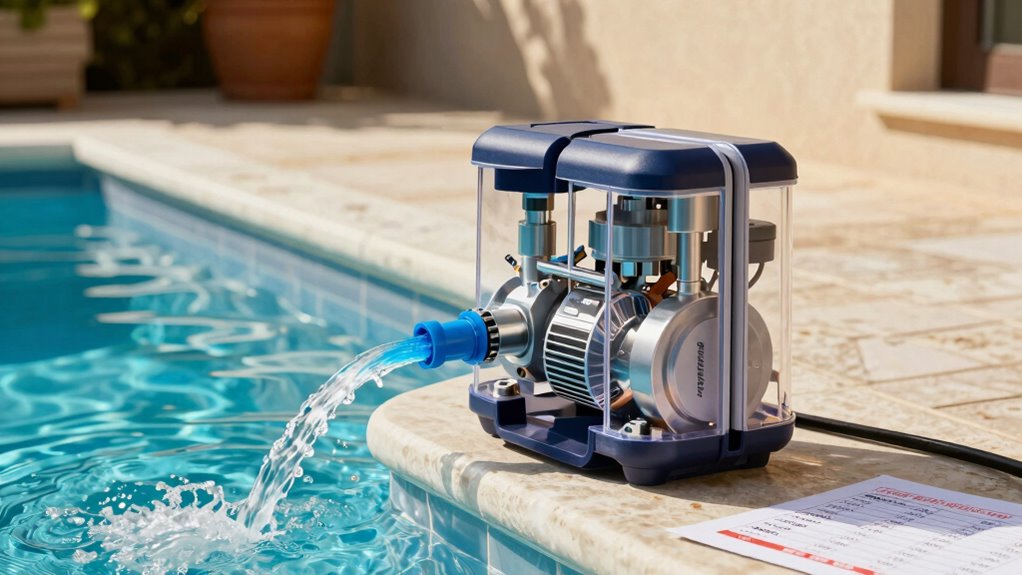
To size your pool pump effectively, you need to start by calculating your pool’s volume accurately. Next, determine how often you want the water to turn over in a day, which influences the flow rate you need. Ensuring proper pump capacity helps maintain water quality and prevents equipment strain. Additionally, considering the contrast ratio of your pool’s lighting and surroundings can improve nighttime visibility and safety. Proper circulation design ensures your pool remains clean and chemically balanced, reducing maintenance efforts. Finally, match that flow rate with a pump that can handle your pool’s volume and turnover requirements efficiently.
Calculate Pool Volume Accurately
Calculating your pool’s volume accurately is essential for selecting the right pump size. An exact measurement guarantees efficient circulation and energy savings. To do this:
- Measure the pool’s length, width, and average depth—these dimensions determine total volume.
- Consider skimmer placement—proper placement affects water flow, influencing volume calculations.
- Account for pool cover use—a cover can reduce evaporation, impacting how often you need to run your pump.
Getting these details right ensures your pump handles the volume effectively, preventing under- or over-pumping. Accurate volume calculations also help avoid issues like poor skimmer performance or uneven circulation. When you know your pool’s true size, you can confidently select a pump that keeps your water clean, clear, and inviting.
Determine Desired Turnover Rate
How quickly you need your pool water to turn over directly impacts the size of the pump you should choose. Turnover rate refers to how many times the entire volume of water circulates through the pump in a given period, usually in 8 hours. A higher turnover rate means better water circulation, which helps maintain water quality and clarity. When determining your desired turnover rate, consider your pool’s use, local health standards, and pump efficiency. A faster turnover requires a more powerful pump, but keep in mind that increased flow can reduce pump efficiency if it’s too high for your system. Striking the right balance guarantees effective water circulation without unnecessary energy consumption or equipment strain.
Match Pump Flow Rate
Matching your pool pump’s flow rate to your pool’s volume and desired turnover makes certain of efficient circulation without overworking your equipment. When properly sized, your pump reduces strain, cuts down on pump maintenance needs, and maximizes energy savings. To achieve this, focus on:
- Selecting a pump that matches your turnover rate, avoiding unnecessary energy use.
- Ensuring the flow rate isn’t too high, which can cause equipment wear.
- Regularly monitoring performance to maintain ideal circulation and prevent issues.
A correctly matched pump keeps your pool crystal clear, minimizes operational costs, and prolongs equipment life. By aligning flow rate with your pool’s specifics, you’re investing in efficient, hassle-free pool operation.
Choosing the Right Pump: Flow Rate and Head Pressure Explained

Choosing the right pool pump involves understanding two key factors: flow rate and head pressure. Flow rate determines how quickly water circulates, affecting water quality and filtration efficiency. Head pressure measures the resistance the pump must overcome, influencing how hard the pump works. Selecting a pump with the correct flow rate ensures ideal pump efficiency, saving energy and reducing operational costs. Proper head pressure prevents strain on the motor, enhancing motor durability and longevity. If you pick a pump with too high a flow rate or inadequate head pressure, it could lead to unnecessary wear or inefficiency. Conversely, undersized pumps may struggle to circulate water properly. Balancing these factors helps you choose a pump that delivers reliable performance, energy savings, and long-lasting durability.
Common Mistakes When Sizing Your Pool Pump (And How to Avoid Them)
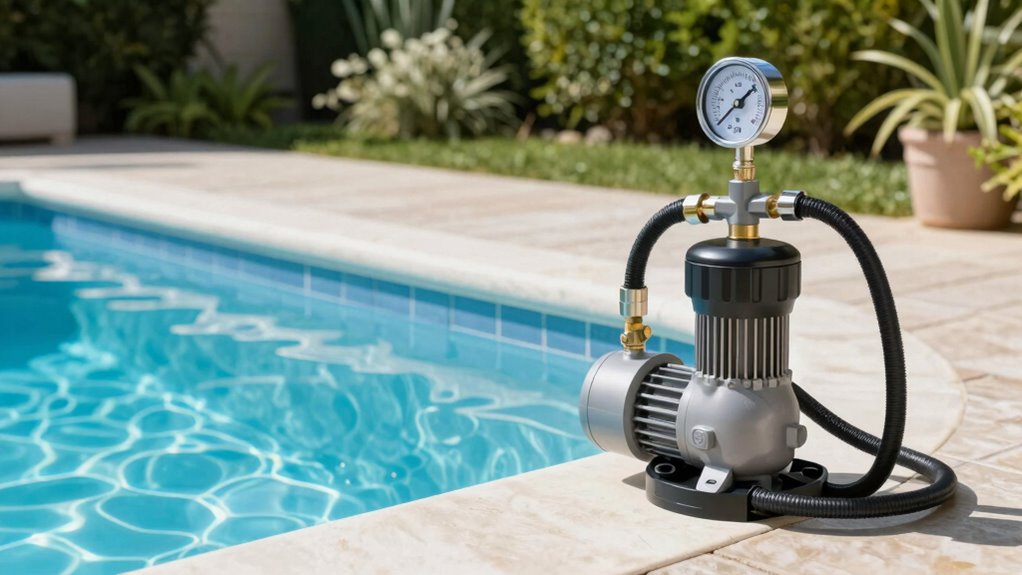
Sizing your pool pump correctly is essential for peak performance, but common mistakes can lead to inefficiency and increased wear. One mistake is choosing a pump that’s too small, causing excessive noise and inadequate circulation, which can affect pool lighting and overall enjoyment. Conversely, selecting a pump that’s too large wastes energy and creates unnecessary pump noise, disturbing your peace. Another mistake is ignoring the actual flow needs, leading to poor water turnover and potential algae growth. In conclusion, overlooking the importance of proper plumbing and filtration setup can cause pressure drops and reduce pump lifespan. To avoid these pitfalls, always match pump size to your pool’s specific needs, consider noise levels, and ensure your system is optimized for smooth operation.
How Pool Size and Surface Area Help Fine-Tune Your Pump Choice
Your pool’s size and surface area play a crucial role in determining the right pump capacity. A larger surface increases the volume of water needing circulation, affecting pump compatibility. To fine-tune your choice, consider how surface area impacts flow rate and filtration needs.
| Pool Size | Surface Area Effect |
|---|---|
| Small | Easier pump compatibility, lower flow |
| Medium | Moderate flow, balanced pump size |
| Large | Higher flow, larger pump required |
Matching your pool surface with the right pump ensures efficient circulation and filtration. If your surface area is extensive, you’ll need a pump that can handle greater flow without overworking. Proper sizing prevents issues like inadequate filtration or unnecessary energy use.
How Energy Efficiency Affects Pool Pump Sizing
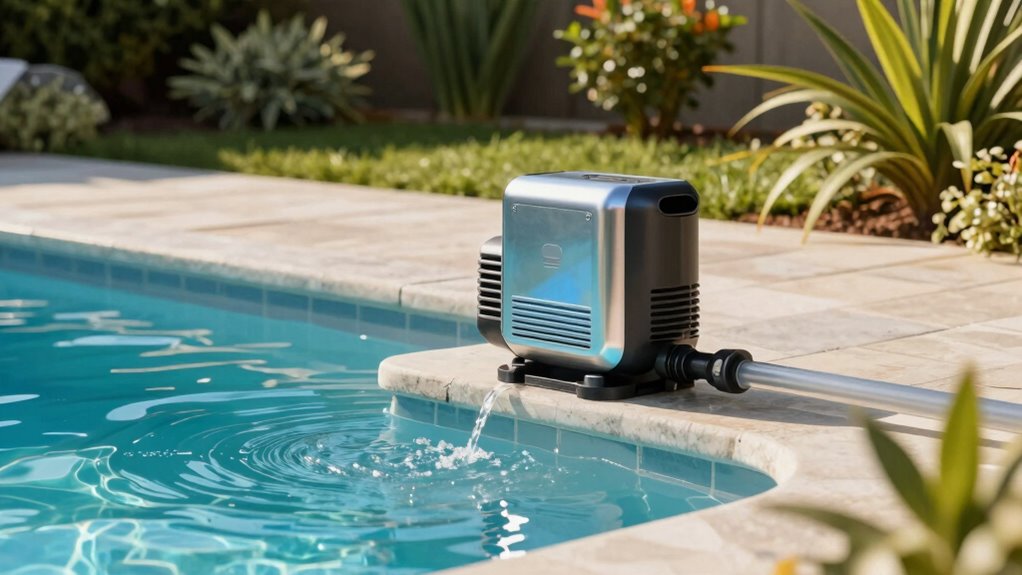
When selecting a pool pump, considering energy efficiency can save you money and reduce environmental impact. An energy-efficient pump helps you achieve significant energy savings and supports eco-friendly equipment choices. To maximize benefits, focus on:
- Choosing models with variable speed settings for tailored operation.
- Investing in pumps with high-efficiency motors that consume less power.
- Ensuring proper sizing to avoid overworking the pump, which wastes energy.
Pro Tools and Formulas for Accurate Pool Pump Sizing
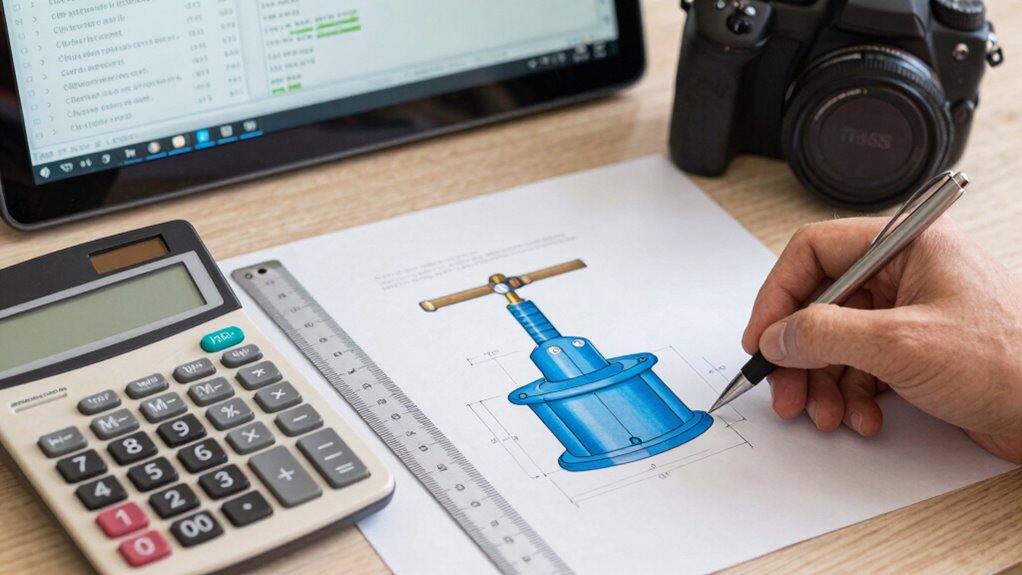
To guarantee you select the right pool pump, leveraging specialized tools and formulas can make the process more accurate and efficient. One essential tool is the pump sizing calculator, which considers your pool’s volume, plumbing, and flow rate needs. Using formulas based on pool maintenance principles ensures proper chemical balancing and circulation, preventing algae growth and equipment wear. You can also use the turnover rate formula: divide the pool’s volume by the desired turnover time to determine the required flow rate. Additionally, pressure loss calculations help identify how pipe length and fittings impact pump performance. These tools help you avoid guesswork, ensuring your pump provides ideal circulation, maintains proper chemical levels, and reduces energy waste—all crucial for keeping your pool safe, clean, and well-maintained.
Frequently Asked Questions
How Does Local Climate Impact Pool Pump Sizing Choices?
Your local climate considerably impacts pool pump sizing choices because it influences water evaporation and filtration needs. In hot, dry regions, you might need a larger pump for better circulation and to compensate for higher evaporation losses, aligning with climate adaptation strategies. Regional regulations may also dictate specific pump sizes or energy efficiency standards, ensuring your pool operates effectively and complies with local environmental policies.
Can Variable Speed Pumps Be More Efficient for Specific Pool Sizes?
Variable speed pumps can be more energy-efficient for specific pool sizes, especially smaller or medium-sized pools. They allow you to adjust the flow rate to match your needs, leading to significant energy savings and improved cost efficiency. By running at lower speeds when full power isn’t necessary, you reduce electricity consumption, save money, and extend the lifespan of your equipment, making them a smart choice for tailored pool operation.
What Maintenance Practices Influence Optimal Pump Performance?
Think of your pool pump as the heart of your oasis; keeping it healthy requires regular tune-ups. You influence its performance through diligent filter maintenance, clearing debris that chokes efficiency, and pump lubrication, reducing friction like oiling gears in a finely-tuned machine. By maintaining these practices, you guarantee your pump runs smoothly, conserves energy, and extends its lifespan, turning your pool into a pristine retreat with steady, reliable circulation.
How Do Pool Features Like Waterfalls Affect Pump Head Calculations?
Waterfalls increase the pump head calculation because they add extra water features that require more water flow. You should consider the additional height and flow rate needed to operate waterfalls smoothly, which impacts your pump capacity. When you account for these features, your pump can handle the increased demand without losing efficiency or pressure, ensuring your pool’s water circulation remains ideal. Properly sizing your pump prevents issues caused by overworking or underperforming.
Is There a Recommended Lifespan for Properly Sized Pool Pumps?
Properly sized pool pumps typically last about 8 to 15 years, depending on care and conditions. You can maximize energy efficiency and cost savings by maintaining your pump regularly and choosing quality equipment. Regular maintenance prevents premature wear and tear, extending its lifespan. When you invest in a reliable, well-sized pump, you guarantee maximum performance, save energy, and enjoy the pool longer without the hassle or added costs of early replacement.
Conclusion
Getting your pool pump size right isn’t just about saving money — it’s about ensuring your pool stays clean, safe, and enjoyable all season long. When you choose the correct pump, you’ll avoid issues like poor circulation or wasted energy. So, why settle for guesswork when you can use proven methods to get it just right? Take the time to size your pump properly — your pool will thank you for it!