If you’ve upgraded your pool but still see cloudy water or algae, poor flow might be to blame. Insufficient circulation causes stagnation, which prevents your new equipment from working efficiently. Common issues include improper pump size, clogged filters, or restrictive plumbing layout. These flow problems make your upgrades less effective, leaving you disappointed with the results. Keep exploring how to improve your pool’s circulation to release the full potential of your upgrades.
Listen free for 30 days with Audible
Thousands of audiobooks and originals — cancel anytime.
As an affiliate, we earn on qualifying purchases.
Key Takeaways
- Poor water circulation causes stagnation, making upgrades ineffective and leaving pools cloudy or algae-filled.
- Undersized or clogged pumps reduce flow, negating the benefits of expensive upgrades.
- Inefficient plumbing design, like long or narrow pipes, hampers water movement despite upgrades.
- Neglecting regular maintenance leads to restrictions and mechanical issues that hinder circulation.
- Small adjustments in valves and layout can significantly improve flow and maximize upgrade results.
Upgrading your pool can be exciting, but a common issue that often arises is the flow problem, which can hinder proper water circulation and filtration. When you invest in new equipment or layout changes, you expect a seamless improvement in your pool’s performance. However, if water isn’t flowing correctly, you could end up with stagnant spots, cloudy water, and even algae growth. This is usually caused by poor water circulation, which means your pool’s water isn’t moving through the filtration system as it should. The result? Your costly upgrade doesn’t deliver the sparkling, clear water you envisioned.
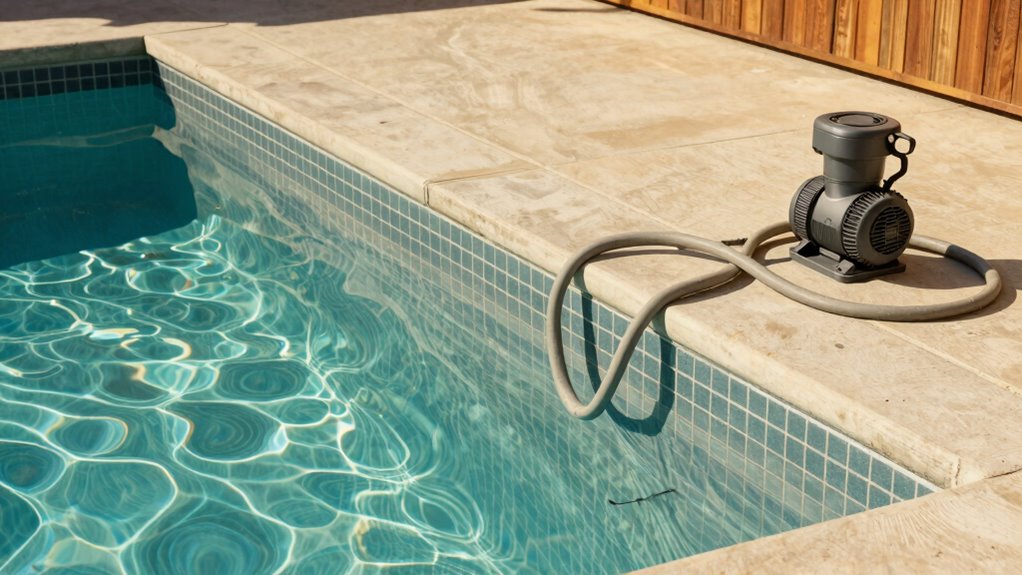
One of the main culprits behind flow problems is pump efficiency. Your pool pump is responsible for pushing water through filters, skimmers, and returns. When the pump isn’t operating at peak efficiency, it can create uneven water movement or insufficient flow. This often happens if the pump is undersized, clogged, or experiencing mechanical issues. Even small inefficiencies can markedly reduce water circulation, making your upgrade less effective. You might notice that some areas of your pool remain still or that water isn’t cycling through the system quickly enough to keep it clean and healthy. Proper water flow management is essential to ensure your system functions optimally.
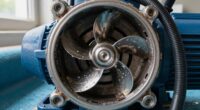
To troubleshoot, you need to evaluate your pump’s performance. Check for debris blocking the pump strainer basket, and ensure the impeller isn’t clogged. Sometimes, just cleaning or replacing worn parts can restore pump efficiency. Confirm that your pump’s size matches your pool’s volume; an undersized pump simply won’t generate enough flow to circulate water properly. Also, examine the piping and valves—any restrictions or leaks can compromise water flow. If your pump is old or underpowered, investing in a higher-capacity model might be necessary to enhance water circulation markedly. Additionally, understanding the importance of proper water flow and ensuring your plumbing system promotes smooth water movement will help your upgrade reach its full potential. Improving your plumbing system design can also significantly impact flow, so considering layout adjustments can be worthwhile. Properly maintaining your plumbing components ensures that minor issues do not turn into major flow restrictions that hinder overall circulation.
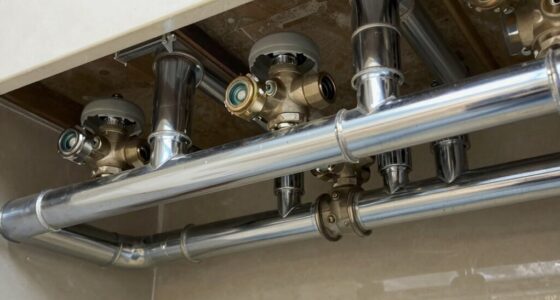
Beyond equipment issues, the design of your plumbing system plays a vital role. Long runs, sharp turns, or narrow pipes can impede flow, regardless of pump efficiency. Making sure your plumbing layout promotes smooth water movement will help your upgrade reach its full potential. Additionally, adjusting valve positions to optimize flow can make a noticeable difference. Sometimes, small tweaks can enhance circulation enough to prevent stagnation and maximize the benefits of your expensive upgrade.
In the end, addressing flow problems requires a combination of evaluating your pump’s efficiency, inspecting your plumbing, and making necessary adjustments. When water circulation is optimized, your pool will stay clearer, cleaner, and more inviting—making your investment truly worthwhile. Without proper flow, even the most advanced upgrades can fall short, leaving you disappointed despite the effort and expense.
As an affiliate, we earn on qualifying purchases.
Frequently Asked Questions
How Can I Identify if My Pool Has a Flow Problem?
You can identify a flow problem by observing your pool’s water circulation, noticing if the water isn’t moving smoothly or if there are dead spots. Check your pool’s pump and filter for proper operation during routine pool maintenance. Also, test your water chemistry regularly—poor flow can cause uneven chemical distribution, leading to cloudy water or algae growth. If you notice these signs, it’s time to address your pool’s flow issues.
Are There Quick Fixes for Flow Issues in Pools?
Think of your pool’s flow like a highway; if traffic slows, everything backs up. Quick fixes include cleaning your pool filter thoroughly and checking for clogs, which can instantly improve flow. Regular pump maintenance ensures smooth operation, preventing future issues. Sometimes, simply adjusting the valve or removing debris from skimmer baskets can restore proper circulation, making your pool feel more invigorating and less disappointing.
Can Flow Problems Cause Long-Term Structural Damage?
Yes, flow problems can cause long-term structural damage if left unaddressed. Poor water circulation compromises pool safety and disrupts water chemistry, leading to algae buildup, corrosion, or cracks in the pool’s structure. You should regularly check and fix flow issues to maintain proper circulation, ensuring the pool remains safe and durable. Proper maintenance prevents costly repairs and keeps your pool in good condition for years to come.
What Are the Signs of Poor Water Circulation?
Think of your pool as a well-tuned orchestra; poor water circulation is like a conductor missing a beat. Signs include murky water, uneven temperature, and algae buildup, which disrupt the harmony of your pool. Regular pool maintenance and monitoring water chemistry help keep circulation smooth. If you notice these signs, it’s time to check your pool’s flow system to prevent bigger issues and keep your pool inviting.
How Much Does Fixing a Flow Problem Typically Cost?
Fixing a flow problem usually costs between $300 and $1,500, depending on the issue’s severity. Improving pool pump efficiency can reduce long-term costs, while addressing flow issues helps prevent chemical imbalance effects that cause cloudy water and algae growth. You might need to replace the pump, clean filters, or reconfigure plumbing. Investing in proper repairs guarantees better circulation, fewer chemical adjustments, and a more enjoyable, maintenance-free swimming experience.
As an affiliate, we earn on qualifying purchases.
Conclusion
Ultimately, understanding the flow problem helps you see why costly pool upgrades might not meet your expectations. You invest so much, yet the experience feels underwhelming. Could it be that you’re missing the key to revealing true satisfaction? Recognizing this disconnect allows you to focus on the right improvements that genuinely enhance your enjoyment. Don’t let the expense overshadow the true purpose—creating a pool experience that flows effortlessly and delights you every time you plunge in.
As an affiliate, we earn on qualifying purchases.
As an affiliate, we earn on qualifying purchases.
NFL season / tailgating Picks
team gear
As an affiliate, we earn on qualifying purchases.