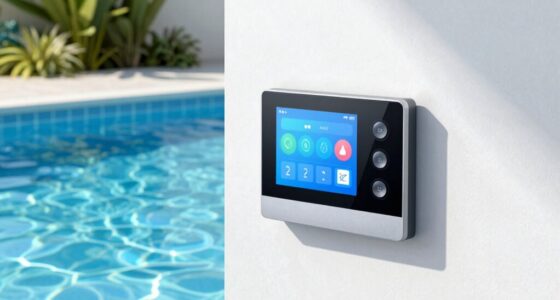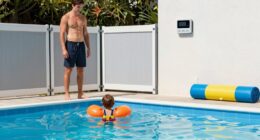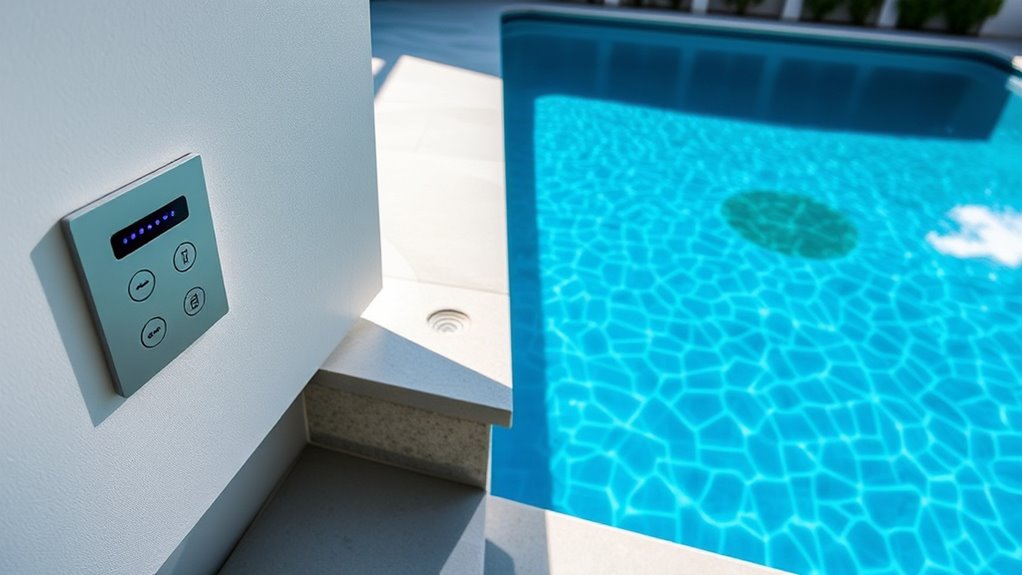

Connecting your pool systems to a smart home lets you control everything easily via voice commands or smartphone apps. You can adjust valves, heaters, filters, and lights without manual effort, saving time and energy. Integration with platforms like Alexa or Google Assistant makes managing your pool seamless and intuitive. You’ll enjoy remote access, automatic maintenance, and enhanced safety. Keep exploring to discover how you can transform your pool into a fully connected, modern feature of your home.
Key Takeaways
- Integrate pool systems with smart home hubs for centralized control and automation.
- Use compatible voice assistants like Alexa, Google Assistant, or Apple HomeKit for seamless commands.
- Implement remote access features for monitoring and adjusting pool settings remotely via mobile apps.
- Set up routines or scenes to automate multiple pool functions simultaneously within your smart home ecosystem.
- Ensure system compatibility and proper configuration for smooth integration and reliable operation.
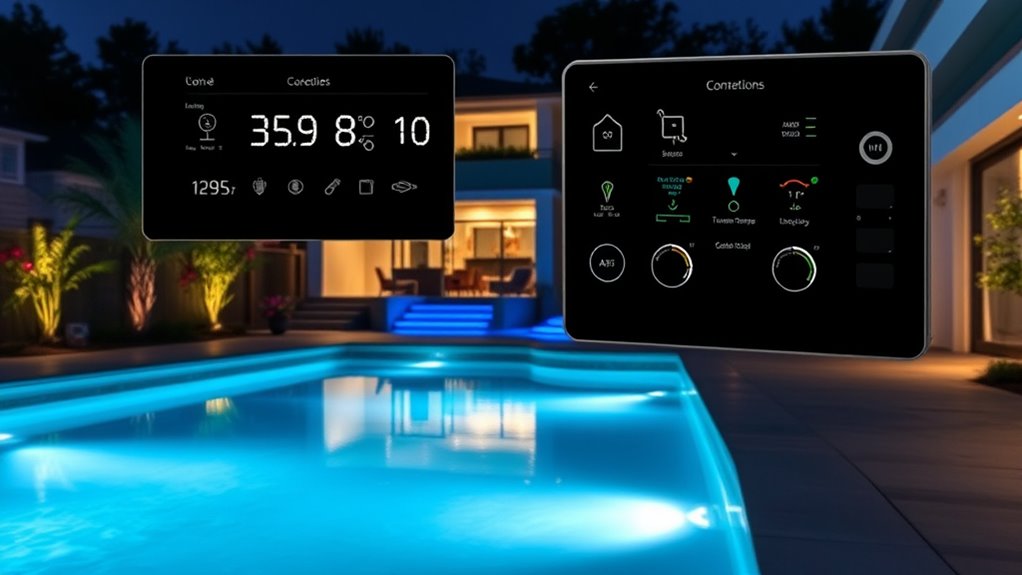
Have you ever wondered how businesses streamline operations and boost efficiency? The same principles apply when integrating your pool systems into a smart home setup. Modern automation makes managing your pool easier, more convenient, and more energy-efficient. One of the key features is the ability to control your pool equipment using voice commands. Instead of manually adjusting valves or fiddling with control panels, you can simply speak your commands to a compatible smart device. Whether you want to turn on the pool heater, adjust the filtration system, or activate the pool lighting, voice commands offer a hands-free, intuitive way to manage your pool. This level of control not only saves time but also enhances your experience by making pool maintenance seamless and accessible. Additionally, integrating your pool system with sustainability initiatives can help reduce energy consumption and environmental impact, making your setup more eco-friendly.
Control your pool effortlessly with voice commands for a seamless, hands-free experience.
Remote access plays a vital role in this integration. With the right setup, you can monitor and control your pool systems from anywhere—whether you’re at work, on vacation, or just relaxing inside your home. Using your smartphone or tablet, you can open a dedicated app and make adjustments on the go. This means you don’t have to be physically present to turn on the pool heater before arriving home or to check if the filtration system is working properly. Remote access provides peace of mind, allowing you to keep an eye on your pool’s status and make changes instantly. It also helps conserve energy by enabling you to turn off equipment when not needed or schedule operations during off-peak hours, all remotely.
Integrating voice commands and remote access involves connecting your pool system to a central smart home platform. Many modern systems are compatible with popular voice assistants like Amazon Alexa, Google Assistant, or Apple HomeKit. Once connected, you can set up routines or scenes—for example, saying “Alexa, start the pool” to activate multiple functions at once. Meanwhile, remote access apps give you a user-friendly interface to customize these routines, check system statuses, or troubleshoot issues without calling a technician. This integration simplifies pool management, reduces manual effort, and enhances safety by allowing quick responses to any problems that might arise.
Ultimately, combining voice commands and remote access transforms the way you manage your pool. It turns a traditionally manual and sometimes time-consuming task into a smooth, effortless experience. By leveraging these advanced features, you gain more control, flexibility, and convenience—making your pool not just a relaxing retreat but a smart, connected part of your home.

Wireless Automatic Pool Water Level Control System with Three Modes and 500ft Range Ideal for Pools Spas and Water Tanks
AUTOMATIC WATER REFILL FUNCTION: The water level sensor monitors the water level and triggers the valve controller to…
As an affiliate, we earn on qualifying purchases.
As an affiliate, we earn on qualifying purchases.
Frequently Asked Questions
What Security Measures Protect Smart Pool Systems From Hacking?
You protect your smart pool system by implementing strong cybersecurity protocols and encryption standards. Regularly update firmware and software to fix vulnerabilities, and use secure Wi-Fi networks with strong passwords. Enable two-factor authentication where possible, and avoid default login credentials. These measures help prevent hacking attempts, keeping your pool system safe and secure from unauthorized access. Staying vigilant with cybersecurity best practices is essential for protecting your smart home devices.
How Compatible Are Different Pool Brands With Various Smart Home Platforms?
Ever wondered if your pool brand plays nice with your smart home platform? Most modern pools offer good brand compatibility, but it’s essential to check platform integration options carefully. Some brands work seamlessly with popular systems like Alexa, Google Home, or Apple HomeKit, while others may require additional hubs or apps. To guarantee smooth operation, verify compatibility before purchasing, so your pool and smart home work together effortlessly.
Can Automation Systems Detect and Alert for Pool Equipment Malfunctions?
Yes, automation systems can detect and alert you about pool equipment malfunctions. They use pool sensor diagnostics to monitor equipment performance continuously. When a problem occurs, the system sends you equipment failure alerts, allowing you to address issues quickly and prevent costly repairs. This proactive approach keeps your pool running smoothly and saves you time and money by catching problems early before they escalate.
What Is the Average Cost of Integrating Pool Systems Into Smart Homes?
The average cost of integrating pool systems into smart homes typically ranges from $1,500 to $3,500. Your cost estimation depends on pricing factors like the complexity of your existing setup, the type of smart pool equipment, and the required automation features. You’ll want to take into account professional installation fees and system compatibility to get an accurate estimate. Investing in quality components ensures reliable control and long-term savings.
How Does Automation Impact the Maintenance Requirements of Pool Systems?
Automation reduces your maintenance frequency by enabling precise control and monitoring of your pool system. With automated alerts and diagnostics, you can address issues early, preventing major repairs. This proactive approach helps extend equipment longevity, meaning your pool system stays in good shape longer. Overall, automation simplifies upkeep, saves you time, and keeps your pool running smoothly with less frequent manual interventions.
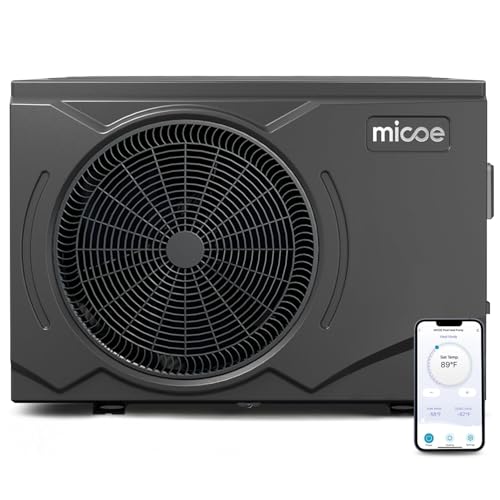
MICOE 35,000 BTU Inverter Pool Heat Pump for Above Ground & Inground Pools up to 24ft (12,000 Gal), Electric Heater with Heating and Cooling Mode, Titanium Heat Exchanger, App Control, 220V
Extend Your Swim Season with 35,000 BTU Heating – Advanced Inverter technology delivers robust heating for pools up…
As an affiliate, we earn on qualifying purchases.
As an affiliate, we earn on qualifying purchases.
Conclusion
Imagine your pool as the heart of your smart home, beating in sync with every other device. When you connect your pool system to your smart home, it’s like giving it a voice and a brain. Just last summer, a homeowner told me how their automated system saved them hours of manual work and kept the water perfectly heated and clean. With automation, you turn your pool into a seamless, effortless oasis—where convenience flows as naturally as water itself.

GoveeLife WiFi Pool Thermometer Wireless App Easy Read, Smart Digital Floating Pool Thermometer with IPX7 Waterproof, Notification Alert, Water Temperature Monitor for Swimming, Pond, Bath, Spa
Smart Remote Monitoring: With a connected 433 gateway (up to 328ft /100m), you can easily monitor your water…
As an affiliate, we earn on qualifying purchases.
As an affiliate, we earn on qualifying purchases.

SURAIELEC WiFi Pool Timer, Outdoor Indoor Smart Switch, 40 AMP, 2HP, 120, 240, 277 VAC, Heavy Duty Pool Controller Light Timer Box for Pool Pump, Water Heater, Spa, Powerful Electrical Appliances
Heavy Duty 40 AMP Pool Timer Switch: 1HP, 120 VAC; 2HP, 240VAC; Control high-power devices like pool filter…
As an affiliate, we earn on qualifying purchases.
As an affiliate, we earn on qualifying purchases.