
Next-generation drowning detection systems use advanced sensors like infrared, underwater cameras, and acoustic devices to monitor water environments continuously. These systems provide real-time alerts, helping you respond quickly during emergencies while reducing manual oversight. They are designed for various settings, from pools to beaches, enhancing safety and minimizing risks. With improved connectivity and reliability, these innovations aim to save more lives. Stay with us to explore how these cutting-edge solutions are transforming water safety worldwide.
Key Takeaways
- Integration of advanced sensor technologies like computer vision, infrared, and acoustic sensors enhances detection accuracy.
- Real-time wireless monitoring enables instant alerts, reducing emergency response times.
- Systems are increasingly user-friendly, customizable, and reliable for diverse aquatic environments.
- Continuous development focuses on automation, power backup, and integration with emergency protocols.
- Future systems aim to leverage AI and machine learning for predictive analysis and enhanced safety measures.
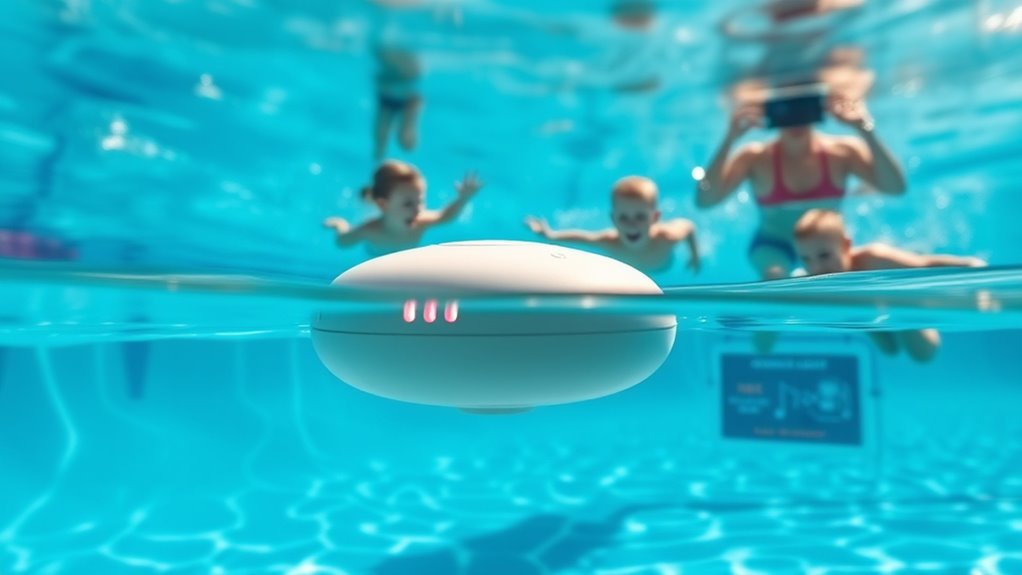
Drowning detection systems are essential tools that help prevent water-related tragedies by quickly identifying when someone is in distress in the water. These systems are becoming increasingly sophisticated, leveraging advanced sensor technology to enhance water safety across pools, beaches, and aquatic facilities. You no longer have to rely solely on lifeguards or manual surveillance; instead, you can benefit from automated systems that continuously monitor swimmers and alert you at the first sign of trouble. This shift toward technology-driven safety measures aims to reduce response times dramatically, saving lives and providing peace of mind for families and operators alike.
Modern drowning detection systems utilize a variety of sensor technologies to monitor water conditions and swimmer behavior. One of the most common approaches involves infrared sensors that detect movement or the presence of a person beneath the water surface. These sensors can distinguish between normal swimming activity and distress signals, such as struggling or sudden stops. Some systems incorporate underwater cameras with computer vision algorithms to analyze patterns and identify potential emergencies, reducing false alarms caused by debris or shadows. Others use acoustic sensors that listen for distress sounds or abnormal breathing patterns, adding another layer of precision. Each sensor type contributes to an exhaustive safety network, creating a multi-faceted approach to drowning prevention.
Infrared, underwater cameras, and acoustic sensors form a comprehensive network for effective drowning prevention.
The integration of sensor technology into drowning detection systems offers several advantages. First, it allows for real-time monitoring without the need for constant human oversight. When a swimmer is in trouble, the system instantly sends alerts to lifeguards or safety personnel, who can respond more quickly than ever before. This rapid response capability is especially critical in large or crowded pools, where manual supervision can be challenging. Additionally, these systems can be customized to fit the specific needs of different aquatic environments, whether it’s a small community pool or a sprawling beachfront. They also help to reduce fatigue and human error, ensuring consistent vigilance around the clock. Moreover, advancements in power backup ensure these critical systems remain operational during outages or storms, further enhancing safety.
As these systems advance, they’re becoming more user-friendly and reliable. Wireless connectivity enables remote monitoring and data collection, which can be used for safety audits or improving protocols. Overall, the combination of innovative sensor technology and a focus on water safety is transforming drowning prevention, making aquatic spaces safer for everyone. With continued development, next-generation drowning detection systems promise to minimize risks, provide faster emergency responses, and save countless lives by harnessing the power of cutting-edge technology.
Frequently Asked Questions
How Do These Systems Differentiate Between Humans and Animals?
You utilize behavioral algorithms and sensor integration to differentiate between humans and animals. The system analyzes movement patterns, body shapes, and swimming behaviors to identify humans, while recognizing distinct animal movements. Sensors gather real-time data, which the algorithms process to make accurate distinctions. This combination guarantees the system detects drowning incidents effectively, reducing false alarms caused by animals, and enhances safety by focusing on human distress signals.
What Is the Average Battery Life for These Devices?
Ever wonder how long these devices last? Typically, their battery longevity ranges from 24 to 72 hours depending on power consumption levels. If you’re using features like real-time alerts or continuous monitoring, expect a shorter battery life. To maximize usage, many systems incorporate low-power modes. So, are you prepared to recharge or replace batteries frequently, or do you prefer models with extended power efficiency?
Are There Any Privacy Concerns With Video-Based Detection?
You might worry about privacy concerns with video-based detection, but manufacturers prioritize data security by using encrypted storage and limited access. These systems are designed to monitor only for safety, not to invade your privacy. Regular updates and strict protocols help prevent unauthorized access. While some concerns exist, choosing reputable brands ensures your data remains protected, allowing you to benefit from advanced drowning detection without compromising your privacy.
How Quickly Can These Systems Alert Lifeguards?
Think of these systems as a vigilant lighthouse, guiding you through darkness. They typically provide rapid alerts, with timing accuracy and alert latency measured in seconds. As soon as a potential drowning is detected, the system instantly signals lifeguards, often within 3 to 5 seconds, so you can respond swiftly. This near real-time notification helps save lives by minimizing delay and ensuring prompt intervention.
Can They Operate Effectively in Poor Weather Conditions?
Yes, these systems can operate effectively in poor weather conditions because of their weather resilience and sensor accuracy. They’re designed to adapt to rain, fog, and rough waters, maintaining reliable detection. You’ll find that their advanced sensors continue to monitor accurately, ensuring quick alerts despite adverse weather. This makes them dependable tools for lifeguards, providing consistent safety coverage even when conditions are challenging.
Conclusion
You might think drowning is rare, but with advanced detection systems, it’s becoming less so. While traditional methods rely on constant supervision, these next-gen systems act instantly, often unnoticed. They’re the silent guardians beneath the surface, catching danger before you even see it. In a world where technology can save lives silently, don’t wait for tragedy—embrace these innovations and stay one step ahead, because prevention is always better than cure.