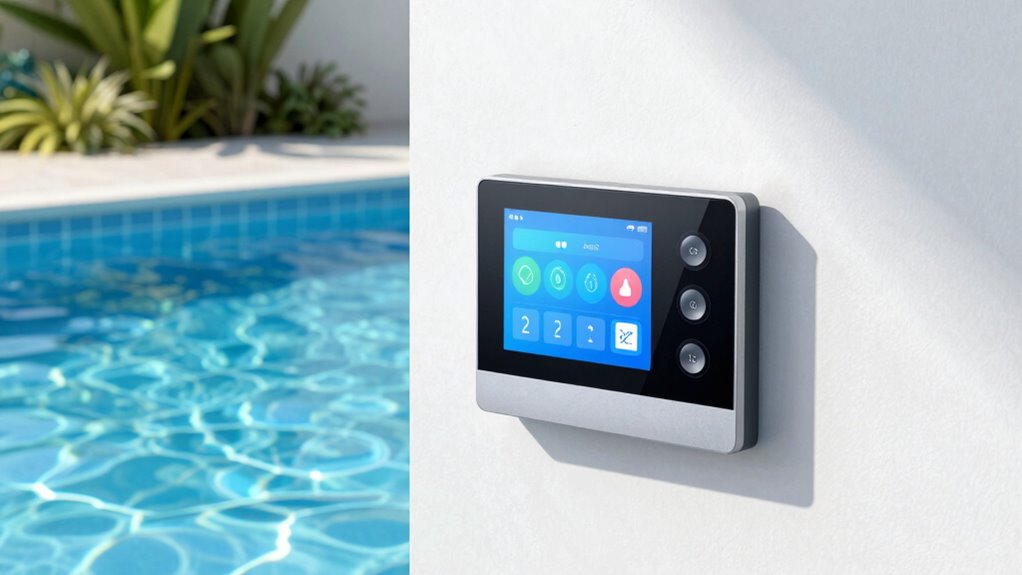

To prevent short-cycling and high bills, set your smart pool thermostat to maintain a comfortable temperature—usually between 78°F and 82°F—and avoid frequent toggling by adjusting cycle limits and using wider temperature differentials. Schedule heating during off-peak hours and use sensors to monitor water temperature closely. Cover your pool when not in use to retain heat. For more tips on optimizing your setup and saving energy, keep exploring these smart control strategies.
Key Takeaways
- Set optimal pool temperature between 78°F and 82°F to balance comfort and energy efficiency.
- Adjust cycle limits and use wider temperature differentials to prevent frequent heater toggling.
- Schedule heating during off-peak hours and align with pool usage to reduce unnecessary cycles.
- Utilize sensors and real-time monitoring to maintain consistent water temperature and avoid short-cycling.
- Cover the pool when not in use to retain heat and decrease energy consumption, lowering bills.

Durablow WH3002 Dual Wi-Fi (2.4G+5G) Smart Home Thermostat Timer Remote Control Kit for Pool Spa Hot Tub Gas Water Heater, Compatible with Alexa, Google Home
★★ ATTENTION: For GAS water heater only. This device is NOT a power supply nor an ignitor unit….
As an affiliate, we earn on qualifying purchases.
As an affiliate, we earn on qualifying purchases.
What Is a Smart Pool Thermostat and How Does It Work?
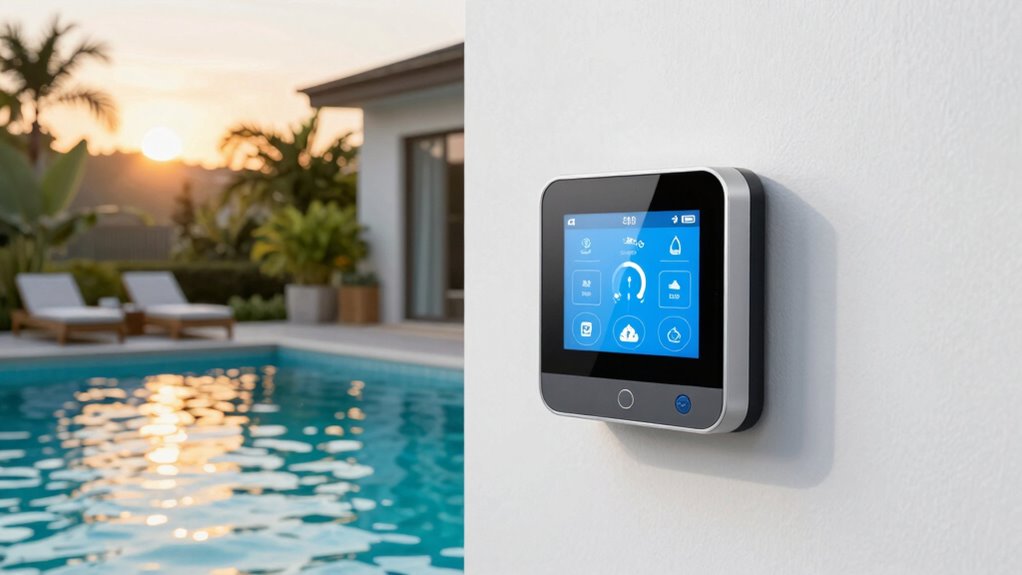
A smart pool thermostat is a device that allows you to control your pool’s temperature remotely through your smartphone or other connected devices. It helps you maintain ideal pool chemistry by ensuring consistent water temperature, which supports proper chemical balance. These thermostats can work seamlessly with solar heating systems, maximizing energy efficiency by adjusting settings based on sunlight exposure and outdoor conditions. You can schedule heating times, monitor current temperatures, and make adjustments from anywhere, saving you time and energy. By integrating with your pool’s existing equipment, a smart thermostat ensures your pool stays comfortable while preventing unnecessary heating cycles. Additionally, smart thermostats often include energy management features that help optimize overall efficiency and reduce costs. This combination of remote control, smart scheduling, and compatibility with solar heating makes managing your pool easier and more efficient. Moreover, incorporating smart home protocols can enhance their connectivity and integration with other home automation systems. Implementing proper installation practices is crucial to ensure safety and optimal performance of your smart thermostat. Enhanced energy efficiency not only reduces operational costs but also contributes to a more sustainable use of resources.

Aqua Cal Heat Pumps Pool Controller – Aqua Cal PS0001 / ECP0343 WiFi Pool Heater Controller Also for AutoPilot ChlorSync Chlorinator
Advanced WiFi Pool Control: View current salt level and water temperature. Experience seamless pool management with our wifi…
As an affiliate, we earn on qualifying purchases.
As an affiliate, we earn on qualifying purchases.
How Do Smart Thermostats Prevent Short-Cycling and Save Money?
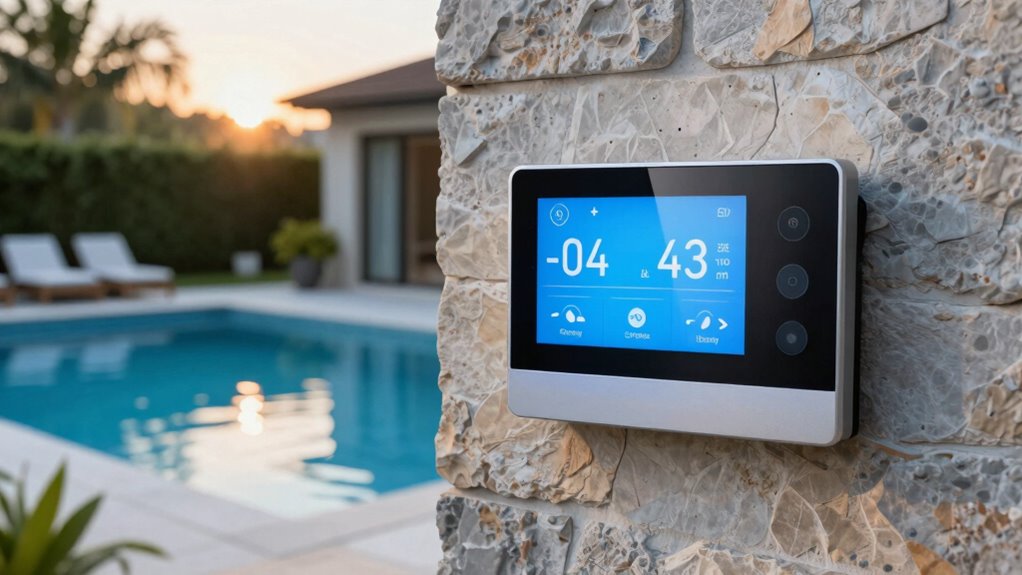
Smart thermostats prevent short-cycling by intelligently adjusting heating cycles, ensuring your pool doesn’t turn on and off too frequently. This supports better pool maintenance and helps maintain consistent water temperature. By avoiding rapid cycling, you reduce wear on your pool equipment and lower energy consumption, which leads to cost savings. When your pool heater runs efficiently, it also enhances pool safety, preventing overheating or other issues that could compromise safety. These thermostats use sensors and algorithms to monitor water temperature closely, activating heating only when necessary. As a result, you save money on energy bills and prolong the lifespan of your equipment. Overall, smart thermostats optimize pool operation, promoting safer swimming conditions and reducing the need for frequent repairs.

TempPro Waterproof Wireless Pool Thermometer Easy Read, Digital Pool Thermometer Floating for Swimming Pool, Hot Tub, Cold Plunge, Pond, Upgraded IPX8 Water Temperature Monitor (Previously ThermoPro)
This sensor/transmitter is specially designed for measuring the water temperature in swimming pools, hot tubs, spas and so…
As an affiliate, we earn on qualifying purchases.
As an affiliate, we earn on qualifying purchases.
Essential Settings to Maximize Your Pool Thermostat’s Efficiency
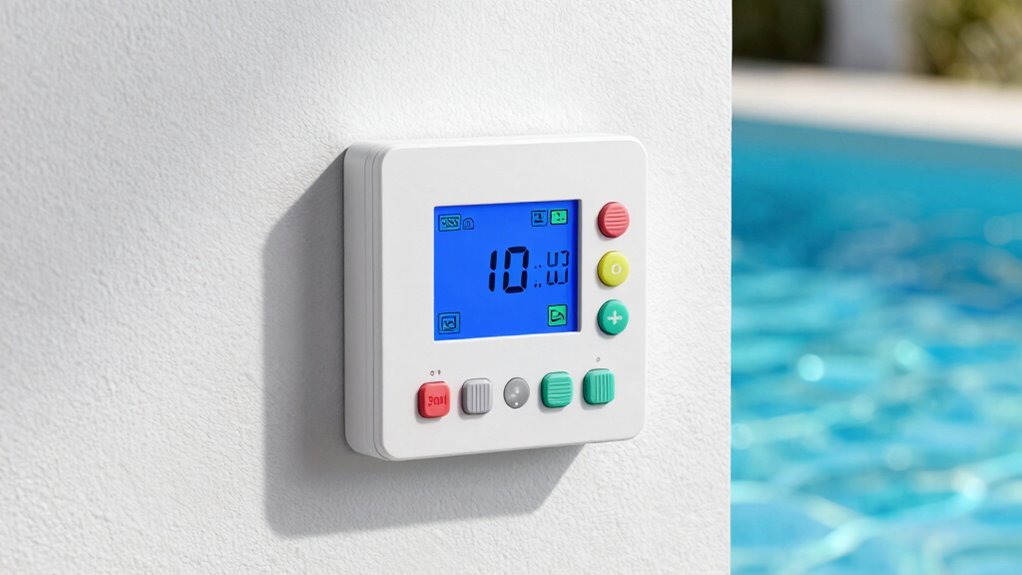
Setting your pool thermostat to an ideal temperature helps save energy while keeping your water comfortable. You should also avoid rapid cycling by preventing frequent on-off switches, which can waste power and strain the system. Adjusting these settings ensures your pool stays efficient and cost-effective to maintain. Additionally, understanding Rhythm Failure can provide insights into optimizing your system’s performance and avoiding issues like short-cycling. Recognizing the cycling pattern of your thermostat can help identify early signs of performance issues and improve overall system longevity.
Optimal Temperature Settings
To maximize your pool thermostat’s efficiency, finding the right temperature is essential. Setting it too high wastes energy and increases costs, while too low can compromise user comfort. Generally, keeping your pool between 78°F and 82°F strikes a good balance, promoting energy conservation without sacrificing enjoyment. If you swim frequently or have sensitive users, lean toward the lower end of that range. Conversely, if the pool is used less often, you can set it slightly higher to save energy. Smart thermostats can help you maintain these ideal temperatures precisely, preventing unnecessary heating cycles. Understanding proper temperature ranges is crucial for efficient pool management. Adjusting your settings within this range ensures you get the most out of your pool while keeping bills manageable and maintaining a comfortable swimming environment. Additionally, preventing short‑cycling through proper thermostat settings not only conserves energy but also extends the lifespan of your pool’s heating system. Being aware of cycling patterns can further optimize your system’s operation and prevent frequent unnecessary heating.
Avoid Rapid Cycling
Rapid cycling occurs when your pool thermostat turns the heater on and off frequently, wasting energy and wearing out the equipment. To prevent this, set your thermostat with a wider temperature differential, allowing the heater to run longer and less often. Consistent pool maintenance is vital, as poor water chemistry can trigger unnecessary heater cycles. Keep pH, alkalinity, and sanitizer levels balanced to maintain stable water conditions, reducing the likelihood of temperature fluctuations that cause rapid cycling. Additionally, avoid setting the temperature too close to the current water temperature, which can lead to constant toggling. Properly configuring your thermostat and understanding pool water chemistry are crucial for optimal performance. By optimizing your thermostat settings and maintaining proper water chemistry, you’ll improve efficiency, extend equipment lifespan, and save on energy costs.

Pool Heater Cover for Hayward,600D Heavy Duty Pool Heater Cover for Outside Units Pool Heater Winter Cover Waterproof Pool Pump Equipment Cover 40" L X 34" W X31 H
Pool Heater Cover: Size 40"L X 34"W x 31"H. Pool Heater Cover is suitable for most heater pumps…
As an affiliate, we earn on qualifying purchases.
As an affiliate, we earn on qualifying purchases.
How to Set Temperature and Cycle Limits?
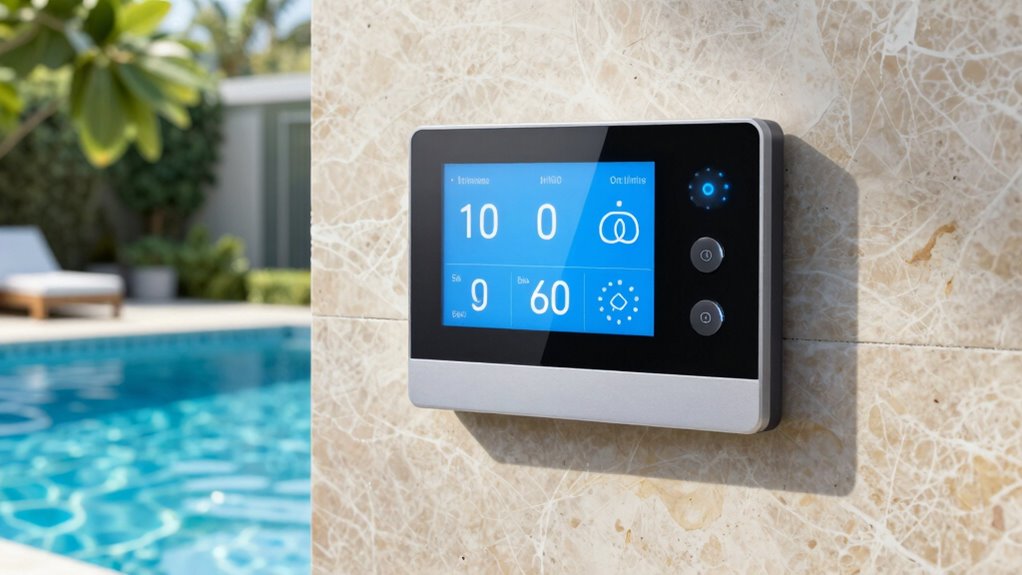
To keep your pool comfortable and efficient, you need to set the right temperature and cycle limits. Adjusting these settings helps prevent energy waste and guarantees your pool stays just right. Let’s explore how to choose ideal temperature levels and fine-tune cycle limits for your system. Proper space planning and understanding of home comfort can also improve overall energy efficiency and ease of use. Incorporating advanced pool technology like smart thermostats can further optimize performance and reduce operational costs.
Optimal Temperature Settings
Setting the right temperature and cycle limits on your smart pool thermostat guarantees your pool stays comfortable without wasting energy. For ideal results, aim for a temperature between 78°F and 82°F, which balances comfort and energy efficiency. Proper water circulation helps maintain consistent temperature and prevents uneven heating, reducing the risk of short-cycling. Keep an eye on your pool chemistry, as chemical imbalances can affect heating efficiency and water clarity. If your pool tends to lose heat quickly, consider slightly higher settings, but avoid raising the temperature too much, as it can lead to unnecessary energy use. Adjusting your thermostat within these parameters ensures your pool stays inviting while keeping energy bills in check. Additionally, ensuring proper system maintenance can help prevent issues like short-cycling and optimize energy savings. Regularly monitoring system performance allows you to fine-tune your settings for peak efficiency and extend the lifespan of your equipment. Incorporating energy-efficient components into your system can further enhance overall performance and savings.
Cycle Limit Adjustments
Adjusting the cycle limits on your smart pool thermostat helps prevent short-cycling and energy waste while maintaining consistent water temperature. Proper cycle limits ensure your system runs efficiently, especially when using solar heating or managing chemical balancing. By setting appropriate turn-on and turn-off points, you avoid unnecessary cycling that can wear out equipment or spike energy bills.
Maintaining nail health and understanding how external factors affect your pool’s operation can also contribute to better energy efficiency. Here are some tips:
- Set cycle limits based on your pool’s size and heating method, like solar panels.
- Adjust for seasonal changes to maximize energy use.
- Consider chemical balancing needs, as stable temperature aids in proper chemical distribution.
- Monitor and fine-tune cycle limits regularly for ideal performance and cost savings.
Programming Your Heating Schedule for Better Efficiency
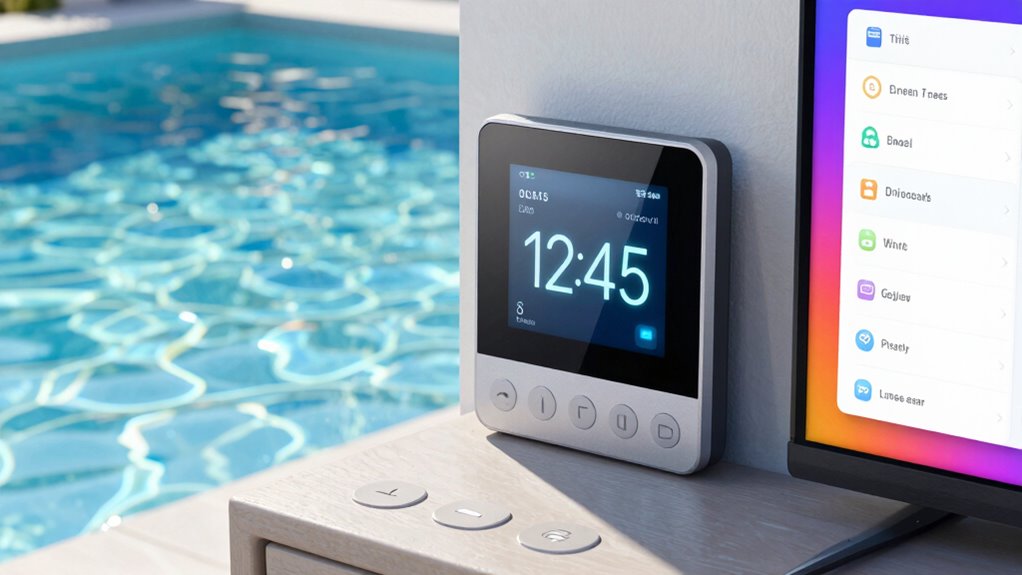
Creating an efficient heating schedule is essential for maximizing your pool’s energy savings and ensuring comfortable swimming times. Start by aligning your heater’s operation with your typical usage, turning it on just before you plan to swim. Use your smart thermostat to set the heater to run during off-peak hours if possible. Keep your pool cover in mind—covering the pool when not in use helps retain heat and reduces the need for continuous heating, saving energy and money. Additionally, maintaining proper chemical balance ensures your pool heats evenly and efficiently, avoiding unnecessary temperature adjustments. Regularly reviewing and adjusting your schedule based on seasonal changes or weather forecasts can further improve efficiency, preventing short-cycling and high energy bills while keeping your pool ready whenever you want to swim. Proper filter sizing and flow also play a crucial role in maintaining consistent heating performance and preventing energy waste. Ensuring your pool equipment setup is optimized can help prevent short-cycling and improve overall energy efficiency. Monitoring your system performance regularly can help identify issues early and keep your pool heating running smoothly.
Using Sensors and Wi-Fi to Keep Your Pool Warm and Save Energy
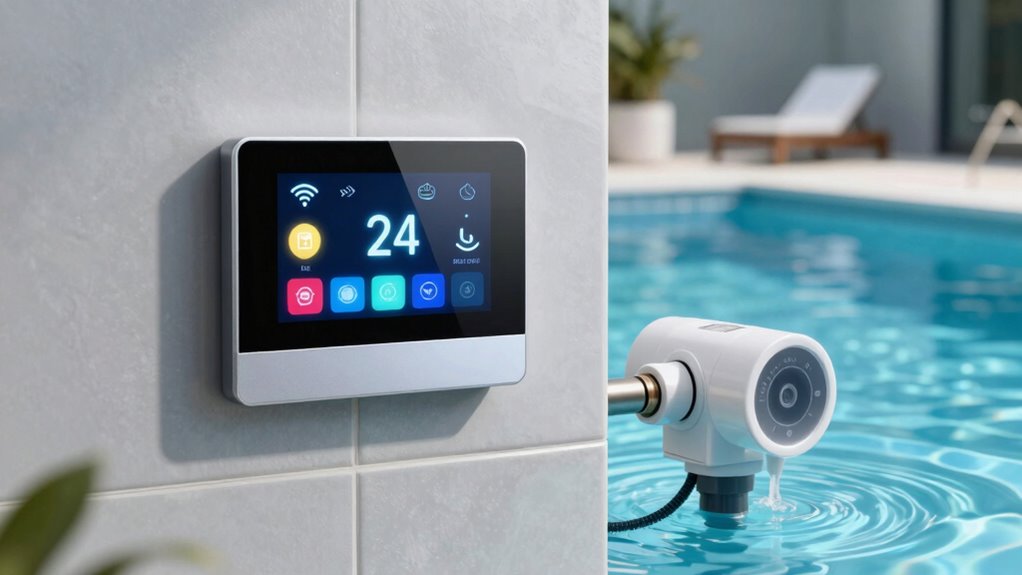
Using sensors and Wi-Fi connectivity takes your pool heating to the next level by providing real-time data and remote control. You can monitor water temperature, adjust settings, and optimize energy use from anywhere. This technology enhances pool cover efficiency by alerting you when to close or open the cover, reducing heat loss. It also facilitates solar heating integration, allowing you to coordinate solar panels with your heating schedule for maximum efficiency. With smart features, you avoid unnecessary heating cycles and save energy. Plus, you can receive notifications if your pool’s temperature drops unexpectedly, preventing short-cycling. This setup ensures your pool stays comfortably warm while minimizing energy waste. Overall, sensors and Wi-Fi make pool management more convenient, efficient, and cost-effective.
Troubleshooting Common Pool Heating Issues
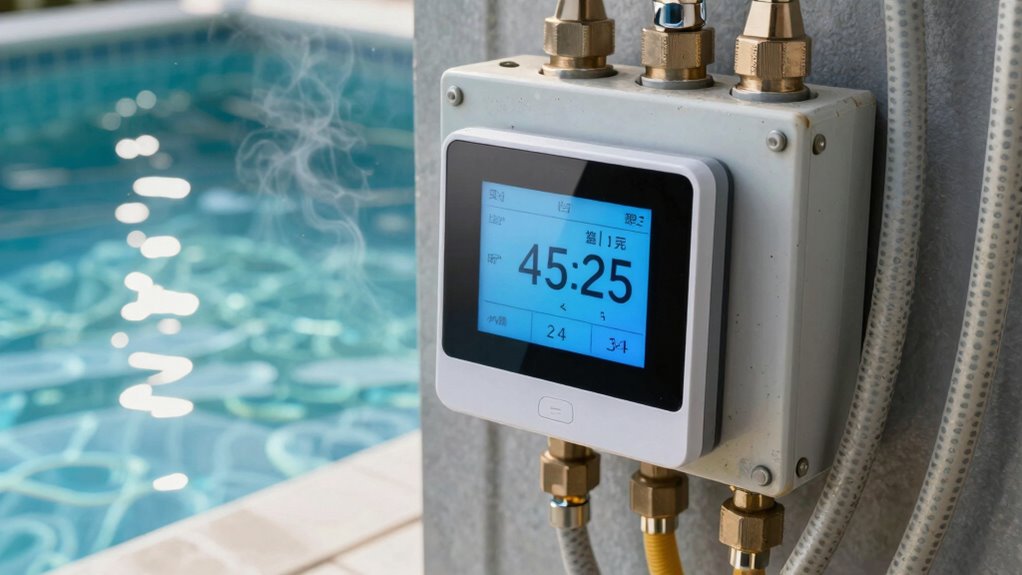
Even with smart technology, pool heating issues can still arise, disrupting your comfort and wasting energy. One common problem is inconsistent heating, often caused by poor pool maintenance or imbalanced chemical levels. If your pool isn’t heating properly, check the chemical balance—pH, alkalinity, and sanitizer levels—and adjust as needed. Poor chemical balance can hinder heater efficiency and damage equipment over time. Additionally, ensure your pool’s filters and pumps are clean and functioning correctly, as debris can reduce circulation and heat transfer. If your thermostat isn’t responding or short-cycling occurs, verify its settings and calibration. Regular maintenance, including cleaning filters and testing water chemistry, can prevent many heating issues and keep your smart system operating smoothly.
Choosing the Right Smart Pool Thermostat for Your Needs
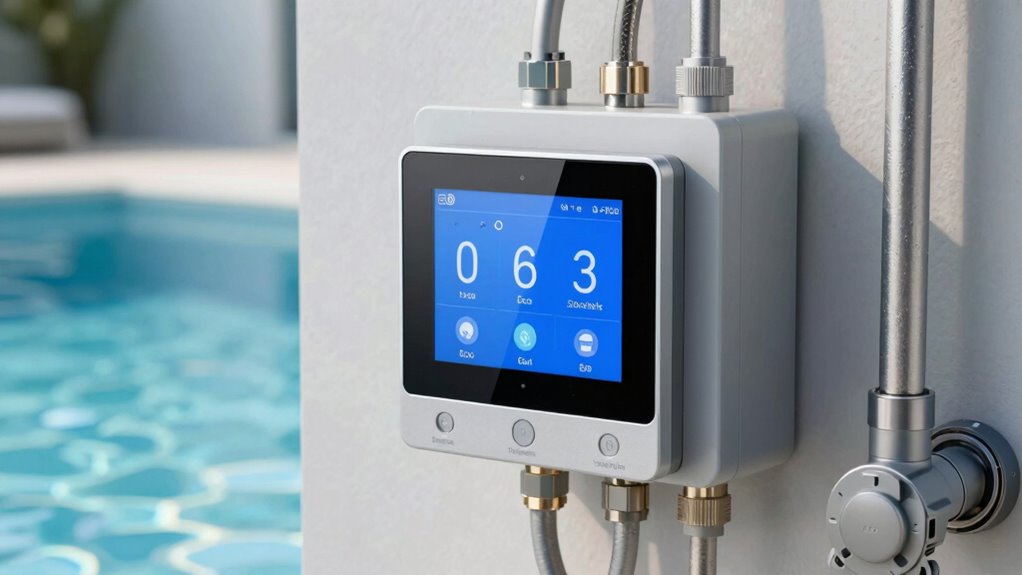
Choosing the right smart pool thermostat depends on your specific needs and preferences, as well as your pool’s size and features. Consider how often you’ll perform pool maintenance and monitor water chemistry, since these impact thermostat performance. A thermostat with advanced scheduling can help prevent short-cycling, saving you money. Look for features like remote control via smartphone to make adjustments easy. Compatibility with your existing pool equipment ensures smooth integration. Also, check if it offers alerts for water chemistry issues or maintenance reminders.
Choose a smart pool thermostat with scheduling, remote control, and water chemistry alerts for optimal maintenance.
- Easy-to-use app for remote adjustments
- Compatibility with your pool equipment
- Water chemistry monitoring features
- Customizable scheduling to prevent short-cycling
Frequently Asked Questions
Can Smart Pool Thermostats Integrate With Existing Home Automation Systems?
Yes, you can integrate smart pool thermostats with your existing home automation systems. This allows you to control the thermostat via voice control and monitor energy usage easily. Many models are compatible with popular platforms like Alexa, Google Assistant, or Apple HomeKit. By integrating, you gain better control over your pool’s temperature, reduce energy costs, and keep track of energy monitoring to guarantee efficient operation.
What Safety Features Do Smart Pool Thermostats Include?
Imagine a secure bubble around your pool, keeping everyone safe. Smart pool thermostats include safety features like temperature locks, preventing accidental adjustments that could cause overheating or freezing. They also have thermostat security, alerting you to malfunctions or unauthorized access. These features guarantee your pool remains a safe, relaxing oasis, giving you peace of mind knowing that your pool safety and thermostat security are always protected.
How Often Should I Update the Firmware of My Smart Pool Thermostat?
You should update your smart pool thermostat’s firmware whenever new updates are available, ideally following a regular maintenance schedule. Firmware updates improve performance, fix bugs, and enhance security. Check your device’s app or settings monthly, and install updates promptly to keep your system running smoothly. Staying current guarantees your thermostat functions efficiently and prevents potential issues that could lead to short-cycling or high bills.
Are Smart Thermostats Suitable for All Types of Pool Heaters?
Imagine your pool heater humming smoothly, perfectly controlled by a smart thermostat—yes, they’re compatible with many types. But, beware: not all pool heaters fit every thermostat. Check your heater’s compatibility first. Installation options vary too—some require professional setup, others are DIY-friendly. So, before you buy, verify compatibility and installation needs to guarantee your smart thermostat seamlessly integrates, giving you precise control and energy savings.
Do Smart Pool Thermostats Work Effectively in Extreme Weather Conditions?
Yes, smart pool thermostats work effectively in extreme weather conditions because they offer weather resilience and climate adaptability. You’ll find that these thermostats adjust their settings based on outdoor temperature changes, helping you maintain consistent water temperature and save energy. Whether it’s a heatwave or a cold snap, smart thermostats respond quickly, ensuring your pool stays comfortable without wasting energy or increasing your bills.
Conclusion
With the right settings, your smart thermostat becomes a gentle guardian, quietly maintaining the perfect pool temperature. It’s like a steady hand guiding warm water to your fingertips, preventing short-cycles and high bills. When you program thoughtfully and use sensors wisely, your pool stays inviting and efficient. Imagine the serenity of clear, warm water, effortlessly kept just right—your smart thermostat works behind the scenes, so you can plunge in and enjoy every moment.