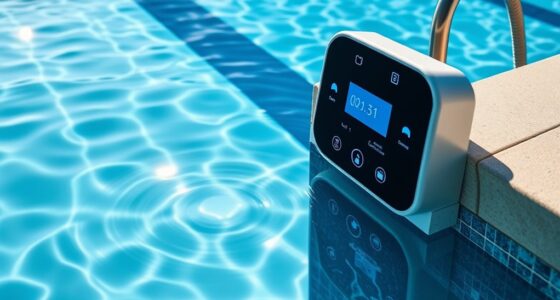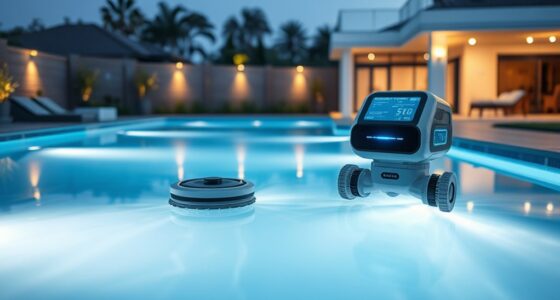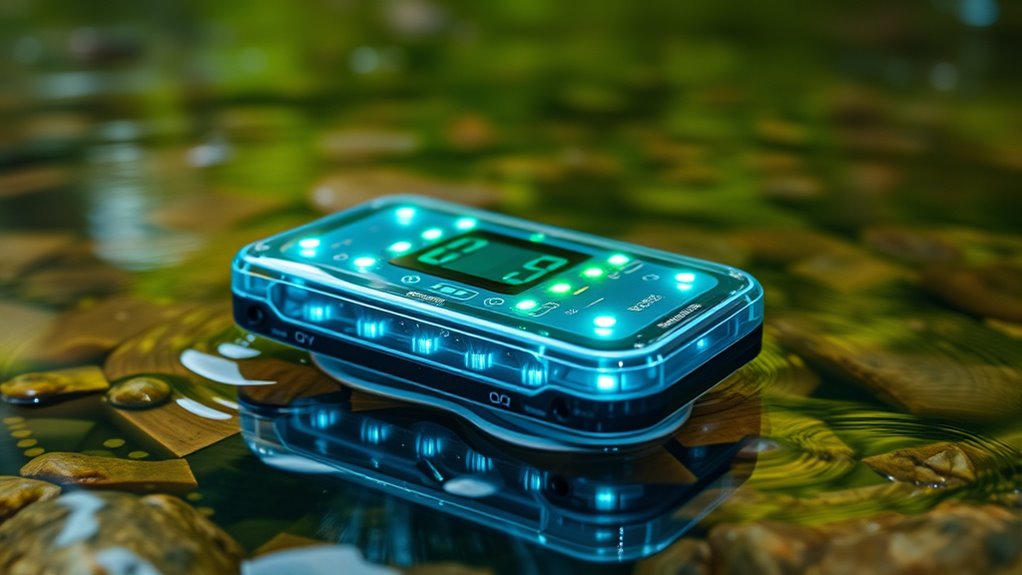
Smart sensors play a critical role in real-time water quality monitoring by providing you instant data on pollutants, pH, turbidity, and other essential parameters. This immediate information helps you detect contamination quickly, respond promptly, and guarantee water safety. They also reduce manual effort through automatic calibration and advanced analytics, helping you identify trends and alarms early. Keep exploring to discover how these technologies can boost water management and safeguard your resources.
Key Takeaways
- Smart sensors enable continuous, real-time measurement of water parameters like pollutants, pH, and turbidity for immediate insights.
- Automated calibration maintains sensor accuracy, ensuring reliable water quality data for monitoring systems.
- Data analytics transform sensor data into actionable insights, identifying trends and contamination risks quickly.
- Real-time monitoring allows prompt responses to water quality issues, reducing health hazards and system downtime.
- These systems improve operational efficiency, support regulatory compliance, and optimize resource management in water treatment.
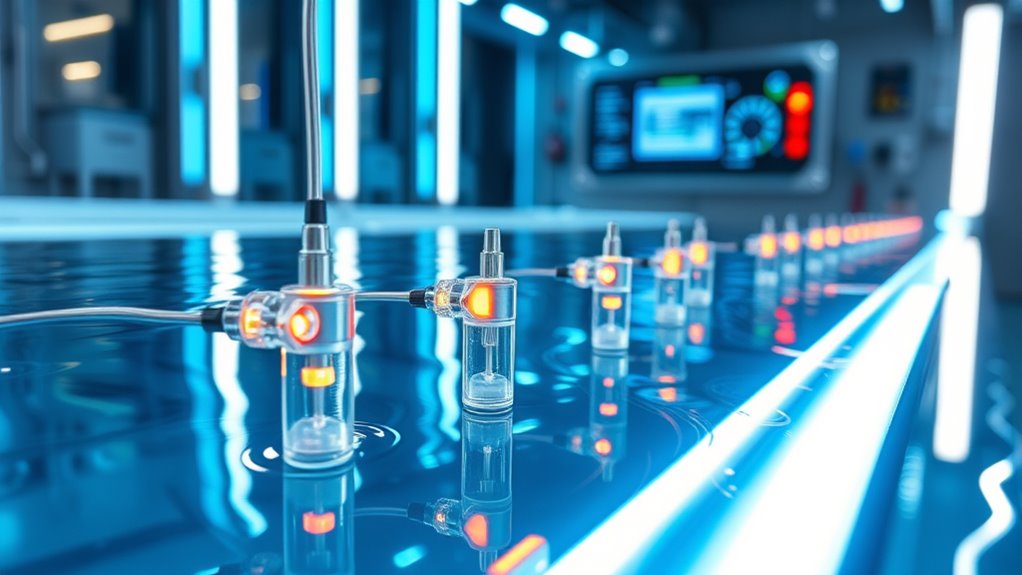
Have you ever wondered how technology can help us manage water resources more efficiently? With smart sensors and real-time water quality monitoring, you can stay ahead of potential issues and guarantee clean, safe water for everyone. These advanced sensors are designed to detect pollutants, pH levels, turbidity, and other essential parameters, providing instant data that helps you make informed decisions. But to get accurate and reliable information, sensor calibration is indispensable. Proper calibration ensures that the sensors are measuring water quality precisely, reducing errors caused by environmental factors or sensor drift. Regular calibration routines, either manual or automated, keep your sensors functioning at peak accuracy, which is fundamental for meaningful data analytics.
Smart sensors and calibration are key to accurate, reliable water quality monitoring.
When sensors are properly calibrated, it allows you to trust the data they generate. This data, when combined with powerful analytics tools, helps you identify trends, anomalies, and potential risks in water quality. Data analytics transforms raw sensor readings into actionable insights, enabling you to respond swiftly to contamination events or other issues. For example, if sensors detect a sudden spike in harmful bacteria levels, analytics can help pinpoint the source and assess the extent of contamination. This proactive approach minimizes health risks and reduces the costs associated with water treatment and cleanup.
Real-time monitoring systems leverage these sensors and analytics to provide continuous oversight of water bodies, pipelines, or treatment plants. Instead of relying on periodic sampling, which can miss rapid changes, you get instant updates on water conditions. This immediacy allows you to act quickly when problems arise, whether it’s shutting down a contaminated water source or adjusting treatment processes on the fly. Additionally, data analytics can forecast future water quality trends based on historical data, helping you plan for seasonal variations or infrastructure upgrades.
Integrating smart sensors into your water management infrastructure also enhances operational efficiency. Automated calibration and data analysis reduce manual labor, eliminate guesswork, and improve overall system reliability. You can set up alerts for when water quality parameters exceed safe thresholds, ensuring that your team responds promptly. Over time, the accumulated data can reveal patterns and insights that support long-term planning, policy development, and resource conservation. Incorporating industry standards and best practices in sensor calibration further ensures your system remains compliant and accurate. In essence, smart sensors and data analytics work together to create a smarter, more resilient water management system that protects public health, preserves environmental quality, and optimizes resource use.

GoveeLife Upgraded Smart Water Leak Detector 1s with 1804ft Ultra-Long Range, WiFi Water Sensor with SMS/Email/APP Push and Sound Alarm,5-Year Battery Life, 5 Pack, Suit for Home, Basement, Kitchen
Breakthrough 550m/1804ft Connectivity: Engineered with advanced Sub-1G long-range wireless tech, our leak detector maintains robust signals over unprecedented…
As an affiliate, we earn on qualifying purchases.
As an affiliate, we earn on qualifying purchases.
Frequently Asked Questions
How Do Smart Sensors Withstand Harsh Environmental Conditions?
You can trust that smart sensors are built with high sensor durability and environmental resilience. They use rugged materials and protective coatings to withstand harsh conditions like extreme temperatures, moisture, and chemical exposure. These design features ensure your sensors remain accurate and reliable over time, even in tough environments. Regular maintenance and calibration also help maximize their lifespan and performance, giving you peace of mind in challenging conditions.
What Is the Lifespan of a Typical Smart Water Sensor?
Ever wonder how long your smart water sensor lasts? Typically, a good sensor can operate for 3 to 5 years, but its lifespan depends on factors like sensor calibration and data transmission quality. Regular calibration ensures accuracy, while reliable data transmission prevents data loss and prolongs device life. Are you maintaining your sensor properly? Proper upkeep can extend its lifespan and keep your water quality data precise over time.
Are There Privacy Concerns With Real-Time Water Monitoring Data?
You should be aware that real-time water monitoring data can raise privacy concerns, especially around data security. If this sensitive information isn’t properly safeguarded, it could be vulnerable to breaches or misuse. To address this, ensure your system complies with privacy regulations and implements strong security measures. Staying vigilant about data security concerns helps you protect user privacy and maintain trust while leveraging the benefits of real-time water quality data.
How Do Smart Sensors Differentiate Between Different Pollutants?
Imagine each sensor as a detective with a unique fingerprint, able to identify specific pollutants. You set it up for pollutant detection through sensor calibration, teaching it to recognize distinct chemical signatures. When water flows past, it analyzes data, distinguishing pollutants based on their unique properties. This way, the sensor acts like a skilled detective, accurately differentiating between various contaminants in real time.
What Maintenance Is Required for Long-Term Sensor Accuracy?
To keep your sensors accurate long-term, you need to perform regular sensor calibration, ensuring readings stay precise. Additionally, fouling prevention is essential; regularly clean sensors and apply anti-fouling coatings to prevent buildup. Monitoring sensor performance helps identify drift early, so you can recalibrate or replace components as needed. Proper maintenance, including calibration and fouling prevention, keeps your sensors reliable and extends their lifespan for accurate water quality monitoring.

Frizzlife LP365 Smart Water Monitor and Automatic Shutoff – 0.01GPM Ultrasonic Micro Leak Detection, APP Wi-Fi Remote Control, Real-Time Flow/Temp Monitoring, 24/7 Water Usage Reports, 3/4" and 1"
【LP365】–Supports viewing Temp and Flow Rate,【LP365-P】–Supports viewing Water pressure and Flow Rate (All other functions are identical)
As an affiliate, we earn on qualifying purchases.
As an affiliate, we earn on qualifying purchases.
Conclusion
By harnessing smart sensors, you become a vigilant guardian of water, turning complex data into a clear, flowing river of insights. Imagine your monitoring system as a watchful eye, constantly dancing like fireflies in the night, illuminating pollution or contamination before it spreads. With real-time water quality monitoring, you’re not just observing water—you’re orchestrating a symphony of safety and sustainability, ensuring every drop remains pure and life-giving for generations to come.

pH Calibration Solution Kit (4,7,10 pH Buffer Solution) & pH Electrode Storage Solution 3 * 50ml pH Buffer Calibration Solution + KCl pH Probe Storage Solution for All pH Meters with High Accuracy
Precisely Calibrate & Protect Your pH Meters – The GIDIGI pH Solution Kit includes 3x50ml pH buffer calibration…
As an affiliate, we earn on qualifying purchases.
As an affiliate, we earn on qualifying purchases.

5 Pack Water Leak Detectors for Home, 100dB Water Sensor Alarm for Basement,Flood Leakage Detection Devices for Pipe/Drain/Sink/Faucet Drip Alert,Floor Flooding in Bathroom/Kitchen/Toilet/Laundry Room
Leaking & Dripping: 2 water sensitive probes on the front for monitoring pipe/drain drip and 4 rear probes…
As an affiliate, we earn on qualifying purchases.
As an affiliate, we earn on qualifying purchases.