To track sustainability in your pool business, focus on measuring eco-friendly chemical use and water conservation techniques. Keep records of the chemicals you choose, especially natural or less harmful options, and document reductions in water consumption through cover systems and recycling. Share these metrics with clients to build trust and demonstrate your commitment. Continually analyze your data to set new sustainability goals, revealing how transparent reporting can strengthen your reputation and differentiate your business. Explore further to discover effective strategies for tracking and sharing your progress.
Key Takeaways
- Track and report eco-friendly chemical usage to demonstrate environmental commitment and reduce chemical loads.
- Measure water conservation efforts, such as evaporation reduction and recycling, to showcase resource preservation.
- Combine chemical and water metrics to provide a comprehensive view of sustainability progress.
- Share sustainability data with clients and stakeholders to build trust and enhance business reputation.
- Use trend analysis to refine practices, set benchmarks, and demonstrate continuous improvement over time.
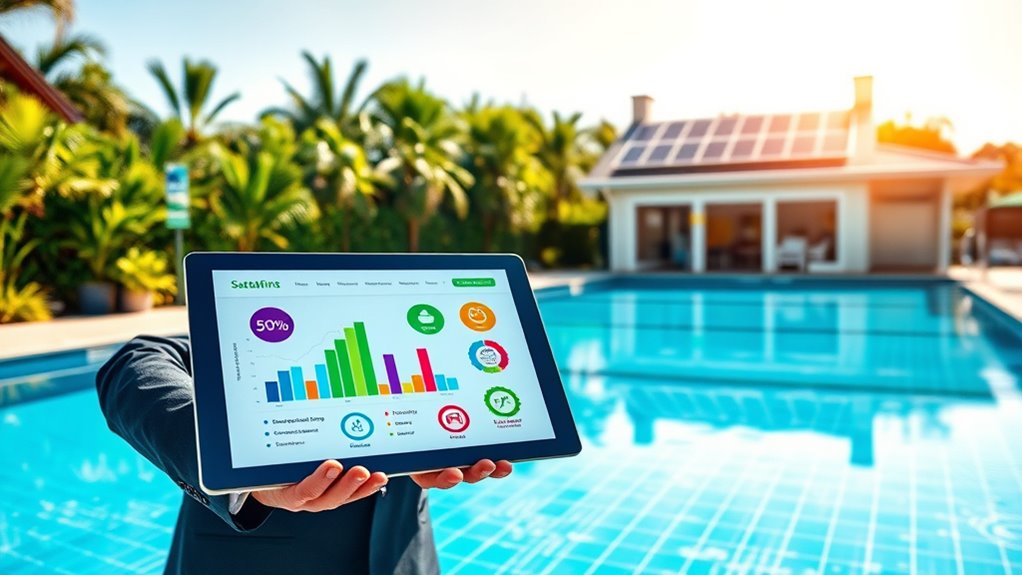
Are you wondering how pool businesses can measure and showcase their commitment to sustainability? One of the most effective ways is by implementing clear metrics that highlight your eco-friendly practices. Using eco-friendly chemicals is a great starting point. These chemicals are designed to minimize environmental impact without compromising water quality or safety. When you switch to natural or less harmful chemicals, you not only reduce the chemical load in your pools but also demonstrate your dedication to protecting the environment. Tracking the amount of eco-friendly chemicals used over time can serve as a tangible metric to show your progress and commitment. Customers increasingly value businesses that prioritize health and sustainability, and sharing your chemical choices can enhance your reputation.
Water conservation techniques are equally essential in measuring your sustainability efforts. Pool water is a valuable resource, and employing strategies to reduce water use is fundamental. Techniques such as installing cover systems can considerably cut down evaporation, especially during off-peak hours or off-season periods. You can also adopt smart water management practices, like adjusting fill levels based on seasonal demand or weather conditions, to avoid unnecessary refills. Incorporating water recycling systems or greywater reuse can further lower your overall water footprint. By documenting the reduction in water consumption achieved through these methods, you create a clear metric that highlights your commitment to conserving critical resources. Sharing these figures with clients or through your marketing channels not only boosts transparency but also reinforces your business’s sustainability ethos.
Combining data on eco-friendly chemical usage and water conservation techniques provides an all-encompassing picture of your sustainability efforts. Regularly monitoring these metrics allows you to identify trends, set improvement goals, and showcase tangible results. For example, if you notice a steady decrease in chemical use or water consumption, you can confidently communicate these achievements to clients and stakeholders. Reporting such metrics in sustainability reports or marketing materials demonstrates transparency and accountability, which can differentiate your business in a competitive market. Remember, consistency is key—tracking progress over time helps you refine practices and set new benchmarks. By actively measuring and sharing your efforts, you not only improve your environmental impact but also build trust with clients who increasingly seek out eco-conscious businesses. Ultimately, integrating these practices into your operations sends a clear message: your pool business is committed to sustainability, and you’re taking active steps to make a positive difference.

Ultimate Natural Pool Clarifier – an Eco-Friendly Way to get Clear Pool Water by Removing Cloudy Pool Water – AquaDoc Natural Pool Chemicals
Fast-Acting Pool Clarifier: The AquaDoc Natural Pool Clarifier transforms murky, cloudy pool water into a sparkling oasis, creating…
As an affiliate, we earn on qualifying purchases.
As an affiliate, we earn on qualifying purchases.
Frequently Asked Questions
How Often Should Pool Businesses Update Their Sustainability Reports?
You should update your sustainability reports at least annually, aligning with standard sustainability reporting cycles. This report update frequency guarantees you stay current with your environmental performance and compliance requirements. Regular updates help you track progress, identify areas for improvement, and communicate your efforts transparently. By maintaining consistent reporting cycles, you demonstrate your commitment to sustainability and build trust with clients and stakeholders.
What Certifications Indicate a Pool Business’s Commitment to Sustainability?
You can show your commitment to sustainability by pursuing eco labeling standards and green building certifications like LEED or Green Globes. These certifications demonstrate your dedication to environmentally friendly practices, energy efficiency, and sustainable materials. By obtaining such credentials, you signal to clients and partners that you prioritize eco-conscious operations, helping you stand out in the pool industry and contribute positively to environmental conservation.
How Can Small Pool Businesses Improve Their Sustainability Metrics Cost-Effectively?
To improve your sustainability metrics cost-effectively, focus on using eco-friendly materials for pool maintenance and equipment. Implement water conservation practices like regular leak checks and efficient filtration systems. Educate your team on eco-conscious methods and promote customer awareness. Small changes, such as installing low-flow fixtures or solar covers, can markedly reduce your environmental impact without breaking the bank, boosting your sustainability profile and attracting eco-minded clients.
What Are the Common Challenges in Collecting Sustainability Data for Pools?
You might think collecting sustainability data is complicated, but focusing on data accuracy and stakeholder engagement makes it manageable. Challenges include inconsistent data collection methods and limited staff resources. To overcome these, establish clear procedures and involve your team early. Engaging stakeholders ensures you gather extensive, reliable data. By prioritizing data accuracy and team cooperation, you’ll streamline the process and support your sustainability goals more effectively.
How Do Customer Preferences Influence Sustainability Reporting in Pools?
Your customer preferences shape your sustainability reporting by emphasizing eco-friendly materials and water conservation. When clients value eco-friendly materials, you highlight sustainable pool components and eco-conscious practices. Water conservation becomes a priority, so you showcase efforts to reduce water use and optimize efficiency. By aligning your reporting with customer interests, you demonstrate your commitment to sustainability, encouraging trust and loyalty, and differentiating your business in a competitive market.

INTEX Krystal Clear Saltwater Pool Chlorine System for Above Ground Pools up to 7,000 Gallons, Pool Cleaner with Automatic Timer and Self Cleaning
✔ UPGRADE TO A SALTWATER POOL – QS500 saltwater system lets you enjoy the same process used for…
As an affiliate, we earn on qualifying purchases.
As an affiliate, we earn on qualifying purchases.
Conclusion
By embracing sustainability metrics and transparent reporting, you’re not just running a pool business—you’re transforming the industry itself. Your commitment can set a new standard so high that it’ll be remembered as the gold standard for eco-friendly practices. Don’t wait for change to happen; lead it today. With every step you take toward sustainability, you’ll make an impact so massive it’ll ripple through generations, turning your business into a legend of environmental stewardship.

LO-CHLOR Aqua Blanket – The Liquid Solar Blanket for Pools and Energy Saving Liquid Pool Cover, Non-Toxic and Safe Pool Evaporation Prevention, Greatly Reduces Heat and Chemical Loss AB009-12 (32 Oz)
Hassle-Free: Just one small weekly dose of this liquid pool cover offers an invisible solar pill for pool…
As an affiliate, we earn on qualifying purchases.
As an affiliate, we earn on qualifying purchases.
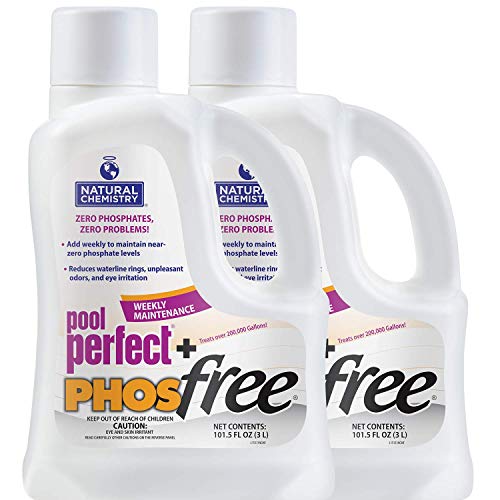
Natural Chemistry® Pool Perfect® + Phosfree®, 3-Liter (2-Pack)
Add weekly to maintain near zero phosphate levels
As an affiliate, we earn on qualifying purchases.
As an affiliate, we earn on qualifying purchases.