
Good swimmer hygiene is essential for preventing illness and keeping the pool safe. Shower before swimming to wash away sweat and dirt, and avoid urinating in the water. After swimming, towel off and shower again to remove chlorine residue and bacteria, then apply moisturizer to protect your skin from dryness. Maintaining clean gear and practicing proper hygiene helps reduce germs and contaminants. For more tips on staying healthy in the water, keep exploring how hygiene impacts your overall safety.
Key Takeaways
- Shower before swimming to remove sweat, dirt, and oils, reducing bacteria in pool water.
- Avoid swimming when feeling unwell to prevent transmitting illnesses to others.
- Refrain from urinating in the pool to prevent irritants and maintain water quality.
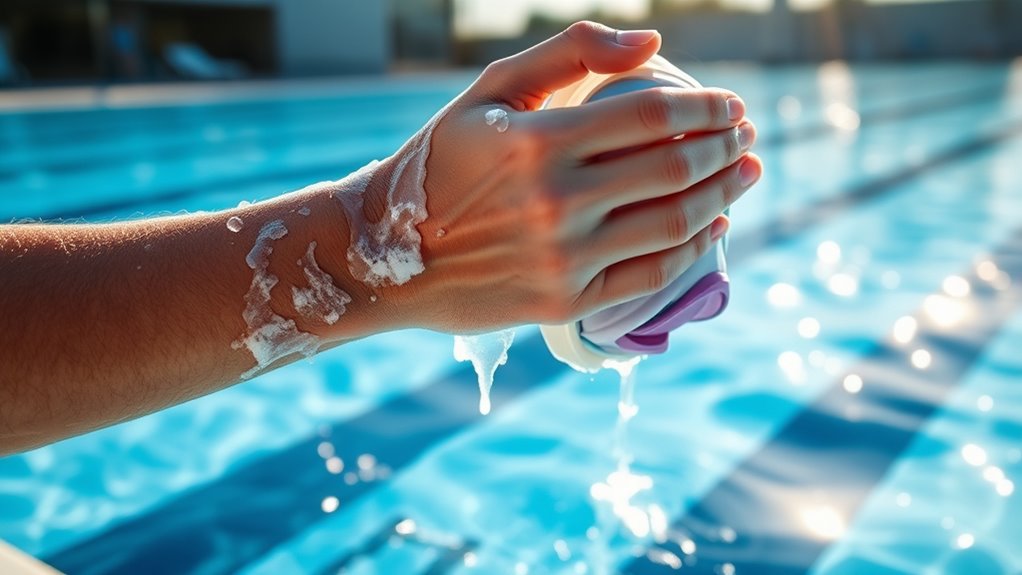
- Shower and moisturize after swimming to remove chlorine residue and protect skin health.
- Regularly clean swim gear and towels to prevent bacterial buildup and cross-contamination.
Maintaining good swimmer hygiene is essential for staying healthy and preventing infections in the pool. When you dive in the water, the last thing you want is to introduce bacteria or other contaminants that can lead to illness. One key aspect of this is understanding how chlorine effects your skin and overall hygiene. Chlorine is widely used to disinfect pools, killing germs and bacteria that could cause infections. However, it’s important to recognize that chlorine can also impact your skin’s hydration. Prolonged exposure or frequent swimming can strip moisture from your skin, leading to dryness, irritation, and even cracks that make it easier for bacteria to enter your body. To counteract this, you should always rinse off thoroughly after swimming and apply a good moisturizer to restore your skin’s natural barrier. Using a gentle, hydrating lotion can help maintain skin hydration, guaranteeing your skin remains resilient against irritants and bacteria. Additionally, using appropriate skin care products can further support skin health and hydration during regular swimming routines.
Rinse and moisturize after swimming to protect your skin from chlorine’s drying effects.
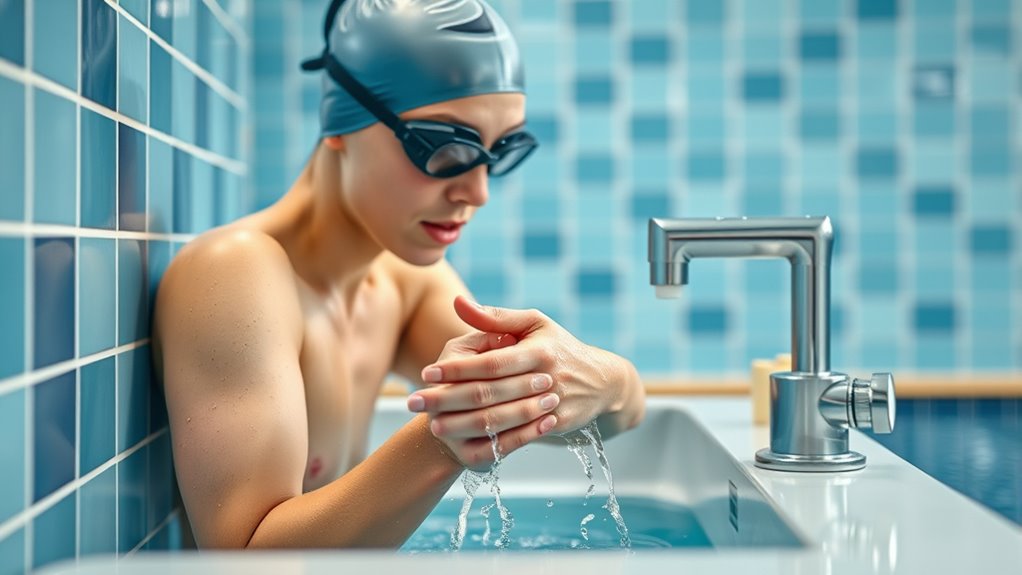
In addition to understanding chlorine effects, you should be proactive about your personal hygiene before entering the pool. Showering before swimming not only removes sweat, dirt, and oils from your skin but also reduces the amount of bacteria you carry into the water. Wearing a clean swimsuit each time minimizes the spread of germs, and avoiding swimming if you’re feeling unwell helps prevent transmitting illnesses to others. It’s also advisable to avoid urinating in the pool, as urine reacts with chlorine to form compounds that can cause skin irritation and eye discomfort, further compromising your hygiene.
While in the pool, try to limit the amount of water that remains on your body by towel-drying promptly afterward. This helps reduce skin dryness caused by chlorine effects. Remember, your hygiene routine doesn’t end once you leave the pool. Showering again after swimming helps wash away chlorine residue and bacteria that might have accumulated on your skin and hair. Applying moisturizer post-shower is vital for maintaining skin hydration, especially if you notice your skin feeling tight or itchy. Consistent skin care practices not only improve comfort but also strengthen your skin’s defenses against infections.
Finally, paying attention to your overall health and hygiene habits creates a safer swimming environment for everyone. Regularly cleaning your swim gear and towels prevents the buildup of bacteria and fungi. Keeping your skin hydrated and protected ensures that chlorine’s disinfectant benefits don’t come at the expense of your skin’s health. By following these simple steps—proper pre- and post-swim hygiene, managing skin hydration, and understanding chlorine effects—you can enjoy swimming while minimizing the risk of infections and maintaining your health.

TRIHARD Chlorine Removal Body Wash, Protects and Hydrates Sensitive Skin from Pool and Ocean, Pool Essentials for Post Swim Chlorine Skin Protection
AFTER-SWIM BODY WASH FOR CHLORINE REMOVAL: A post-swim body care essential designed to gently cleanse, hydrate, and refresh…
As an affiliate, we earn on qualifying purchases.
As an affiliate, we earn on qualifying purchases.
Frequently Asked Questions
How Often Should I Shower Before Swimming?
You should shower before swimming at least once, ideally right before you hit the pool. This pre swim hygiene helps remove sweat, dirt, and oils, reducing contamination in the water. Shower frequency depends on how active you are, but a quick rinse before each swim is recommended. By practicing good pre swim hygiene, you keep the water cleaner and lower your risk of illness.
What Are the Signs of an Illness From Swimming?
If you notice symptoms like persistent stomach upset, diarrhea, or skin rashes after swimming, your body’s warning signs are flashing like neon lights. Poor pool water quality can weaken your swimmer immune system, making you more vulnerable. Keep an eye out for respiratory issues or unusual fatigue, which might signal illness. Trust your body’s signals; they’re the first line of defense against hidden dangers lurking in the water.
Can Pool Chemicals Cause Skin Allergies?
Yes, pool chemical reactions can cause skin allergies. When your skin comes into contact with chlorinated water, it may trigger skin irritation or allergic reactions, especially if you have sensitive skin. Chemicals like chlorine and bromine can strip natural oils, leading to dryness, redness, or itching. To reduce this risk, shower before and after swimming, moisturize your skin, and inform the pool staff if you notice any reactions.
How Should I Handle a Contagious Skin Condition?
Ever wondered how you can stop a skin infection from spreading? You should see a healthcare professional for diagnosis and treatment of your contagious skin condition. Keep the affected area covered, avoid sharing towels or gear, and practice good hygiene to prevent spreading. For effective contagious skin condition management and skin infection prevention, stay home until your doctor clears you, and follow their advice carefully.
Are There Specific Hygiene Practices for Children?
You should teach children good hygiene practices, like washing their hands thoroughly before and after swimming, showering immediately after swimming, and avoiding sharing towels or water toys. Make certain they wear clean swimwear daily, and remind them not to scratch or touch their skin. These child hygiene habits are essential for swimming safety, helping reduce the risk of illness spreading. Consistent hygiene keeps your child healthy and ensures a safe swimming experience.

TRIHARD Chlorine Defense Body Lotion for Swimmers, Protects and Hydrates Sensitive Skin from Pool and Ocean, Pre and Post Swim Chlorine Protection from Hard Water and Chemicals
SWIM BODY LOTION FOR CHLORINE PROTECTION: A pre- and post-swim body care essential designed to support dry, sensitive…
As an affiliate, we earn on qualifying purchases.
As an affiliate, we earn on qualifying purchases.
Conclusion
Maintaining good swimmer hygiene is like keeping your boat afloat in rough waters—you need to stay vigilant to prevent illness. By showering thoroughly, avoiding shared gear, and practicing proper pool etiquette, you protect yourself and others. Think of it as your personal shield against germs, helping everyone enjoy the water safely. Remember, staying clean isn’t just about you; it’s about creating a healthier, happier swimming environment for all. plunge in responsibly and stay healthy!
waterproof swim gear cleaning kit
As an affiliate, we earn on qualifying purchases.
As an affiliate, we earn on qualifying purchases.
chlorine removal body wash
As an affiliate, we earn on qualifying purchases.
As an affiliate, we earn on qualifying purchases.