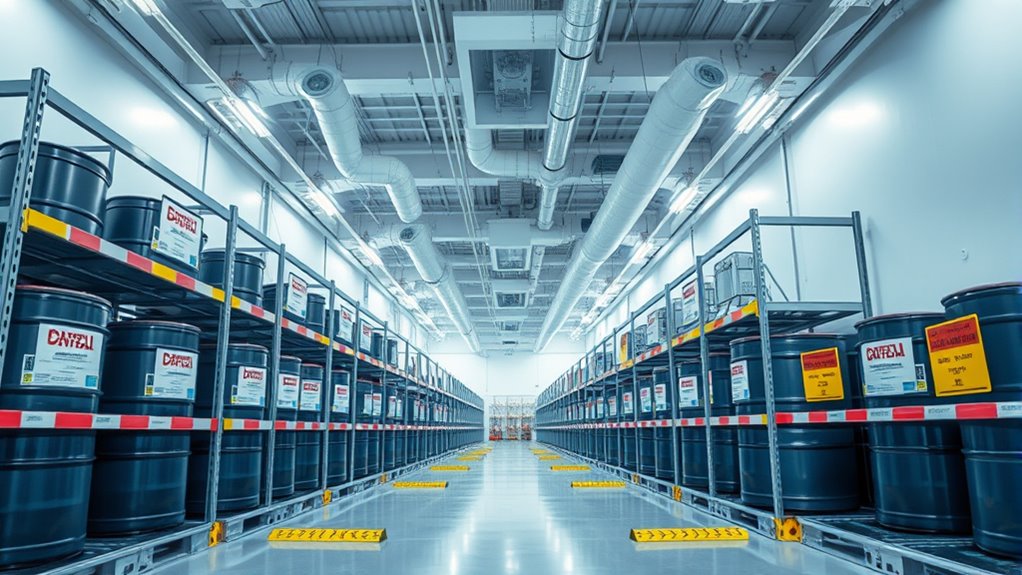

To guarantee safe chemical storage, you need proper ventilation that disperses fumes and prevents vapor buildup, minimizing fire risks. Always segregate incompatible chemicals like acids and alkalis using clearly labeled zones and containers. Implement spill control measures such as spill kits, absorbents, and secondary containment to swiftly manage accidents. Maintaining these safety practices helps reduce hazards and keeps your workspace secure. If you keep exploring, you’ll discover detailed tips for optimizing your chemical storage and safety protocols.

Get pool and patio gear delivered free — and shop member deals
- Fast, free delivery on millions of items
- Access to Prime Big Deal Days deals on October 6–7
- Prime Video, Amazon Music and more included
Key Takeaways
- Ensure proper ventilation with exhaust fans or vents to disperse fumes and prevent vapor buildup.
- Use vertical storage solutions and organized design to optimize space and improve airflow.
- Segregate incompatible chemicals, such as acids from alkalis, using labeled containers and designated zones.
- Consult Safety Data Sheets and industry standards to follow proper storage and segregation protocols.
- Implement spill containment measures like drip trays, spill kits, and absorbents for quick, effective spill control.
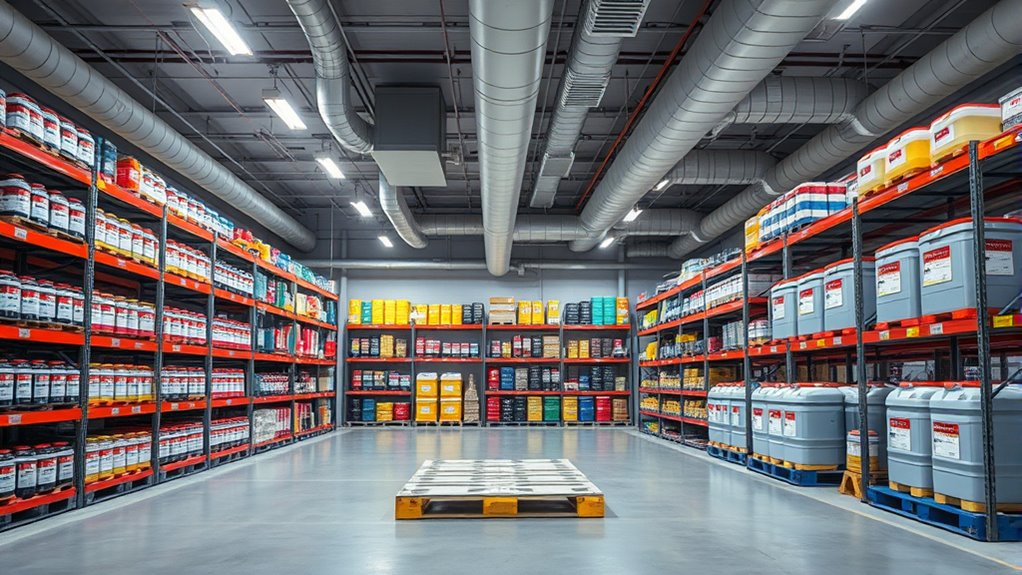
Have you ever wondered how to keep chemicals safely stored and prevent accidents? Proper storage is crucial to protect yourself, others, and the environment. One of the most important factors is ventilation. Adequate airflow helps disperse hazardous fumes and vapors, reducing the risk of buildup that could lead to fires, explosions, or health issues. When designing or choosing a storage area, ensure it has proper ventilation systems, such as exhaust fans or vents that direct fumes outside. Regularly inspect these systems to confirm they’re functioning correctly. Without proper ventilation, dangerous vapors can accumulate unnoticed, creating an unsafe environment and increasing the likelihood of accidents. Utilizing vertical storage solutions can further optimize space and improve airflow within the storage area. Segregation is another critical aspect of chemical storage. You need to keep incompatible chemicals apart to prevent dangerous reactions. For example, acids should never be stored next to alkalis or flammable solvents near oxidizers. Use clearly labeled containers and designated storage zones to maintain separation. Color-coded shelving or storage cabinets can help you quickly identify and access different chemical groups. When segregating chemicals, consider their reactivity, stability, and compatibility. This proactive approach minimizes the risk of accidental mixing, which could cause fires, toxic releases, or explosions. Additionally, always consult the Safety Data Sheets (SDS) for specific storage instructions, ensuring you’re following manufacturer recommendations and industry standards.
Spill control is essential because even with the best precautions, accidents can happen. You should always have spill containment measures in place, such as drip trays, secondary containment pallets, and absorbent materials. Keep spill kits nearby, equipped with neutralizers, absorbents, and protective gear, so you can respond quickly if a spill occurs. When handling chemicals, wear appropriate personal protective equipment (PPE) to reduce exposure. If a spill happens, contain it immediately to prevent it from spreading. Cleanup should be thorough, following proper disposal procedures and safety protocols. Regular training on spill response ensures everyone knows what to do during an emergency. Proper spill control not only minimizes environmental impact but also protects health and safety.
As an affiliate, we earn on qualifying purchases.
Frequently Asked Questions
How Often Should Chemical Storage Areas Be Inspected for Safety?
You should inspect chemical storage areas at least monthly to guarantee safety. Regular checks help you spot leaks, corrosion, or damaged containers early. It’s also essential to verify proper labeling, ventilation, and segregation of incompatible chemicals. Conducting these inspections more frequently if you handle hazardous substances can prevent accidents. Always document your findings and address issues promptly to maintain a safe environment and comply with safety regulations.
What Are the Best Practices for Labeling Chemical Storage Containers?
You should clearly label all chemical storage containers with the chemical’s name, hazard symbols, and handling instructions. Use permanent, legible labels that resist moisture and chemical exposure. Confirm labels are visible from a distance and updated whenever contents change. Proper labeling minimizes accidents and ensures quick response in emergencies. Regularly check labels for damage or fading, replacing them promptly to maintain clarity and safety.
How to Handle Emergencies Involving Chemical Spills?
In an emergency involving a chemical spill, you should first alert others and evacuate the area if necessary. Put on appropriate personal protective equipment, like gloves and goggles. Contain the spill using absorbent materials and avoid spreading it. Ventilate the area if possible. Dispose of the spill according to your facility’s procedures, and report the incident to the appropriate authorities promptly to prevent further hazards.
Are There Specific Ventilation Standards for Different Chemical Types?
Yes, there are specific ventilation standards for different chemical types. You should guarantee local, national, and industry-specific guidelines are followed. For example, volatile chemicals require exhaust ventilation systems that maintain negative pressure to prevent leaks, while corrosive or toxic substances need specialized fume hoods or localized exhausts. Regularly assess your ventilation systems to ensure they effectively control vapors and fumes, protecting your workspace and maintaining safety compliance.
What Training Is Required for Personnel Handling Chemical Storage?
You need to complete proper training before handling chemical storage. This includes understanding chemical properties, hazards, and safety procedures. You should learn how to recognize potential risks, use appropriate personal protective equipment, and respond to spills or emergencies. Your training must cover proper labeling, segregation, and storage techniques. Regular refresher courses are essential to stay updated on safety protocols and guarantee you handle chemicals responsibly to prevent accidents.
ventilation exhaust fan for chemical storage
As an affiliate, we earn on qualifying purchases.
As an affiliate, we earn on qualifying purchases.
Conclusion
By properly ventilating, segregating, and controlling spills, you can keep chemical storage safe and efficient. Think of it as keeping a tight ship—if you don’t stay on top of each aspect, problems can quickly snowball. Regular checks and careful planning make sure you’re ahead of potential hazards. Remember, a little caution today prevents a big mishap tomorrow. Stay vigilant, and you’ll navigate chemical storage challenges smoothly, like a captain steering through calm waters.
chemical storage segregation containers
As an affiliate, we earn on qualifying purchases.
As an affiliate, we earn on qualifying purchases.
As an affiliate, we earn on qualifying purchases.
Fall Picks
fall essentials
As an affiliate, we earn on qualifying purchases.