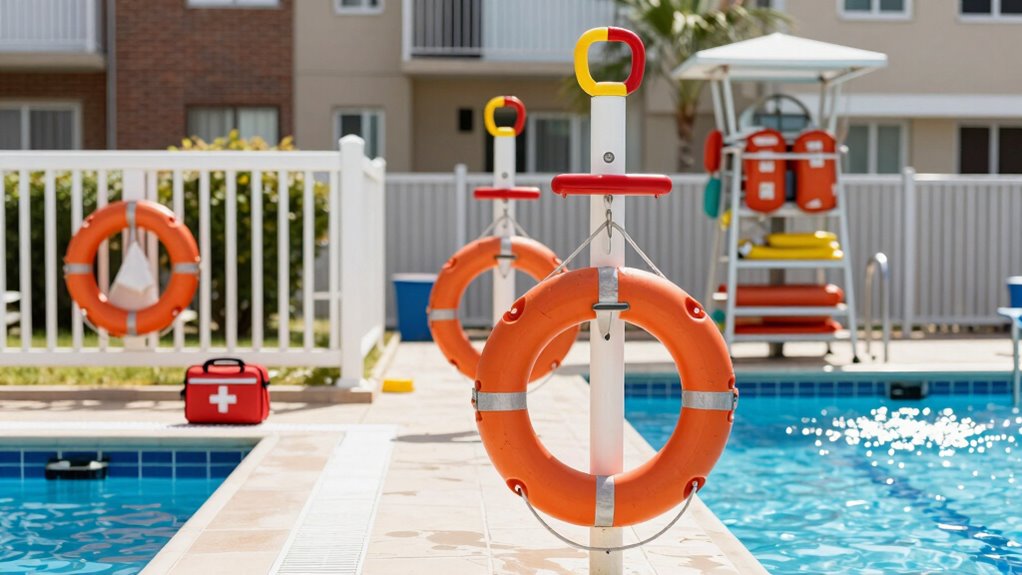

In public pools, strict safety regulations require you to have specific rescue equipment like life rings, reaching poles, and emergency alarms strategically placed for quick access. These tools must be regularly maintained and involve trained lifeguards skilled in rescue techniques. Residential pools generally follow more relaxed guidelines, focusing on basic safety devices and adult supervision. If you want to understand how these rules impact pool safety and preparedness, there’s more to explore.
Key Takeaways
- Public pools have strict regulations on required rescue equipment types, quantities, and proper placement, unlike residential pools with more relaxed standards.
- Certified lifeguards in public pools are trained in rescue techniques and CPR, whereas residential pools rely mainly on adult supervision.
- Routine inspection and maintenance of rescue tools are mandated in public pools, while residential pools focus on basic safety measures.
- Public pools emphasize strategic equipment placement for quick access, whereas residential pools prioritize general safety practices like fencing.
- Emergency response plans and signage are required in public pools, while residential pools depend on personal safety measures and supervision.
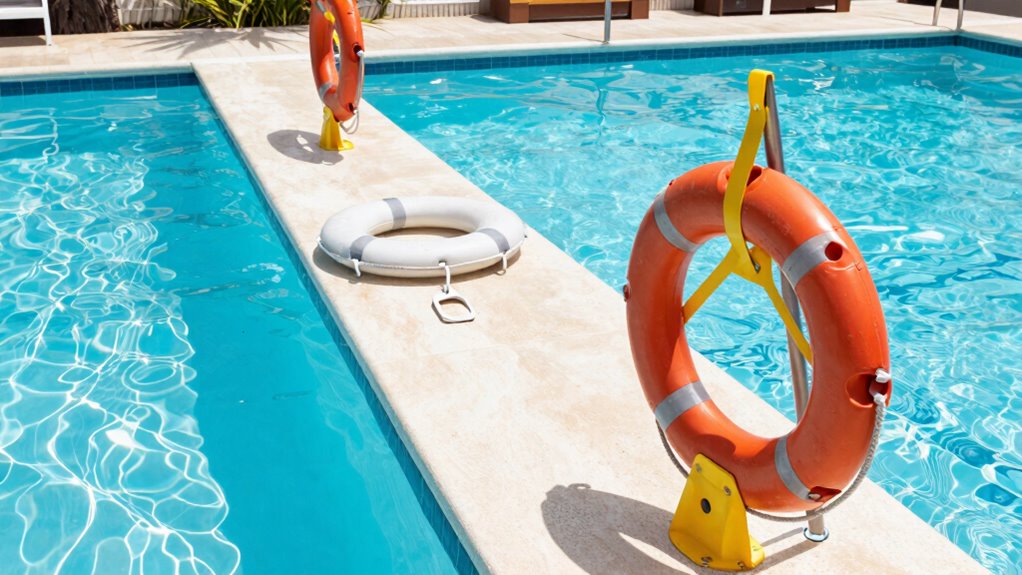
When it comes to pool safety, having proper rescue equipment and following the right rules can make all the difference. The standards for rescue equipment differ markedly between residential and public pools, primarily due to the varying risks and regulatory requirements involved. In public pools, pool safety regulations are strict, often mandated by local or national authorities, to ensure the safety of large numbers of swimmers. These regulations specify not only the type and amount of rescue equipment needed but also how it should be maintained and accessible at all times. You’ll typically find life rings, reaching poles, and emergency alarms strategically placed around the pool’s perimeter, with clear signage indicating their locations. Additionally, public pools are usually required to have trained lifeguards on duty, and their training often includes thorough lifeguard training programs that emphasize the correct use of rescue equipment. These programs focus on quick response, rescue techniques, and CPR, ensuring lifeguards are prepared for any emergency. Proper rescue equipment placement is essential to reduce response time during emergencies, especially in busy public pool environments. Moreover, comprehensive safety protocols often include routine inspections to make sure rescue tools are in optimal condition and ready for use. Ensuring that rescue equipment is regularly checked and maintained can prevent failures during critical moments, which is vital for public safety.
In contrast, residential pools are generally governed by more relaxed regulations, which often don’t require formal rescue equipment or professional lifeguard training. Still, safety should be a priority for homeowners. You might choose to keep basic rescue tools like a life ring or a reaching pole nearby, especially if children or inexperienced swimmers are present. Because residential pools are smaller and less crowded, the risk level is lower, but accidents can still happen. In these settings, safety rules emphasize adult supervision, pool covers, and fencing, but having rescue equipment available adds an extra layer of security. While the regulations are less prescriptive, implementing safety measures similar to those in public pools can markedly reduce potential accidents. Ensuring that rescue equipment is easily accessible can significantly improve emergency response times, especially in emergencies, even at private pools.
Implementing a comprehensive safety plan tailored to the specific pool type can further enhance safety and preparedness in any setting.

Altovexis 4-15ft Telescopic Pool Rescue Hook with Pole Fiberglass Telescoping Ring Emergency Life-Saving Rescue Equipment Pool Safety Hook for Swimming, Boat
- Durable Fiberglass Construction: Heavy-duty, lightweight, easy to grip
- Adjustable Length: Extends from 4 to 15 feet
- High Visibility Design: Vibrant color for quick identification
As an affiliate, we earn on qualifying purchases.
As an affiliate, we earn on qualifying purchases.
Frequently Asked Questions
Are Rescue Equipment Requirements the Same Worldwide?
Rescue equipment requirements aren’t the same worldwide. Pool safety and equipment standards vary based on local regulations, climate, and pool types. You need to follow the specific rules in your area to guarantee safety. Always use appropriate rescue gear like life rings, poles, and first aid supplies that meet local standards. Staying updated with regional regulations helps prevent accidents and keeps swimmers safe, regardless of where you are.
Who Is Responsible for Inspecting Rescue Equipment Regularly?
You are responsible for inspecting rescue equipment regularly, guaranteeing it’s in top condition. In doing so, you maintain emergency preparedness by catching issues early. You check for wear and tear, verify accessibility, and confirm that all items are functional. Regular inspections ensure equipment maintenance is up to date, reducing risks during emergencies. By staying diligent, you help keep everyone safe, reinforcing your commitment to safety and preparedness at all times.
Can Pool Owners Choose Their Preferred Rescue Tools?
Yes, pool owners can choose their preferred rescue tools, but they must prioritize pool safety and comply with local regulations. Equipment selection should focus on effectiveness, ease of use, and durability to guarantee quick rescue responses. You should regularly inspect and maintain your rescue equipment, regardless of type, to keep it ready for emergencies. Always stay informed about specific safety standards applicable to your pool to make the best choices.
Are There Specific Training Requirements for Using Rescue Equipment?
Think of rescue equipment as the lifeline in a storm; proper training is your anchor. You need specific training requirements to operate rescue tools effectively, ensuring emergency preparedness. Regular equipment maintenance keeps your rescue gear ready for action, preventing failure when it’s needed most. Without proper training and maintenance, even the best equipment risks becoming just unused, decorative pieces—so stay sharp, stay prepared, and always know how to act swiftly.
How Often Should Rescue Equipment Be Replaced or Updated?
You should replace or update rescue equipment regularly based on equipment maintenance and durability. Check for signs of wear, damage, or corrosion at least monthly, and after any heavy use or incidents. Follow manufacturer guidelines for lifespan, and replace equipment if it shows signs of compromise. Proper upkeep guarantees your rescue gear remains reliable, ready for emergencies, and helps prevent accidents caused by equipment failure.

Calvana 20" Foam Life Preserver Ring with 98.4ft Floating Rope
- Complete Safety Set: Includes 20-inch foam ring and 98.4 ft rope
- Reliable Buoyancy: Supports up to 110 lbs with durable materials
- Extended Rescue Rope: 98.4 ft floating rope with hand ring
As an affiliate, we earn on qualifying purchases.
As an affiliate, we earn on qualifying purchases.
Conclusion
While residential pools often lack strict rescue equipment rules, public pools prioritize safety with mandated gear and trained staff. This contrast highlights how accessibility and oversight shape safety standards—yet, both environments demand your vigilance. Whether you’re at a quiet backyard or a bustling community pool, remember that preparedness can be the difference between a minor scare and a tragedy. Stay alert, stay equipped, and always prioritize safety—because in water, every second truly counts.
Altovexis 4-15ft Telescopic Pool Rescue Hook with Pole Fiberglass Telescoping Ring Emergency Life-Saving Rescue Equipment Pool Safety Hook for Swimming, Boat
- Durable Fiberglass Construction: Heavy-duty, lightweight, easy to grip
- Adjustable Length: Extends from 4 to 15 feet
- High Visibility Design: Vibrant color for quick identification
As an affiliate, we earn on qualifying purchases.
As an affiliate, we earn on qualifying purchases.

BCONE® Pool Alarm by Lifebuoy® | ASTM F2208 Certified | Floating Safety Device with App Alerts + Alexa Voice Control | 2.4GHz Wi-Fi | for Inground & Above-Ground Pools
- Smart Home Compatibility: Works with Alexa and Google Assistant
- Remote Control: Control via Smartphone App from anywhere
- False Alert Prevention: Advanced algorithm reduces false alarms
As an affiliate, we earn on qualifying purchases.
As an affiliate, we earn on qualifying purchases.