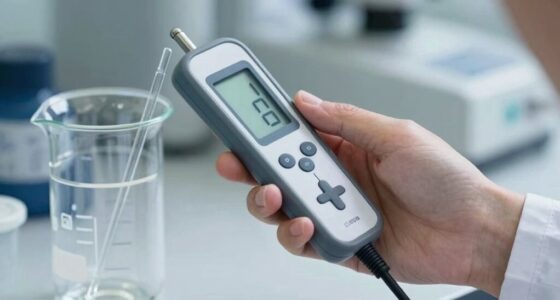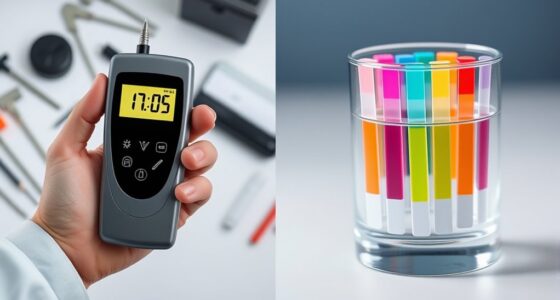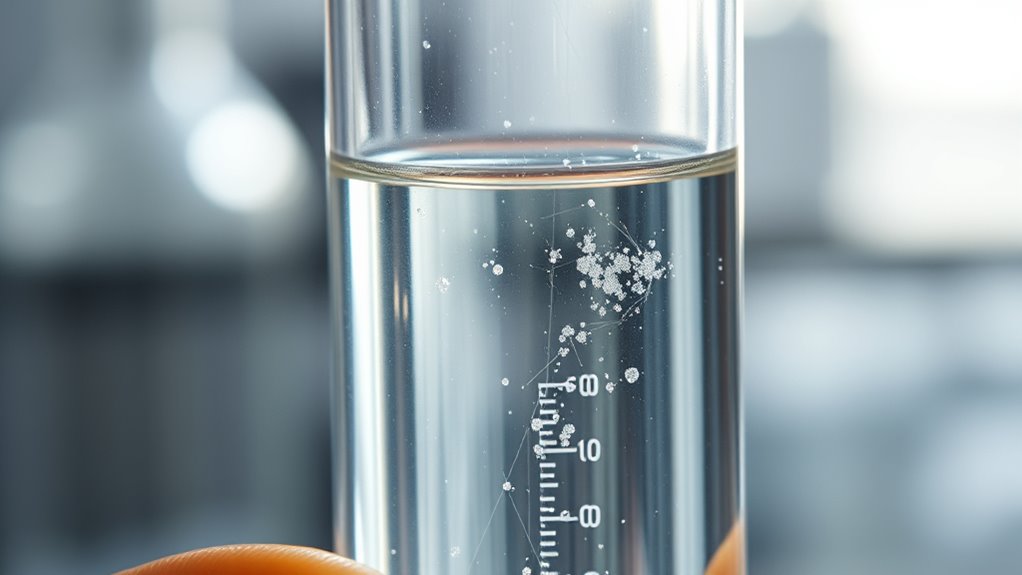

To measure water turbidity, you typically use optical devices like turbidimeters or spectrophotometers that analyze how light passes through a water sample. Before measurement, you often filter the sample to remove debris that can interfere with results, focusing on smaller particles that affect water clarity. These tools quickly provide reliable turbidity data, essential for water quality assessments. Keep exploring, and you’ll discover more detailed procedures and tips for accurate measurements.
Key Takeaways
- Optical devices like turbidimeters and spectrophotometers measure light scattering or transmission through water samples to determine turbidity levels.
- Sample preparation involves filtering water through 0.45-micron filters to remove debris and ensure accurate optical measurements.
- Turbidity measurement methods include portable handheld devices for quick field assessments and laboratory-based spectrophotometers for detailed analysis.
- Filtration improves accuracy by isolating small suspended particles responsible for turbidity and reducing interference from larger debris.
- Regular monitoring using these methods helps detect pollution, assess water quality, and ensure compliance with environmental standards.
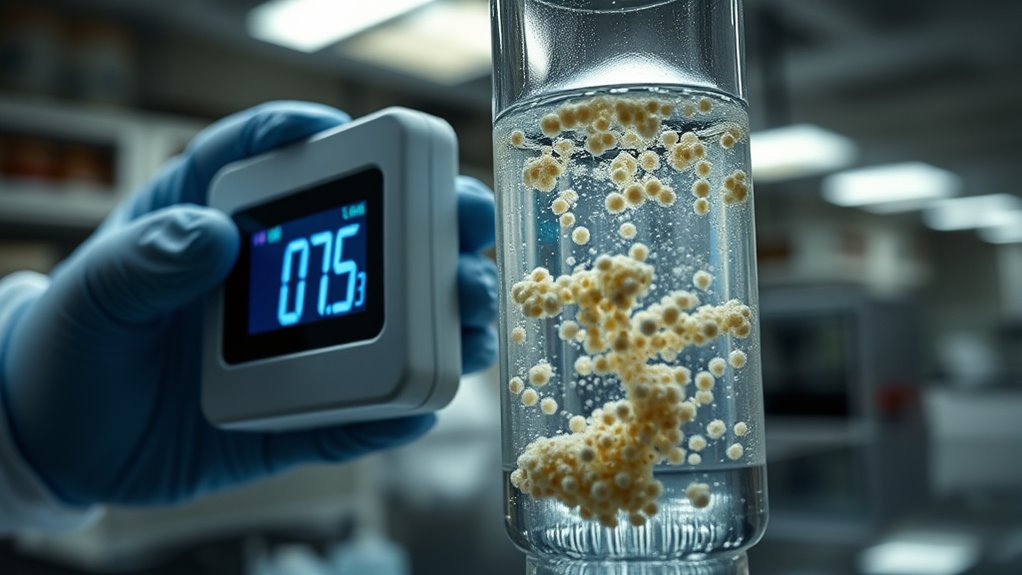
Have you ever wondered how clear or murky water really is? When measuring water turbidity, you’re fundamentally assessing how much suspended particles scatter light within the sample. To do this accurately, you need reliable methods that can detect even small variations in water clarity. One common approach involves using optical devices, which are designed to measure the amount of light that passes through or is scattered by the sample. These devices range from simple handheld turbidimeters to more sophisticated instruments integrated with spectrophotometers. By shining a light through the water sample and analyzing the amount of light that either transmits or gets scattered, these optical devices provide a quantifiable measure of turbidity. They’re quick, portable, and suitable for field testing, making them a popular choice for water quality assessments.
Before using an optical device, proper sample preparation is vital. Sample filtration often plays a key role here. Filtration helps remove larger particles and debris that could skew the results or clog sensitive equipment. When you filter a sample, you’re fundamentally isolating the smaller suspended particles responsible for turbidity, ensuring that your measurements are as accurate and consistent as possible. The process usually involves passing the water through a filter with a specific pore size—commonly 0.45 microns—to retain larger particles while allowing smaller ones to pass through. This step can be particularly useful when you need to analyze the finer particles that contribute to turbidity but might be masked by larger debris. Additionally, understanding the celebrity lifestyle of water sources can provide context for pollution levels and environmental impact. After filtration, the sample is ready for measurement with the optical device, which will then provide a precise turbidity reading based on how much light is scattered or transmitted.
The combination of sample filtration and optical measurements offers a robust method for evaluating water clarity. It’s especially valuable in monitoring water sources like lakes, rivers, or drinking water supplies, where quick and accurate turbidity readings can inform treatment decisions or identify pollution events. The process is straightforward: filter the sample, insert it into the optical device, and read the turbidity value. This method not only provides reliable data but also allows for rapid assessments, helping you respond swiftly to changes in water quality. By understanding and applying these techniques, you gain a clearer picture of water conditions, ensuring safety and compliance with environmental standards. Whether you’re conducting routine testing or investigating pollution, mastering the use of optical devices and sample filtration is indispensable for precise turbidity measurement.
portable water turbidity meter
As an affiliate, we earn on qualifying purchases.
As an affiliate, we earn on qualifying purchases.
Frequently Asked Questions
How Does Water Temperature Affect Turbidity Measurements?
Water temperature critically influences turbidity measurements because temperature influence can affect the accuracy of your readings. When water is warmer or cooler, it changes the optical properties of the water, which can lead to measurement inaccuracies. To guarantee accurate results, you should account for temperature variations, possibly calibrate your instruments accordingly, and understand that temperature fluctuations may cause readings to be skewed if not properly managed.
What Are Common Sources of Error in Turbidity Testing?
You might encounter errors in turbidity testing due to calibration issues, which cause inaccurate readings if your instrument isn’t properly zeroed or calibrated regularly. Sample contamination can also skew results, especially if samples aren’t collected or stored correctly. Be sure to clean equipment thoroughly and calibrate your device regularly to minimize these errors, ensuring more reliable and accurate turbidity measurements.
Can Turbidity Impact Aquatic Life Health?
High turbidity can harm aquatic ecosystems, especially fish health. Imagine a river after heavy rainfall; increased sediment cloudiness reduces light penetration, disrupting fish feeding and breeding. This sediment can also clog gills, causing stress or illness. When water clarity drops, fish struggle to find food and avoid predators, ultimately threatening their survival. Hence, maintaining low turbidity levels is essential for preserving healthy aquatic ecosystems and supporting fish populations.
How Often Should Turbidity Be Monitored in Natural Water Bodies?
You should monitor water turbidity regularly, ideally establishing a sampling frequency that accounts for seasonal variations. During periods of heavy rainfall or runoff, increase sampling to detect sudden changes. In stable conditions, weekly or bi-weekly checks may suffice. By adjusting your sampling frequency based on seasonal patterns, you guarantee accurate, timely data that helps protect aquatic ecosystems and maintain water quality standards.
Are There Portable Devices Suitable for Field Turbidity Measurements?
Yes, you can easily find portable sensors and handheld devices for field turbidity measurements. These tools are like Swiss Army knives, compact yet versatile, making water testing straightforward. They allow you to quickly assess water clarity on-site, providing instant results without laboratory delay. With advancements, modern handheld devices offer user-friendly interfaces and reliable accuracy, helping you monitor water quality efficiently wherever you are.
spectrophotometer for water analysis
As an affiliate, we earn on qualifying purchases.
As an affiliate, we earn on qualifying purchases.
Conclusion
By understanding and choosing the right methods to measure water turbidity, you open a window into the hidden world beneath the surface. Think of turbidity as a cloudy mirror reflecting water’s true clarity; with the right tools, you can clear that mirror and see straight through. Whether using simple devices or advanced techniques, your measurements become the key to safeguarding water quality, turning murky mysteries into crystal-clear truths you can trust.
0.45 micron water filter for turbidity testing
As an affiliate, we earn on qualifying purchases.
As an affiliate, we earn on qualifying purchases.
handheld water turbidity tester
As an affiliate, we earn on qualifying purchases.
As an affiliate, we earn on qualifying purchases.