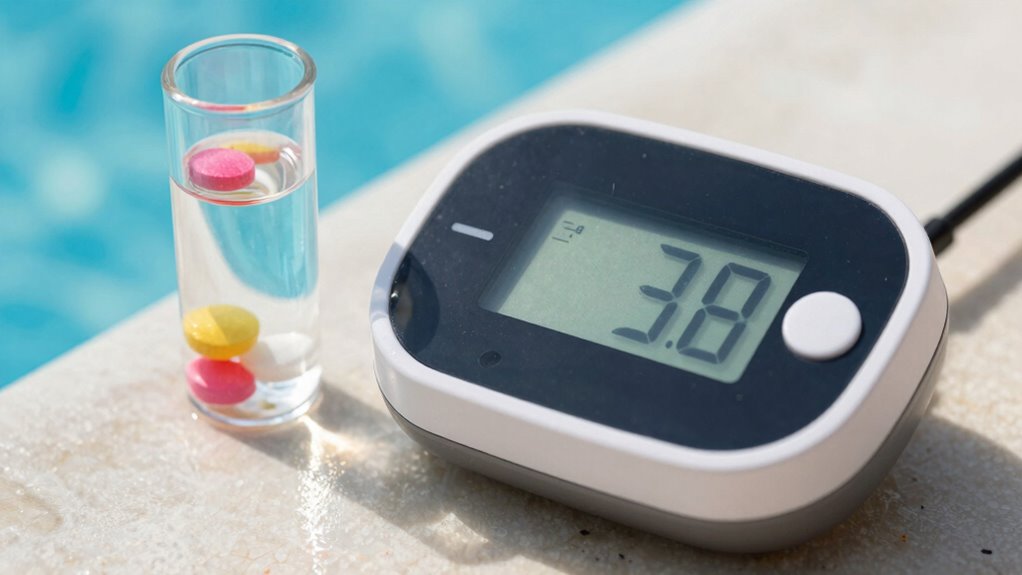
Discrepancies between your smart pool monitor and test kit often happen because of calibration issues, environmental factors, or user errors. Your monitor needs regular calibration and clean sensors for accurate readings, and environmental conditions like debris or temperature changes can impact results. Proper sampling techniques matter too—rushing or misreading can cause differences. Keeping up with maintenance and setup guarantees better accuracy, and if you keep exploring, you’ll discover how to troubleshoot these issues effectively.
Key Takeaways
- Sensor calibration drift or inaccuracies can cause discrepancies between the monitor and test kit results.
- Environmental factors like debris, temperature changes, or water chemistry can affect sensor readings.
- User errors in sample collection or timing can lead to inconsistent test outcomes.
- Dirty or improperly placed sensors may produce false readings, requiring regular cleaning and correct setup.
- Differences in measurement techniques or interpretation methods can cause variations between devices.
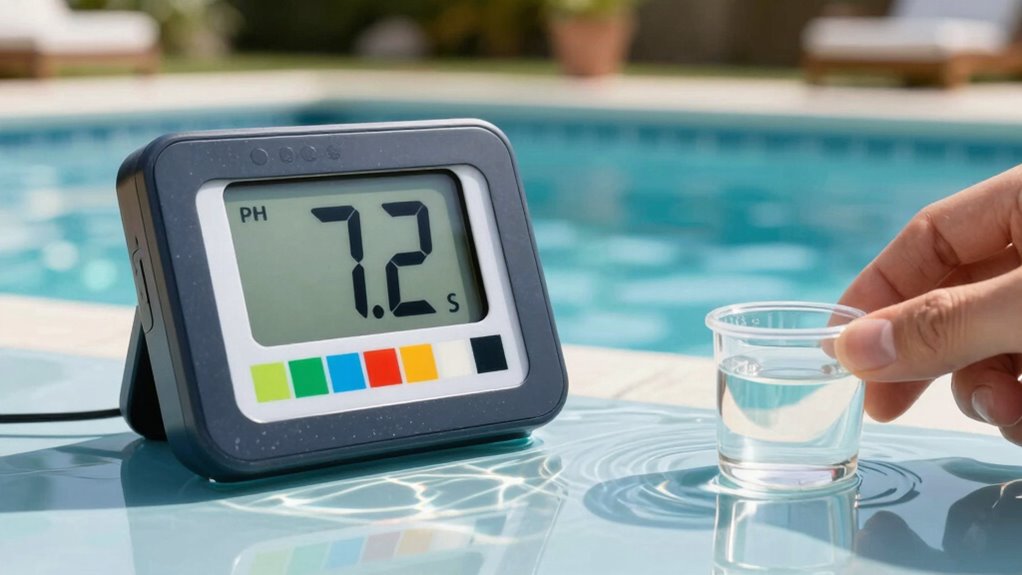
If you’ve recently relied on both a smart pool monitor and a traditional test kit, you might have noticed some conflicting results. It’s frustrating when these devices don’t agree, but understanding why can help you troubleshoot effectively. One common reason for discrepancies is sensor calibration. The sensors in your smart monitor need regular calibration to provide accurate readings. Over time, environmental factors like temperature changes or buildup of debris can affect sensor accuracy. If your smart monitor isn’t properly calibrated, it might report different levels of chlorine, pH, or other chemicals than your test kit. Confirming your device is calibrated according to the manufacturer’s instructions can substantially improve accuracy. Some monitors have automatic calibration features, but it’s still wise to double-check calibration periodically, especially after cleaning or maintenance. Additionally, environmental conditions such as water movement or chemical fluctuations can impact readings, so monitoring these factors is also important.
Another factor that leads to disagreements is user error. Both testing methods require proper technique, but mistakes happen. When using a traditional test kit, improper sample collection, incorrect timing, or misreading color changes can skew results. For instance, if you use too little or too much sample, or if you don’t wait the specified time before reading, your test can be off. Similarly, misinterpreting color shades or rushing through the process can cause inaccuracies. On the other hand, smart pool monitors depend on correct setup and placement. If the sensor isn’t submerged properly, is dirty, or isn’t positioned in the right spot, it might give false readings. Also, neglecting to update the device’s firmware or ignoring maintenance routines can impair performance. Regular sensor maintenance and following setup instructions can help ensure accurate readings.
It’s important to follow the instructions for both methods carefully. When using your test kit, measure samples consistently and interpret colors accurately, perhaps by using a color comparator. For your smart monitor, keep the sensor clean, ensure it’s calibrated, and verify that it’s functioning according to the manufacturer’s guidelines. If you notice consistent differences, consider recalibrating the device or checking for user errors. Sometimes, a simple reset or cleaning can resolve the issue. Remember, no system is perfect, but regular maintenance and vigilance can minimize discrepancies. By understanding these factors—sensor calibration and user error—you can better interpret your pool water test results and maintain a healthier, more balanced pool.
smart pool monitor calibration kit
As an affiliate, we earn on qualifying purchases.
As an affiliate, we earn on qualifying purchases.
Frequently Asked Questions
How Often Should I Calibrate My Smart Pool Monitor?
You should calibrate your smart pool monitor at least once a month to guarantee accurate readings. Regular sensor calibration helps maintain water stability and precision in measurements. If you notice inconsistent results or significant changes in water quality, calibrate more frequently. Proper calibration ensures your monitor provides reliable data, helping you keep your pool safe and balanced. Consistent maintenance is key to avoiding discrepancies between your monitor and test kit readings.
Can Environmental Factors Affect Test Kit Accuracy?
Environmental factors can indeed affect your test kit’s accuracy. Chemical interference from substances like chlorine or other chemicals can skew results, making them unreliable. Additionally, light sensitivity plays a role; direct sunlight or bright lighting can impact test readings, causing inaccuracies. To guarantee precise results, avoid testing in extreme lighting conditions and keep chemicals well-balanced, reducing the risk of interference and improving your test kit’s reliability.
What Is the Ideal Water Temperature for Testing?
Think of water temperature as the Goldilocks zone for testing—neither too hot nor too cold. The ideal water temperature for testing is between 77°F and 82°F. When water stays within this range, your test accuracy improves because reagents react predictably. If water is outside this range, test results can be skewed, leading to discrepancies between your smart monitor and test kit. Always aim for this temperature window for the most reliable readings.
Do Different Test Kits Use the Same Measurement Standards?
Different test kits often use varying measurement standards, so calibration is vital for accurate results. Environmental influences like temperature and lighting can also affect readings. You should regularly calibrate your test kit according to the manufacturer’s instructions and consider environmental factors when testing. This ensures consistency and helps your smart pool monitor and test kit provide more aligned water quality readings.
How Long Does a Typical Test Take With a Test Kit?
A typical test with a test kit takes about 5 to 10 minutes, depending on the type of test and water sample. You collect a water sample, add the reagents, and wait for the color change. The test duration is quick, but accuracy depends on following instructions carefully. Rushing can lead to errors, so take your time to guarantee precise results for your pool’s water quality.
pool test kit for chlorine and pH
As an affiliate, we earn on qualifying purchases.
As an affiliate, we earn on qualifying purchases.
Conclusion
So, next time your smart pool monitor and test kit clash like a stubborn married couple, don’t panic. Remember, this disagreement could be the universe’s way of warning you that your pool’s secrets are more elusive than a unicorn in a swimming pool. Trust your instincts, double-check, and don’t let a tiny digital disagreement turn your pool into a bubbling, chaotic jungle. Stay vigilant, and your perfect pool paradise is just a test away!
As an affiliate, we earn on qualifying purchases.
automatic pool water testing device
As an affiliate, we earn on qualifying purchases.
As an affiliate, we earn on qualifying purchases.