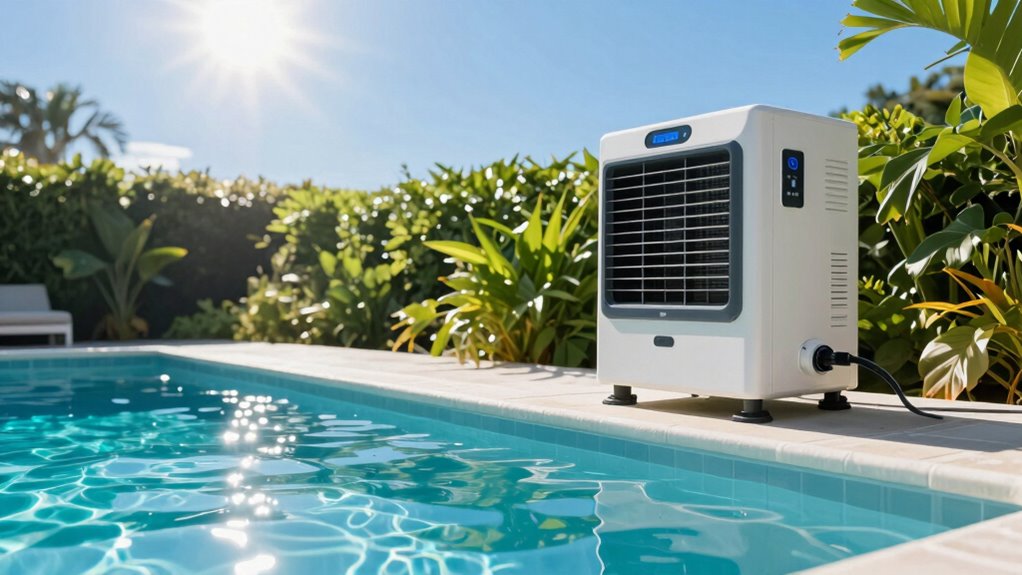

In extremely hot regions, your pool chiller needs careful attention. Choose models with high SEER ratings and inverter technology to boost energy efficiency and reduce running costs. Place your chiller in shaded, well-ventilated areas to prevent overheating and guarantee proper water flow for ideal cooling. Regular maintenance, like checking for leaks and clean filters, extends system life. Staying aware of environmental factors and proper placement can make a big difference—continue exploring to discover more tips for mastering your pool chillers in hot climates.

Get pool and patio gear delivered free — and shop member deals
- Fast, free delivery on millions of items
- Access to Prime Big Deal Days deals on October 6–7
- Prime Video, Amazon Music and more included
Key Takeaways
- Place chillers in shaded, well-ventilated areas to prevent overheating and ensure efficient cooling.
- Use energy-efficient models with inverter technology to adapt to high cooling demands and save costs.
- Regularly maintain filters, refrigerant levels, and water flow to optimize performance during extreme heat.
- Consider environmentally friendly refrigerants to reduce ecological impact in hot climates.
- Schedule chiller operation during cooler parts of the day to reduce energy strain and improve longevity.
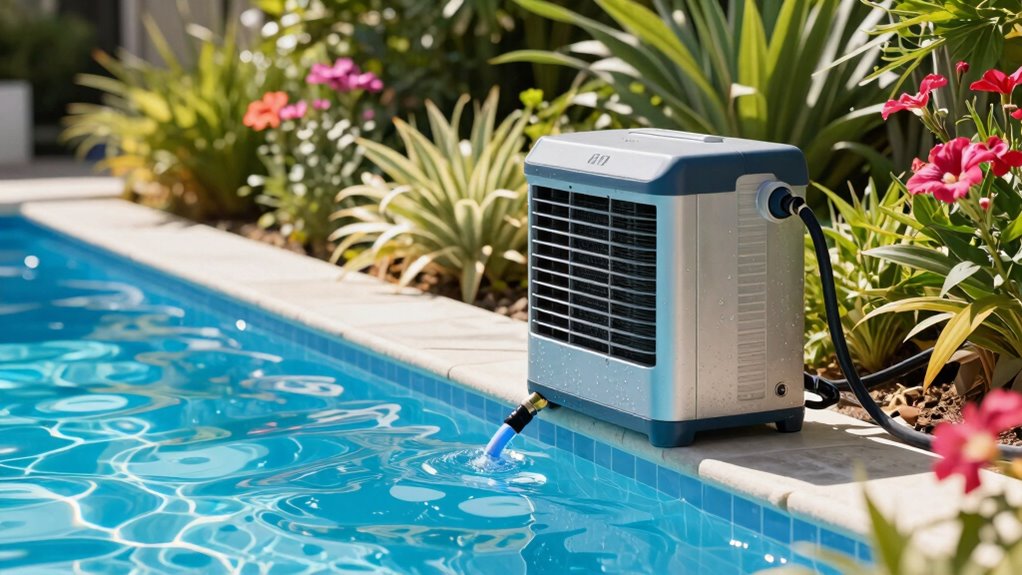
In hot regions, keeping your pool comfortably cool can be a challenge, especially during peak summer months. That’s where pool chillers come into play, helping you maintain a refreshing water temperature without the hassle of constant manual cooling. Understanding how they work and what to consider can make a huge difference in your overall pool experience. One of the most important factors is energy efficiency. Since chillers run for extended periods during the hottest months, choosing an energy-efficient model can save you a significant amount on electricity costs. Look for chillers with high SEER (Seasonal Energy Efficiency Ratio) ratings and inverter technology, which adjusts compressor speed based on cooling demand, reducing energy consumption. Ensuring your chiller operates efficiently not only cuts costs but also minimizes its environmental impact. Additionally, selecting models made with environmentally friendly refrigerants can further reduce your carbon footprint.
Choosing energy-efficient pool chillers with high SEER ratings and inverter technology saves costs and reduces environmental impact.
Maintenance tips are equally crucial to keep your pool chiller functioning optimally. Regularly inspecting the system for leaks, strange noises, or reduced performance helps catch problems early. Keep the filters clean, as clogged filters can strain the system and decrease efficiency. It’s also important to check the refrigerant levels periodically; low refrigerant can cause the chiller to work harder, increasing energy use and risking damage. Additionally, ensure that the water flow rate remains within the recommended range; improper flow can hinder heat exchange, reducing cooling effectiveness. Properly maintaining your chiller extends its lifespan and ensures it operates at peak efficiency when you need it most. Incorporating proper system maintenance can help prevent costly repairs and prolong the life of your equipment. Being aware of energy-efficient options can also guide you to select models that are better suited for your needs and the environment. Understanding refrigerant types and their impact on system performance can help you make more informed choices for sustainability.
To optimize performance, consider the placement of your chiller, ensuring it is in a shaded, well-ventilated area to prevent overheating and improve efficiency. Proper placement reduces the workload on the system, especially in hot climates. It’s also beneficial to integrate your chiller with your pool’s automation system for better control and scheduling. Setting the chiller to operate during off-peak hours can save you money and reduce energy strain during the hottest parts of the day. Being mindful of biodiversity and local environmental conditions can help you make more sustainable choices in managing your pool’s cooling system.
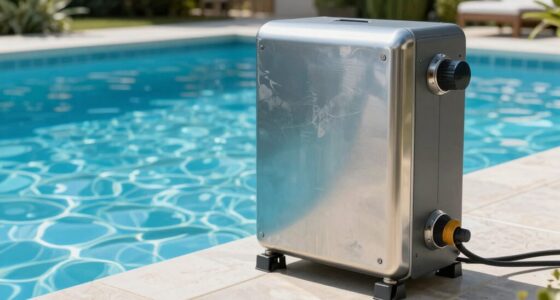
energy-efficient pool chiller with inverter technology
As an affiliate, we earn on qualifying purchases.
As an affiliate, we earn on qualifying purchases.
Frequently Asked Questions
How Often Should I Service My Pool Chiller in Hot Climates?
You should service your pool chiller every 2-3 months during hot climates. Regular pool maintenance helps prevent issues, especially in extreme heat. Keep an eye on your chiller’s performance and perform troubleshooting if you notice increased energy use or reduced cooling. Routine inspections and cleaning of filters, coils, and fans ensure maximum operation, extending your chiller’s lifespan and maintaining a comfortable pool environment in scorching weather.
Are There Eco-Friendly Chiller Options Suitable for Hot Regions?
Yes, you can choose eco-friendly chillers for hot regions. Look for models using eco-friendly refrigerants like R-410A or R-32, which reduce environmental impact. Solar-powered chillers are also an excellent option, harnessing sunlight to cool your pool sustainably. These choices help lower energy consumption and minimize your carbon footprint while keeping your pool comfortably cool during scorching weather. Consider these eco-friendly options to make your pool setup more sustainable.
What Is the Typical Lifespan of a Pool Chiller in Extreme Heat?
In extreme heat, your pool chiller typically lasts 10 to 15 years with proper pool maintenance and regular chiller installation checks. High temperatures can accelerate wear, so you should monitor the system closely. Ensuring professional chiller installation and routine maintenance helps extend its lifespan, preventing costly repairs. Keep the system clean, and address any issues promptly to maximize your chiller’s durability in hot climates.
Can Pool Chillers Be Integrated With Existing Pool Automation Systems?
Yes, pool chillers can be integrated with your existing pool automation system. This integration simplifies pool maintenance by allowing you to control temperature, filters, and other features from a single interface. Make certain your system supports compatibility with chillers, and consult with professionals for proper setup. With seamless system integration, you’ll enjoy easier management, saving time and energy, especially during extreme heat, helping your pool stay comfortable and well-maintained.
How Does Ambient Temperature Affect Chiller Energy Efficiency?
Ambient temperature actively impacts a chiller’s efficiency, with higher temperatures hampering its ability to cool effectively. When ambient cooling is extreme, chillers work harder, leading to increased energy consumption. To optimize energy efficiency, you should consider shading or cooling the environment around the chiller, ensuring it operates within ideal temperature ranges. Proper placement and maintenance promote energy optimization, helping your pool stay cool without skyrocketing energy costs.
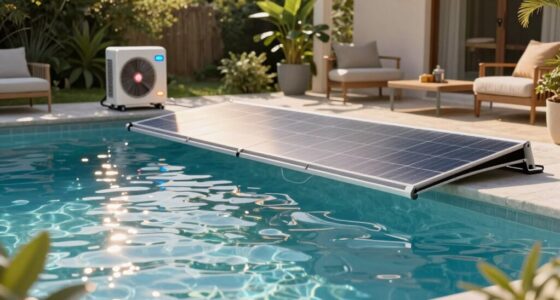
high SEER pool chiller for hot climates
As an affiliate, we earn on qualifying purchases.
As an affiliate, we earn on qualifying purchases.
Conclusion
In scorching regions, a pool chiller isn’t just a cool idea — it’s your pool’s lifeline against the relentless sun. Think of it as a invigorating oasis shield, turning your sizzling summer days into a breezy retreat. Without it, your sparkling waters risk turning into a steaming cauldron. Embrace the chill, and let your pool be the cool, calming sanctuary it’s meant to be, no matter how fierce the heat wave rages.
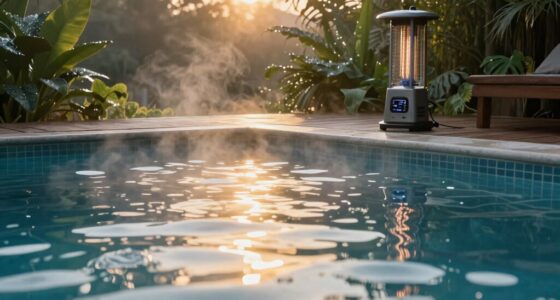
environmentally friendly refrigerant pool chiller
As an affiliate, we earn on qualifying purchases.
As an affiliate, we earn on qualifying purchases.
pool chiller with remote temperature control
As an affiliate, we earn on qualifying purchases.
As an affiliate, we earn on qualifying purchases.
Fall Picks
fall essentials
As an affiliate, we earn on qualifying purchases.