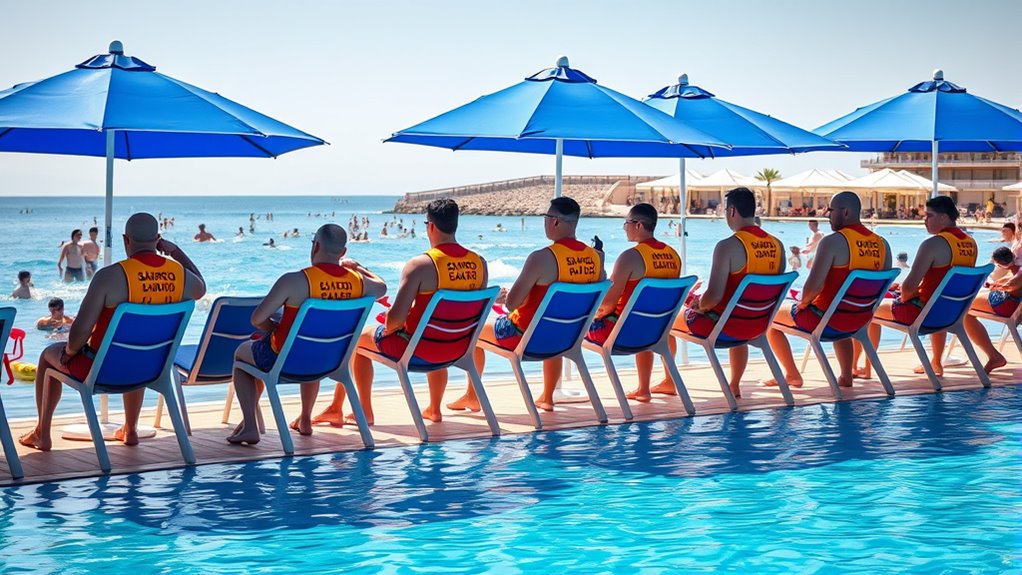

To effectively staff public facilities, you should offer competitive wages, flexible schedules, and ongoing training to attract and retain qualified lifeguards. Use scheduling software to optimize shift coverage during peak times and busy seasons. Cross-train staff to boost flexibility and guarantee safety during absences or surges. Maintaining a positive work environment helps reduce turnover. If you’re ready to create a safe, well-staffed environment, discovering more strategies can help you succeed.
Key Takeaways
- Offer competitive wages and flexible schedules to attract and retain qualified lifeguards.
- Implement ongoing training and cross-training to maintain skill levels and prepare staff for various roles.
- Use scheduling software and real-time attendance data to optimize shift coverage and respond to demand fluctuations.
- Schedule sufficient staff during peak hours, holidays, and weekends to ensure constant safety coverage.
- Foster a positive work environment to improve staff satisfaction and reduce turnover.
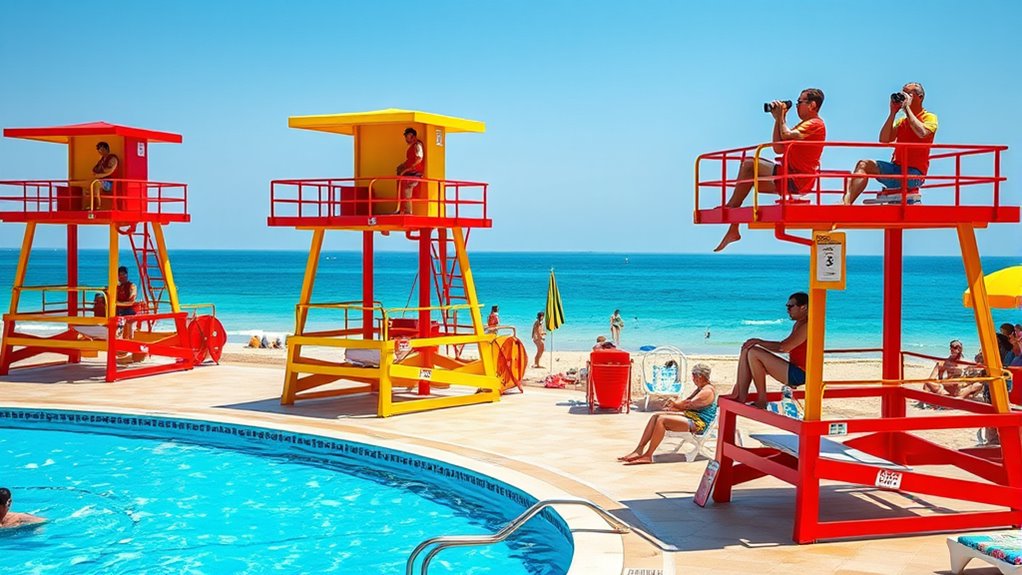
Effective lifeguard staffing is vital to ensuring safety at pools and beaches, especially during peak hours and busy seasons. When your facility is crowded, the risk of accidents increases, making proper staffing indispensable to maintaining pool safety. However, staffing challenges often complicate this goal, as it can be difficult to find enough qualified lifeguards to cover every shift adequately. You need to develop a strategic approach to staffing that balances safety, budget constraints, and labor availability.
Proper staffing is essential for pool safety, especially during busy times when accidents are more likely.
One of the main staffing challenges is guaranteeing you have enough lifeguards on duty during all operating hours. Peak times, such as weekends, holidays, and hot summer days, demand higher staffing levels. If you’re understaffed during these periods, your ability to respond promptly to emergencies diminishes, increasing liability and jeopardizing swimmer safety. To address this, you should analyze usage patterns and schedule more staff during busy times, ensuring constant coverage without overextending your team during slower periods.
Another challenge is recruiting and retaining qualified lifeguards. The pool safety of your facility depends on having well-trained personnel who can handle emergencies calmly and efficiently. Finding certified lifeguards can be difficult, especially in areas with high competition for staffing or seasonal fluctuations. Offering competitive wages, flexible schedules, and ongoing training can help attract and keep skilled lifeguards. Additionally, creating a positive work environment encourages loyalty, reducing turnover and the need to constantly onboard new staff.
Training is also vital in overcoming staffing challenges. Well-trained lifeguards are more confident and capable, which directly impacts pool safety. Investing in regular in-service training sessions ensures your team stays updated on rescue techniques, CPR, and first aid. Cross-training staff to handle multiple roles can also improve coverage and flexibility, especially during unforeseen absences or sudden surges in pool attendance. This way, you’re better prepared to handle staffing gaps without compromising safety. Moreover, understanding the importance of environmental considerations can help you implement sustainable practices that support long-term staffing stability and safety protocols.
Technology can assist in managing staffing challenges too. Scheduling software allows you to optimize shift assignments based on historical data and real-time attendance, reducing scheduling conflicts and overstaffing. Some facilities use automated alert systems to notify staff of upcoming shifts or emergencies, ensuring they’re always aware of their responsibilities. Combining smart scheduling with effective communication helps streamline operations and maintains high standards of pool safety.
In the end, addressing staffing challenges requires ongoing effort and strategic planning. By understanding your peak times, investing in staff training, and leveraging technology, you create a safer environment for everyone. Proper lifeguard staffing isn’t just about compliance; it’s about actively protecting your patrons and ensuring they enjoy their time at your facility with confidence.
Frequently Asked Questions
How Do I Handle Unexpected Staff Shortages During Peak Hours?
When unexpected staff shortages happen during peak hours, you should quickly implement your emergency protocols to guarantee pool safety. Call for backup staff or trained volunteers if available, and make sure remaining lifeguards stay vigilant. Communicate clearly with patrons about any adjustments, and prioritize maintaining a safe environment. Staying calm and organized helps prevent accidents, so act swiftly to manage the situation effectively and keep everyone safe.
What Criteria Determine the Ideal Lifeguard-To-Swimmer Ratio?
To determine the ideal lifeguard-to-swimmer ratio, start by evaluating swimmer capacity and safety standards. You should consider factors like pool size, water depth, and activity level, which influence supervision needs. Generally, the more swimmers and the higher the risk, the more lifeguards you’ll need. Always adhere to local regulations and safety guidelines, ensuring all swimmers are protected and supervised adequately for a safe, secure swimming environment.
How Can Technology Improve Lifeguard Staffing Efficiency?
You can enhance staffing efficiency by implementing technology like automated scheduling, which streamlines shift planning and reduces errors. Additionally, real-time monitoring systems help you track swimmer activity and lifeguard locations, allowing for quick adjustments to staffing levels as needed. These tools enable you to respond swiftly to changing conditions, ensure adequate coverage, and improve safety, making your facility run more smoothly and confidently.
What Legal Considerations Affect Staffing Decisions at Public Pools?
You need to guarantee your staffing decisions meet legal requirements, like maintaining proper liability insurance and verifying staffing certifications. These elements protect you from legal risks and demonstrate your facility’s commitment to safety. Overlooking certification standards or liability coverage can lead to costly lawsuits. So, double-check that all lifeguards are properly certified and your liability insurance is current—coincidence or not, these steps keep your pool safe and compliant.
How Do Weather Conditions Influence Staffing Adjustments?
Weather conditions substantially influence your staffing adjustments, especially with climate variability and seasonal changes. When the weather is hot and sunny, you’ll likely need more lifeguards to handle increased crowds and ensure safety. Conversely, during cooler or unpredictable weather, you can reduce staffing levels. Monitoring weather forecasts helps you plan seasonal staffing accordingly, ensuring adequate coverage while avoiding overstaffing during less busy periods.
Conclusion
By implementing these lifeguard staffing strategies, you guarantee safety isn’t left to chance—much like the vigilant watch of Minerva, goddess of wisdom and protection. Thoughtful scheduling, targeted training, and clear communication form your shield against accidents. Remember, a well-staffed facility reflects your commitment to safeguarding every swimmer’s trust. With these tactics, you’ll create a secure environment where relaxation and fun flourish, proving that proactive planning is the true mark of leadership in aquatic safety.