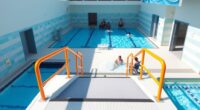
When designing splash pads and interactive water features, safety and engagement are key. You’ll want vibrant, dynamic elements like jets and fountains made from durable, non-slip materials that reduce fall risks. Including accessibility features such as ramps and lowered spray nozzles guarantees all children can participate. Proper maintenance and hygiene, along with soft cushioned surfaces, keep play areas safe and clean. Keep exploring to discover how thoughtful design maximizes fun and safety for every child.
Key Takeaways
- Splash pads feature vibrant, interactive water jets and fountains designed to stimulate senses and encourage active play.
- Safety is prioritized through durable, non-slip materials, soft surfaces, and water pressure systems that meet safety standards.
- Inclusive design includes wheelchair-accessible features, lowered spray elements, and sensory-rich jets for children of all abilities.
- Regular maintenance ensures hygiene, proper drainage, and safe water flow, preventing bacteria buildup and slipping hazards.
- Overall, splash pad designs promote safe, engaging water fun that fosters social interaction and exploration for children.
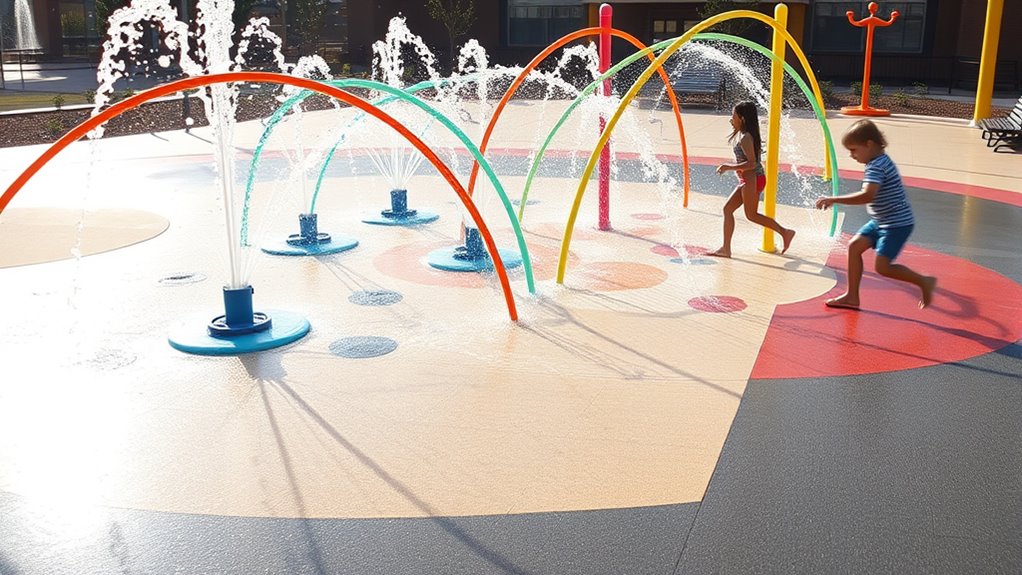
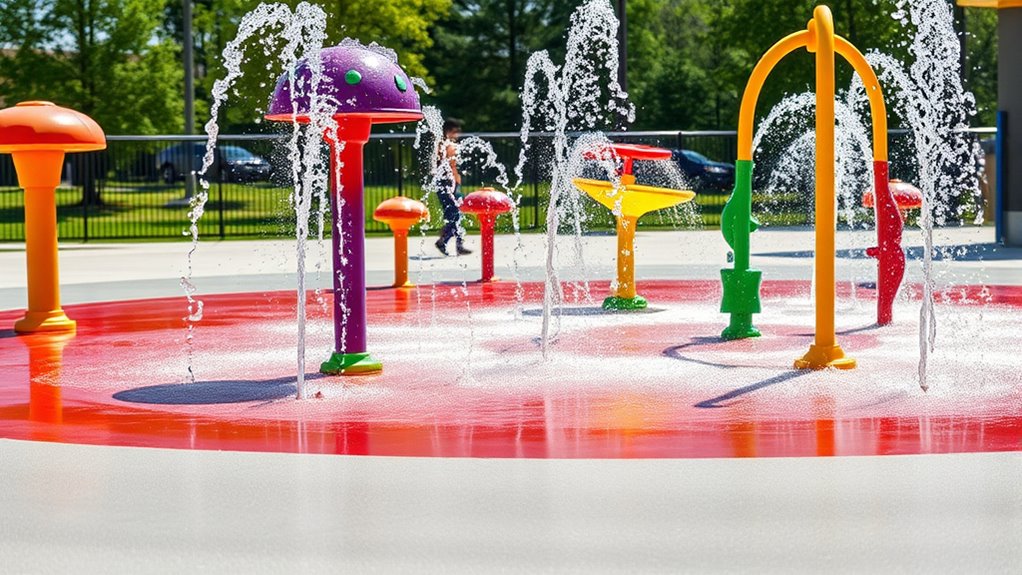
Splash pads and interactive features have become popular attractions in parks and recreational areas, offering kids a fun and safe way to cool off during warm weather. These water play zones are designed to engage children with vibrant, dynamic elements that stimulate both their senses and their imagination. When you approach a splash pad, you’ll notice a variety of water spray features—jets, fountains, and sprays that shoot water at different heights and patterns. These elements create an exciting environment where kids can run, jump, and splash freely, making hot days much more enjoyable.
Splash pads offer safe, vibrant water fun that sparks kids’ imagination and active play.
The design of these play zones prioritizes safety without sacrificing fun. Features are typically made from durable, non-slip materials that reduce the risk of falls and injuries. The water spray systems are engineered to operate at safe pressures and flow rates, ensuring that children can play without the danger of being overwhelmed by high-pressure jets. Many splash pads incorporate soft, cushioned surfaces around the play zones, which help absorb impacts if a child slips or bumps into something. This careful attention to safety standards creates a worry-free environment for parents and guardians, so they can relax knowing their children are playing in a secure space.
In addition to safety, accessibility is a key factor in modern splash pad design. Many play zones are built to be inclusive, allowing children of all abilities to participate. Features like wheelchair-accessible ramps, lowered spray features, and sensory-rich water jets ensure everyone can enjoy the water spray fun. Bright colors and engaging themes are often incorporated to stimulate visual interest and invite children to explore the different play zones with curiosity. Proper maintenance and regular inspections are essential to keep these areas safe and hygienic, preventing the buildup of dirt and bacteria, which is crucial for health. Proper drainage systems are also critical, ensuring excess water flows away quickly to avoid pooling and slipping hazards.
Ultimately, the goal of splash pads and play zones is to offer a safe, interactive environment where children can enjoy water play while parents feel confident in their safety. Thoughtful design, safety features, and ongoing maintenance all work together to create a space that’s not only fun but also secure. When you visit one of these water play zones, you’ll see firsthand how they encourage active play and social interaction, making them a favorite spot for families during the warm months.

Octaplay Splash Pad for Kids & Dogs, 102×87'' Large Sprinkler Pad Water Toys with Basketball Hoop, Thickened Non-Slip Splash Mat, Foldable Play Pool & Outdoor Summer Toys Ages 4-12 (102" Splash Pad)
Upgraded Splash Pad with Ball Toss Game: Octaplay extra-large splash pad for kids ages 4-8/8-12 transforms backyard fun…
As an affiliate, we earn on qualifying purchases.
As an affiliate, we earn on qualifying purchases.
Frequently Asked Questions
How Often Should Splash Pad Water Be Tested for Safety?
You should test the water quality of your splash pad at least once daily, especially during peak usage times, to guarantee safety. Regular maintenance schedules demand frequent testing to monitor for bacteria, chemicals, and contaminants. By staying consistent with these tests, you prevent health risks and maintain a safe environment. Always follow local health regulations and manufacturer guidelines for testing frequency, adjusting as needed based on usage and water conditions.
What Are the Best Materials for Splash Pad Surfaces?
Think of your splash pad as a playground of safety where the surface material is the foundation of fun. Opt for non-slip, durable materials like textured rubber, poured-in-place rubber, or engineered wood fiber. These choices enhance playground safety and support effective water filtration, preventing accidents and keeping water clean. By choosing the right surface, you create a vibrant, safe environment where kids can splash and play freely without worry.
How Can You Prevent Slip Hazards on Wet Surfaces?
To prevent slip hazards on wet surfaces, you should focus on slip prevention by selecting materials with excellent surface traction. Regularly inspect the area for algae, algae, or debris that can reduce grip. Apply slip-resistant coatings or textured finishes to enhance traction, especially in high-traffic zones. Encourage users to wear appropriate footwear and install clear signage. Consistent maintenance and vigilant monitoring are key to keeping the surface safe and slip-free.
Are There Specific Age Restrictions for Interactive Features?
Like a lock and key fitting perfectly, age restrictions guarantee safe user engagement. Typically, interactive features target specific age groups to prevent accidents and promote fun. You should clearly display age restrictions to guide parents and guardians, ensuring children use appropriate equipment. This way, you maintain a safe environment where kids can enjoy and explore confidently, while you minimize risks associated with mismatched user engagement.
How Is Water Conservation Managed in Splash Pad Designs?
You manage water conservation in splash pad designs by implementing water efficiency measures and conservation strategies. For example, you can use recirculating systems that filter and reuse water, minimizing waste. Installing sensors to control water flow and pressure, along with timed shut-offs, helps reduce unnecessary usage. Educating users about conservation also encourages responsible behavior, ensuring that water resources are preserved while maintaining a fun, safe environment.

Step2 Rain Showers Splash Pond Water Table, Kids Water and Sand Activity Sensory Playset, Summer Outdoor Toys, 13 Piece Water Toy Accessories, For Toddlers 1.5+ Years Old, Blue & Green
This kids’ water table will create a mini water park right in your backyard! Use the large bucket…
As an affiliate, we earn on qualifying purchases.
As an affiliate, we earn on qualifying purchases.
Conclusion
Think of splash pads and interactive features as the heartbeats of summer fun, pulsing with energy and joy. When designed with safety in mind, they become a playground of endless laughter and exploration. By balancing creativity with caution, you create a safe oasis where kids can splash, play, and make memories. Remember, a well-designed splash pad isn’t just a splash of water — it’s a fountain of happiness that flows smoothly when safety guides every drop.
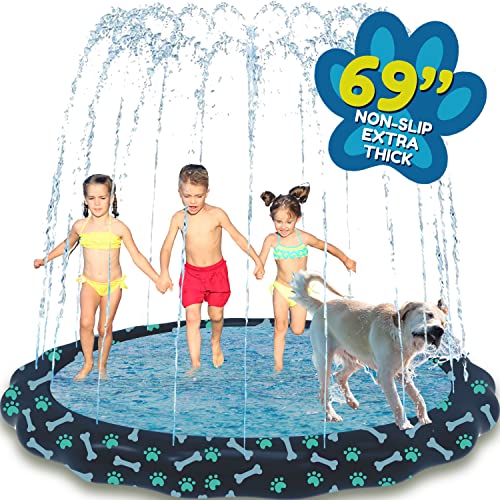
SplashEZ Non Slip Splash Pad for Kids & Dogs, 69’’ Extra Large Splash Pad Sprinkler for Kids, Dog Water Summer Toys – Great Outdoor Toys for Toddlers 1-3 & Children Ages 4-8, Baby Pool for Backyard
No Slip and All Fun – Say goodbye to slips and falls with SplashEZ's non-slip surface! Keep your…
As an affiliate, we earn on qualifying purchases.
As an affiliate, we earn on qualifying purchases.

Plum Play Kids Splash Pad Station Water Slide Play Equipment – Outdoor Toddler Water Toys, Sprinkler Pool for Kids, Fun Backyard Water Park with Bubble Blower, Water Reveal Coloring Wall Ages 3 Years+
Exciting Accessories for Endless Fun: The Plum Waterpark Splash Station includes three dynamic water accessories—a powerful water blaster,…
As an affiliate, we earn on qualifying purchases.
As an affiliate, we earn on qualifying purchases.