To stop scaling and etching using just one formula, you should calculate the Langelier Saturation Index (LSI). By measuring your water’s pH, temperature, calcium hardness, alkalinity, and TDS, then inserting these into the LSI formula, you can determine whether your water is balanced, corrosive, or prone to scaling. If your LSI isn’t ideal, small chemical adjustments can correct it. Keep exploring to learn how to interpret your results effectively.
Key Takeaways
- Use the LSI formula to assess whether your water is scaling, corrosive, or balanced by measuring pH, calcium hardness, temperature, and TDS.
- Keep the LSI close to zero to prevent scaling (positive) and etching (negative), ensuring system longevity.
- Adjust chemical levels—like adding calcium chloride or pH buffers—based on LSI results to maintain a neutral, balanced water condition.
- Regularly test water chemistry and recalculate LSI to proactively prevent damage from scaling or corrosion.
- A single, accurate LSI calculation guides effective chemical adjustments, stopping scaling and etching before they cause system failure.
Understanding the Importance of Water Balance in Pool and Boiler Systems
Maintaining proper water balance is essential for the longevity and efficient operation of pool and boiler systems. When your water isn’t balanced, you risk damaging equipment, increasing maintenance costs, and reducing system lifespan. Imbalanced water can cause corrosion, scaling, or etching, which compromises the integrity of pipes, heaters, and other components. Properly balanced water prevents these issues by maintaining the correct pH, alkalinity, and calcium levels. This ensures minerals stay dissolved and avoid depositing as scale or causing corrosion. Regular testing and adjustments are critical to keep water within ideal ranges. Doing so not only prolongs equipment life but also keeps your system running smoothly and efficiently, saving you time, money, and the hassle of unexpected repairs. Incorporating innovative digital literacy tools can help monitor water quality more accurately and efficiently.
What Is the Langelier Saturation Index and How Does It Work?
Have you ever wondered how to determine whether your water is aggressive, scaling, or balanced? The Langelier Saturation Index (LSI) helps you do just that. It’s a calculated number based on your water’s pH, temperature, total dissolved solids, and calcium hardness. Accurate water analysis is essential for interpreting the LSI correctly and making informed adjustments. The LSI indicates whether water tends to form scale, cause corrosion, or stay in balance. When the LSI is positive, your water is supersaturated with calcium, likely leading to scale buildup. If it’s negative, the water is undersaturated, which can cause etching and corrosion. A zero value means your water is in equilibrium. By understanding the LSI, you can adjust your water chemistry to prevent damage and maintain ideal conditions in your system.
The Key Components Needed to Calculate the LSI
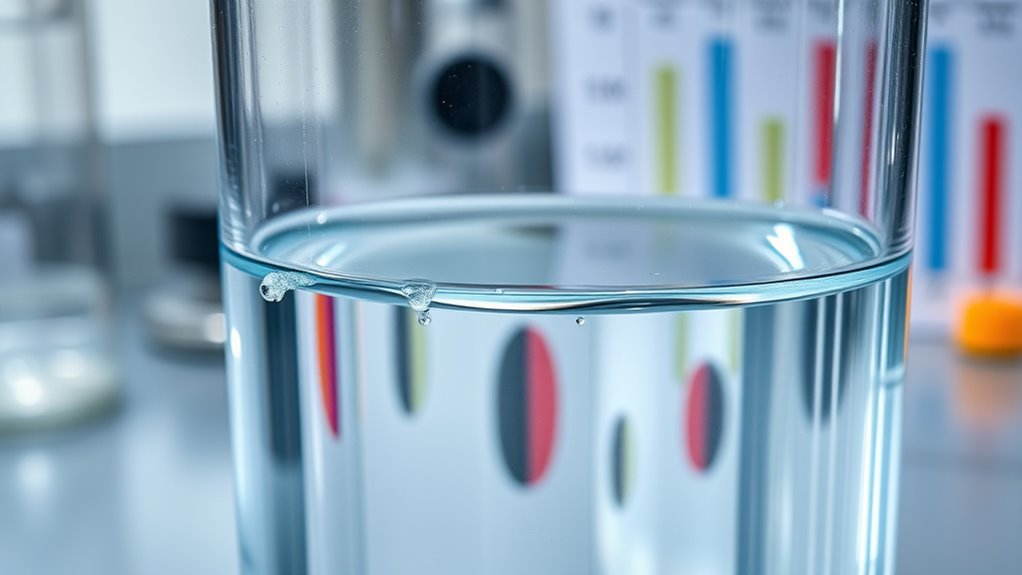
To calculate the LSI, you need to know your water’s calcium hardness levels, pH, and temperature. These components directly influence the water’s tendency to scale or corrode. Understanding how each factor interacts helps you accurately assess your water’s saturation state. Additionally, monitoring water quality is essential for maintaining system integrity and preventing issues related to scaling and etching.
Calcium Hardness Levels
Calcium hardness levels are essential components in calculating the Langelier Saturation Index because they directly influence water’s tendency to scale or corrode. Higher calcium levels promote scaling, forming deposits, while lower levels can lead to corrosion. Maintaining balanced calcium hardness ensures your water isn’t overly aggressive or prone to buildup.
Here’s a quick overview:
| Calcium Level (ppm) | Effect on Water | Recommended Range |
|---|---|---|
| Below 100 | Corrosive | 100-200 |
| 100-200 | Balanced | 150-250 |
| Above 200 | Scaling | 200-400 |
| 400+ | Excessive scaling | 200-400 |
| Ideal Range | Prevents issues | 150-250 |
Staying within the recommended range helps keep your water balanced, preventing damage to your system.
Ph and Temperature
Understanding how pH and temperature influence water chemistry is pivotal when calculating the Langelier Saturation Index. pH indicates how acidic or alkaline your water is, affecting calcium carbonate’s tendency to precipitate or dissolve. Temperature impacts solubility, with warmer water holding less dissolved calcium carbonate, promoting scaling or etching. These components directly affect the LSI calculation.
Consider these points:
- Higher pH increases the likelihood of scaling.
- Lower pH favors corrosion and etching.
- Warm water reduces calcium carbonate solubility.
- Cold water enhances calcium carbonate stability.
- Accurate measurements of both are essential for precise LSI results.
Mastering these factors helps you predict whether your water will scale, etch, or remain balanced.
Step-by-Step Guide to Computing Your Water’s LSI
To compute your water’s LSI, start by gathering essential water data like pH, temperature, alkalinity, calcium hardness, and total dissolved solids. Once you have these values, you can proceed to calculate the saturation index. This step-by-step process helps you understand whether your water is scaling, corrosive, or balanced. Understanding water chemistry is crucial for accurate LSI calculations and maintaining water quality.
Gather Water Data
Before you can calculate your water’s Langelier Saturation Index (LSI), you need to gather accurate water data. This information forms the foundation for precise calculations. You’ll want to collect:
- pH level, showing how acidic or alkaline your water is
- Total dissolved solids (TDS), indicating mineral content
- Calcium hardness, reflecting calcium ion concentration
- Alkalinity, measuring buffer capacity against pH changes
- Temperature, as it affects chemical reactions and solubility
Make certain your measurements are recent and taken from representative samples. Use calibrated instruments or reliable testing kits to avoid inaccuracies. Accurate data ensures your LSI calculation is precise, helping you determine whether your water is scaling, etching, or balanced. Proper data collection is vital for effective water management and prevention of issues. Understanding industry trends can also help you stay updated on best practices for water testing and treatment.
Calculate Saturation Index
Once you’ve gathered accurate water data, you can move on to calculating the Saturation Index, also known as the Langelier Saturation Index (LSI). To do this, you’ll need the pH, calcium hardness, total alkalinity, temperature, and total dissolved solids. Use these values in the LSI formula:
| Parameter | Value | Units |
|---|---|---|
| pH | [Your pH] | – |
| Calcium Hardness | [Your Ca] | mg/L |
| Temperature | [Your Temp] | °C or °F |
| Alkalinity | [Your Alk] | mg/L as CaCO₃ |
| TDS | [Your TDS] | mg/L |
Calculate the saturation index by plugging your data into the formula. A positive LSI suggests scaling, while a negative indicates potential etching. Proper water chemistry understanding is essential for maintaining optimal pool conditions.
Interpreting LSI Results to Prevent Scaling and Etching

Interpreting LSI results accurately is essential for preventing both scaling and etching in your water systems. When the LSI is above zero, scaling risk increases, leading to mineral buildup. If it’s below zero, your water is corrosive, risking etching of pipes and equipment. To interpret results effectively:
- An LSI close to zero indicates balanced water, minimizing risks.
- An LSI above +0.3 suggests potential for scale formation.
- An LSI below -0.3 warns of corrosive conditions.
- Slight variations around zero require monitoring to prevent sudden changes.
- Consistently high LSI values mean adjustments are needed to reduce scaling potential.
- Understanding the testing methods and how they influence LSI accuracy can help in making precise adjustments.
Tips for Maintaining Optimal Water Chemistry Using the LSI

Maintaining ideal water chemistry with the LSI involves regular monitoring and timely adjustments to prevent problems before they arise. Consistently check your water’s pH, alkalinity, calcium hardness, and temperature. Use the LSI formula to determine if your water is balanced, scaling, or corrosive. Adjust chemical levels as needed—add calcium chloride to increase saturation or pH increasers to prevent corrosion. Keep an eye on fluctuations; small changes can impact your system considerably. Here’s a quick guide:
| Water Condition | Adjustment Strategy |
|---|---|
| Scaling | Increase calcium & pH |
| Corrosive | Add stabilizers, pH buffers |
| Balanced | Maintain consistent testing |
Regular testing and timely tweaks keep your water in optimal condition. To better understand the effects of calcium and pH levels, consider reviewing water chemistry fundamentals.
Frequently Asked Questions
Can the LSI Be Used for Freshwater and Saltwater Pools Equally?
Yes, you can use the Langelier Saturation Index for both freshwater and saltwater pools. It helps you determine if your water is balanced, scaling, or corrosive regardless of water type. Just remember, saltwater pools have higher mineral content, which can influence the calculations. Adjust your readings accordingly, and always consider additional testing for precise results. This guarantees your pool stays balanced and safe for swimming.
How Often Should I Test My Water’s LSI for Optimal Results?
You should test your water’s LSI at least weekly to maintain ideal balance. If your pool experiences heavy usage, weather changes, or chemical adjustments, test more frequently—every 2-3 days. Regular testing helps you catch imbalances early, preventing scaling or corrosion. Keep a log of your results and adjust your chemicals accordingly to keep your water perfectly balanced, ensuring a safe, clear, and healthy swimming environment.
Does the LSI Account for Water Temperature Variations?
Did you know that water temperature can influence LSI calculations by up to 2 points? Yes, the LSI does account for temperature variations, which is vital because warmer water tends to hold less dissolved calcium, affecting scaling potential. When testing your water, make sure you measure temperature accurately and input it into the LSI formula. This helps you get precise results to prevent scaling or etching, regardless of the water’s temperature.
Are There Industry Standards for Acceptable LSI Ranges?
Yes, industry standards typically consider an LSI between -0.3 and +0.3 as acceptable. If your LSI falls within this range, your water is generally balanced, minimizing scaling or corrosion risks. You should regularly monitor your LSI to guarantee it stays within these limits, especially when adjusting water chemistry. Maintaining this range helps protect equipment and ensures water quality, aligning with industry best practices.
Can the LSI Predict Long-Term Scaling or Etching Damage?
While the Langelier Saturation Index provides a useful snapshot, it isn’t a crystal ball for long-term scaling or etching. You might worry about future damage, but the LSI mainly predicts immediate tendencies. To better forecast long-term issues, you should combine it with ongoing water testing, corrosion assessments, and monitoring of operational conditions. This extensive approach helps you anticipate and prevent potential scaling or etching damage over time.
Conclusion
By mastering the Langelier Saturation Index, you hold the key to a crystal-clear pool or a smoothly running boiler. Think of it as your personal compass, guiding you through the swirling currents of water chemistry. When you keep the LSI balanced, scaling and etching become distant ripples in your water’s calm surface. Take control, and watch your system stay pristine—your perfect water oasis is just a formula away.