
To comply with regulations for pool wastewater, you need to regularly test water parameters like pH, chlorine levels, and alkalinity to make certain they meet local, state, and federal standards. Proper chemical management is essential to prevent hazardous discharges, and installing pretreatment systems can help control pollutants before releasing water. Keeping detailed records and staying updated on regulations helps you maintain compliance. Continue exploring these guidelines to ensure your operations stay environmentally safe and legally sound.
Key Takeaways
- Regular water testing ensures pool wastewater meets pH, chlorine, and chemical standards required by regulations.
- Proper chemical management prevents hazardous residuals and complies with permissible discharge limits.
- Compliance involves adhering to local, state, and federal wastewater discharge regulations.
- Installation of pretreatment systems or containment measures can reduce pollutant levels before discharge.
- Maintaining detailed records of testing results and chemical treatments supports ongoing regulatory compliance.

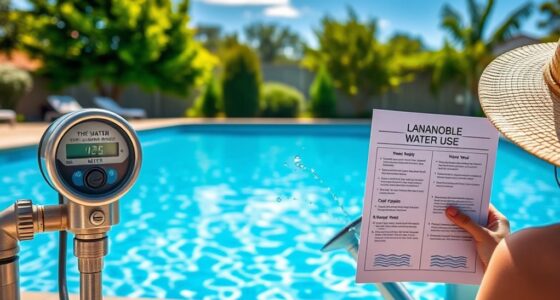
Ensuring regulatory compliance for wastewater from pools is essential to protect the environment and public health. As someone responsible for pool operations, you need to understand that managing wastewater isn’t just about maintaining water clarity—it’s about adhering to strict regulations designed to prevent contamination and pollution. Proper pool water testing is the cornerstone of this effort. Regular testing allows you to monitor water quality parameters such as pH, chlorine levels, alkalinity, and other chemical balances. When these levels are off, it can lead to unsafe discharge practices, potentially harming local waterways. By routinely testing your pool water, you not only guarantee the safety of swimmers but also stay ahead of regulatory requirements that dictate acceptable water quality standards for wastewater disposal.
Regular water testing ensures safety and regulatory compliance for wastewater discharge from pools.
Chemical management plays a critical role in this compliance process. You must carefully control the types and quantities of chemicals used in your pools to avoid creating hazardous wastewater. Overuse of chlorine or pH adjusters can lead to water that’s unsafe to release into the environment. Accurate chemical management involves understanding how chemicals interact, maintaining proper dosing, and adjusting treatments based on test results. This proactive approach helps prevent the formation of toxic byproducts or residual chemicals that could violate wastewater discharge regulations. Maintaining detailed records of water testing results and chemical treatments demonstrates your commitment to compliance and can be essential if inspections occur.
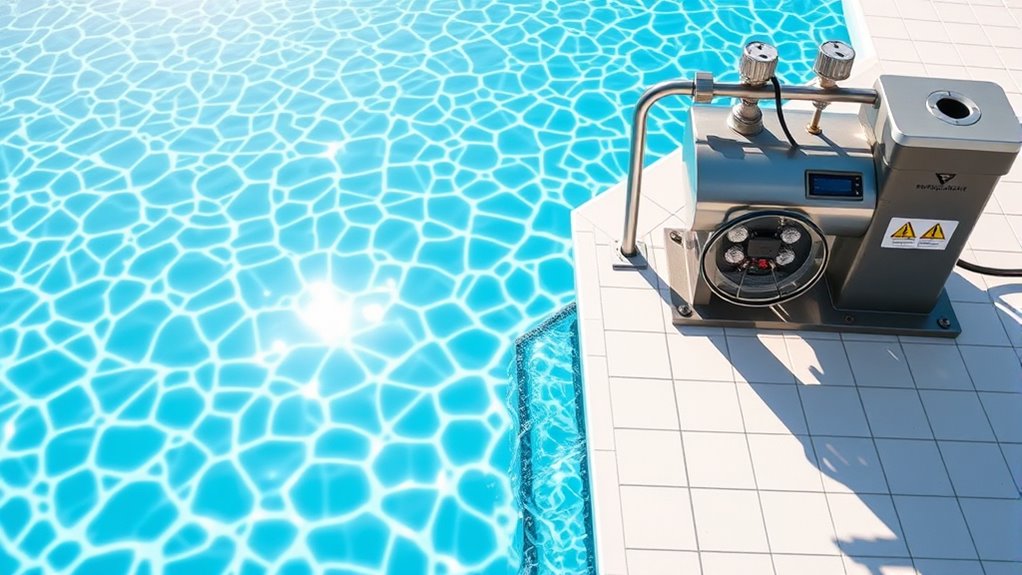
Beyond testing and chemical control, you need to stay informed about local, state, and federal regulations governing wastewater discharge. These regulations specify permitted chemical concentrations, pH ranges, and other quality parameters. You might also be required to install pretreatment systems or containments that reduce pollutants before wastewater leaves your facility. Implementing best practices for chemical management and testing not only guarantees you meet these standards but also minimizes environmental impact, reduces potential legal liabilities, and promotes community trust.
Additionally, investing in staff training is critical. Everyone involved in pool operations should understand the importance of proper testing procedures and chemical handling. This ensures consistent, accurate results and proper responses to any detected issues. When you prioritize regular pool water testing and responsible chemical management, you create a robust system for regulatory compliance. This proactive approach safeguards the environment, protects public health, and keeps your operation running smoothly within legal boundaries. Remember, compliance isn’t a one-time task but an ongoing process that requires vigilance, accurate data collection, and responsible chemical use. Proper wastewater management is essential for sustainable pool operations and environmental stewardship.
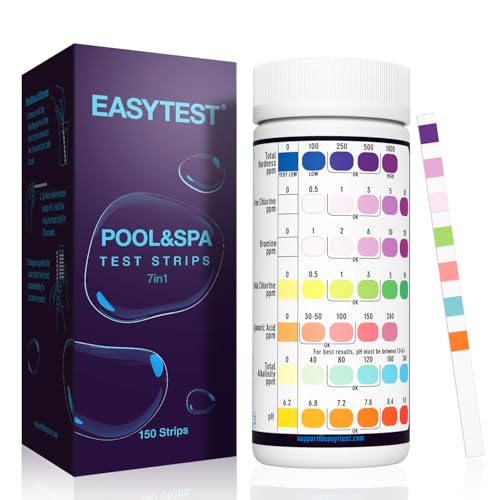
EASYTEST 7-Way Pool Test Strips, 150 Strips Water Chemical Testing for Hot tub and Spa, Accurate Test Bromine, Total Alkalinity, pH, Free Chlorine, Total Hardness, Cyanuric Acid, and Total Chlorine
AFFORDABLE 150 STRIPS: This water chemical testing kit contains 150 test strips. Enough balanced for your swimming pool,…
As an affiliate, we earn on qualifying purchases.
As an affiliate, we earn on qualifying purchases.
Frequently Asked Questions
Are There Specific Permits Required for Pool Wastewater Discharge?
Yes, you need specific permits for pool wastewater discharge. When managing pool water, you must adhere to wastewater treatment standards set by your local authorities. These permits ensure your wastewater complies with environmental regulations, preventing pollution and health risks. You should contact your state or local environmental agency to determine the exact permits required, as they vary by location and discharge methods. Proper permitting helps you stay compliant and safeguard the environment.
How Often Must Wastewater Samples Be Tested for Compliance?
You must test your wastewater at least monthly, or more often if your local regulations demand it. Sampling frequency is vital, and ignoring it could lead to severe penalties. Use reliable testing methods, like laboratory analysis or on-site testing kits, to guarantee accuracy. Staying vigilant with regular testing not only keeps you compliant but also helps protect the environment and your community from harmful contaminants.
What Are the Penalties for Non-Compliance With Regulations?
If you don’t comply with wastewater regulations, you risk fines, legal action, and shutdowns. Penalties aim to protect public health and minimize environmental impact, so authorities enforce strict consequences for violations. Non-compliance can lead to increased pollution and health hazards for your community. To avoid these issues, follow all regulations carefully, conduct proper testing, and stay updated on legal requirements to guarantee the safety of both people and the environment.
Can Wastewater From Pools Be Reused or Recycled?
Yes, you can reuse or recycle wastewater from pools through proper water treatment and filtration processes. Pool filtration helps remove impurities, while water treatment ensures contaminants are eliminated, making the water suitable for reuse. You might repurpose it for irrigation or other non-potable uses, but always follow local regulations. Proper treatment is essential to maintain safety and environmental standards, ensuring that recycled pool wastewater doesn’t harm ecosystems or public health.
How Do Regulations Differ Between Residential and Commercial Pools?
Did you know that commercial pools face stricter regulations than residential ones? You must follow specific chemical regulations and pool water treatment standards to guarantee safety and environmental protection. Commercial pools require regular testing, record-keeping, and adherence to discharge limits, whereas residential pools have more relaxed rules. Staying compliant helps prevent pollution and health hazards, so always check local guidelines to meet the different regulatory demands for each type of pool.
pool chemical management system
As an affiliate, we earn on qualifying purchases.
As an affiliate, we earn on qualifying purchases.
Conclusion
Making sure your pool wastewater meets regulatory standards isn’t just about avoiding fines—it’s about protecting the environment and public health. When you follow proper disposal procedures and stay informed about local regulations, you create a safer space for everyone. It’s like a rhythm that keeps everything in tune: compliance, responsibility, and care. By staying proactive, you ensure your pool stays compliant and your community stays protected, proving that good stewardship truly makes a difference.

PoolRX+ pool unit 7.5k-20k gallons
Eliminates all types of Pool Algae
As an affiliate, we earn on qualifying purchases.
As an affiliate, we earn on qualifying purchases.

AIPER HydroComm Smart Pool Monitor, 24/7 Automatic Water Testing for Pools, Hot Tubs & Spas, 5-in-1 Accurate Digital Tester, App Control, Customized Optimization Tips, White
Automatic Hourly Monitoring: Automatically tests your pool water every hour for continuous day-and-night monitoring. Generates clear water quality…
As an affiliate, we earn on qualifying purchases.
As an affiliate, we earn on qualifying purchases.