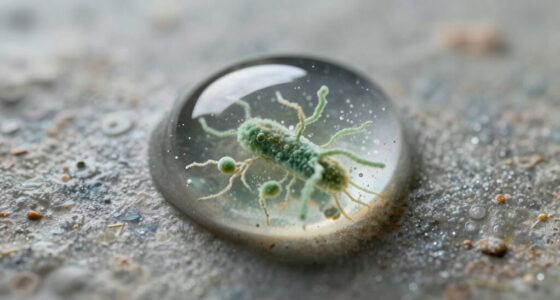
If you use indoor pools, you need to be aware that Legionella bacteria can grow in warm, stagnant water and create aerosols through activities like swimming and water features. These aerosols can carry the bacteria through the air, increasing infection risks. Proper maintenance—like regular disinfection, adequate chlorination, good ventilation, and water testing—can help control its spread. Continuing further will provide you with detailed strategies to keep your indoor pools safe and Legionella-free.
Key Takeaways
- Aerosols from indoor pools can carry Legionella bacteria, increasing inhalation risk for swimmers and staff.
- Warm water, biofilms, and inadequate chlorination promote Legionella growth in indoor pools.
- Proper ventilation and filtration help dilute and remove aerosols, reducing airborne bacteria.
- Regular cleaning, effective water disinfection, and monitoring water quality control Legionella proliferation.
- Implementing advanced water treatment and staff training enhances indoor pool safety and minimizes Legionella risk.
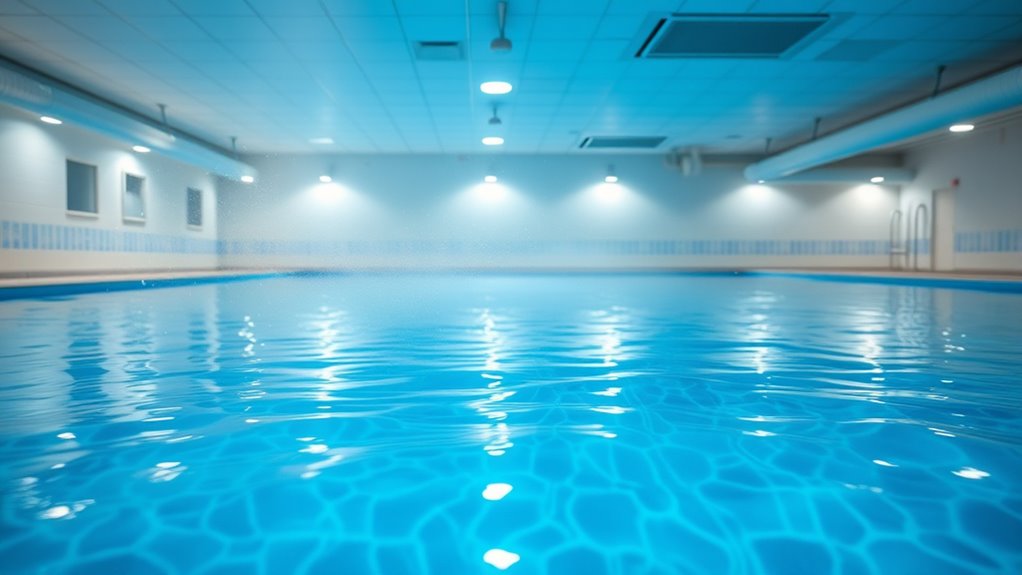
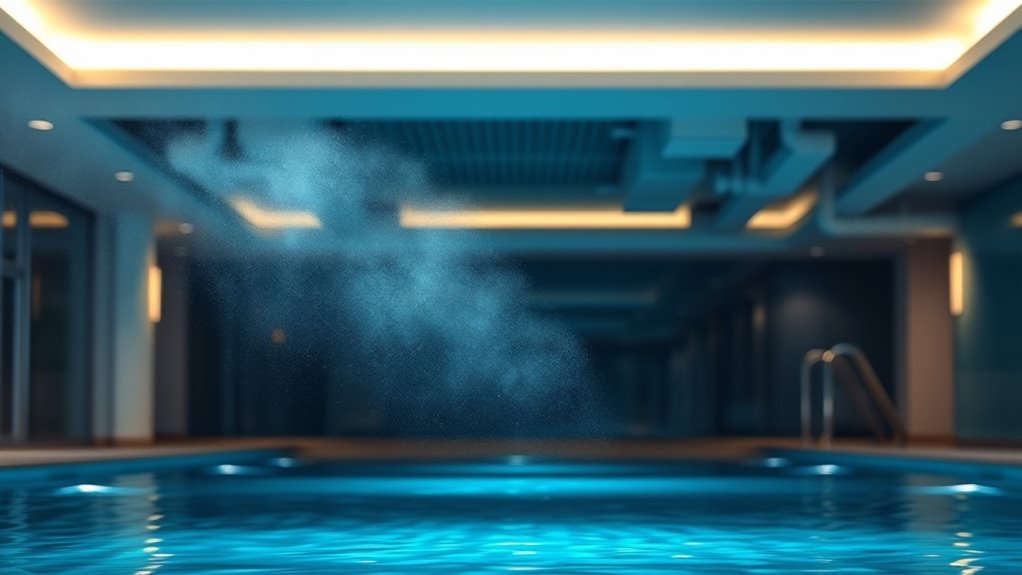
Indoor pools can be a breeding ground for Legionella bacteria, which thrive in warm, stagnant water. If you manage or frequent these pools, understanding how Legionella spreads through aerosols is essential for safety. When you swim or use jets, bubbles, or fountains, tiny water droplets become aerosolized, creating a fine mist that can carry Legionella bacteria. These aerosols can linger in the air around the pool area, especially in enclosed spaces, increasing the risk of inhalation. Once inhaled, the bacteria can cause Legionnaires’ disease, a severe form of pneumonia, or milder illnesses like Pontiac fever. That’s why controlling aerosol production and minimizing exposure are key steps in preventing infections.
The primary concern with aerosols is that they can travel beyond the immediate vicinity of the pool, reaching areas where you might not expect bacterial presence. If the pool water isn’t properly maintained, bacteria multiply rapidly. Factors like warm water temperatures, biofilm formation on surfaces, and inadequate chlorination create ideal conditions for Legionella growth. When you breathe in contaminated aerosols, the bacteria can settle in your lungs and cause infection. This risk is heightened in poorly ventilated indoor pools, where aerosols can accumulate, leading to higher exposure levels for swimmers, staff, and visitors.
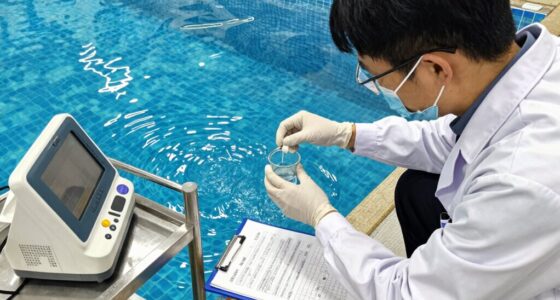
To reduce the risk, pool operators need to implement strict control measures. Regular cleaning and disinfecting of pool surfaces and equipment are essential. Maintaining appropriate chlorine and pH levels helps limit bacterial growth. Ensuring proper water circulation and filtration prevents stagnation, which is a key factor in Legionella proliferation. Additionally, controlling water temperatures—keeping them below 20°C or above 50°C—can inhibit bacterial growth, though maintaining such temperatures must be balanced with comfort and safety standards. You should also regularly test water samples for Legionella and other bacteria to catch problems early. Incorporating advanced water treatment technologies can further enhance safety by effectively removing bacteria and biofilm-forming organisms.
Ventilation plays a critical role in controlling aerosol spread. Proper airflow can dilute and remove contaminated droplets from the indoor environment. Installing high-quality air filtration and ensuring adequate ventilation reduces the concentration of aerosols in the air. If you’re responsible for indoor pools, educating staff about the importance of these measures and monitoring compliance is essential. When everyone follows best practices—such as proper cleaning, water treatment, and ventilation—you greatly decrease the chance of Legionella bacteria becoming a health hazard.
As an affiliate, we earn on qualifying purchases.
Frequently Asked Questions
How Does Legionella Survive in Chlorinated Pool Water?
Legionella can survive in chlorinated pool water because it tolerates low chlorine levels and thrives in warm, stagnant areas. You might not notice it, but biofilms and sediments provide protective environments where the bacteria can persist. To prevent this, you should maintain proper chlorine levels, regularly clean pools, and ensure adequate circulation. These steps help minimize Legionella’s survival and reduce the risk of infection.
What Are the Early Signs of Legionella Infection From Indoor Pools?
You might notice symptoms like cough, shortness of breath, muscle aches, and fever within 2 to 10 days after exposure. Some people also experience headaches, fatigue, or chest pain. If you develop these signs after swimming in an indoor pool, especially if you have a weakened immune system, see a healthcare professional promptly. Early detection and treatment are vital to prevent complications from legionella infection.
Can Legionella Be Transmitted Through Non-Aerosolized Water Contact?
Legionella is like a silent whisper in the water, but it mainly travels through aerosols. When you touch non-aerosolized water, the risk of transmission drops considerably. However, if you swallow contaminated water or have open cuts, bacteria can still enter your body. So, while contact with non-aerosolized water isn’t the primary route, it’s best to keep good hygiene and avoid swallowing pool water to stay safe.
How Often Should Indoor Pool Water Be Tested for Legionella?
You should test indoor pool water for Legionella at least monthly, especially if the pool is used frequently or has a history of contamination. In higher-risk environments, such as hospitals or aging facilities, testing might need to be more frequent, like bi-weekly. Regular testing helps catch any contamination early, allowing you to take prompt action to maintain safe water conditions and prevent Legionella growth.
Are There Specific Building Designs That Minimize Legionella Risk?
Oh, absolutely, because who wouldn’t want their building to double as a Legionella hotspot? You should opt for designs that avoid stagnant water zones, incorporate proper ventilation, and guarantee easy access for maintenance. Think open, well-ventilated spaces with flow-friendly plumbing. Use materials that resist biofilm buildup and eliminate dead legs in piping. Basically, build it so bacteria don’t feel at home—your health depends on it!
pool water disinfectant for Legionella
As an affiliate, we earn on qualifying purchases.
As an affiliate, we earn on qualifying purchases.
Conclusion
To keep yourself safe around indoor pools, stay vigilant about controlling Legionella. Regular maintenance, proper disinfection, and good ventilation are your best tools to prevent outbreaks. Remember, an ounce of prevention is worth a pound of cure—don’t let your guard down. By staying proactive, you can avoid the pitfalls of aerosols carrying bacteria, ensuring a safe and enjoyable swimming experience for everyone. Keep these measures in mind, and you’ll be swimming in safety rather than trouble.
air filtration system for indoor pools
As an affiliate, we earn on qualifying purchases.
As an affiliate, we earn on qualifying purchases.
As an affiliate, we earn on qualifying purchases.