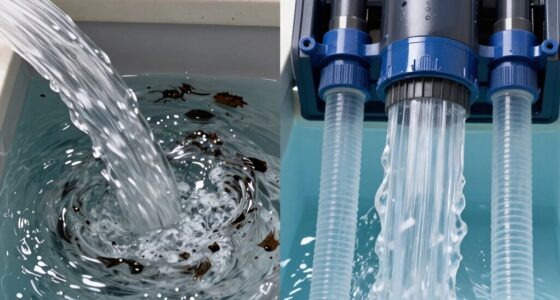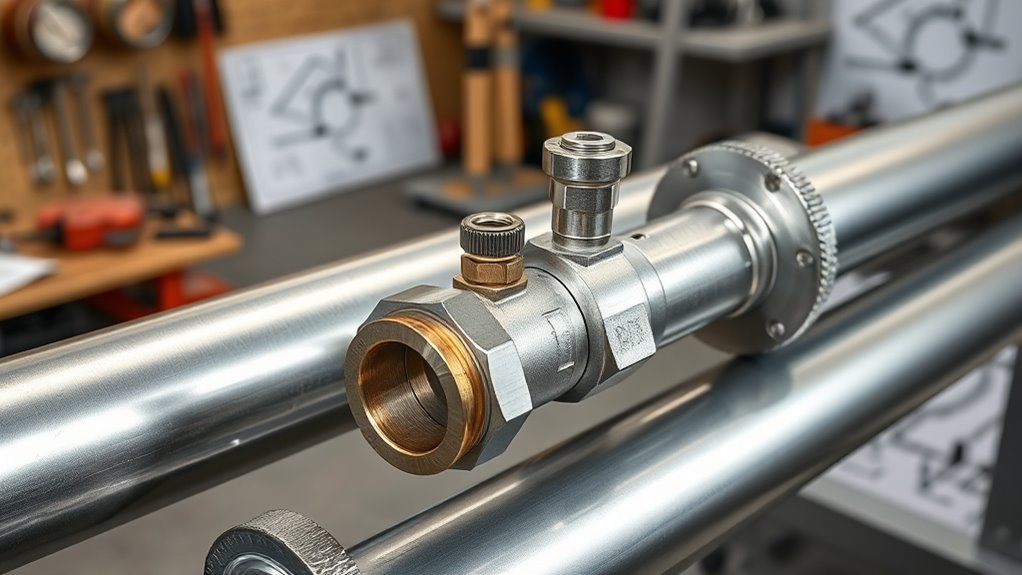

When sizing pipes and fittings in hydraulic design, you must consider flow rate, pipe material, diameter, and length to guarantee efficient water flow and pressure control. Proper calculations using formulas like Darcy-Weisbach or Hazen-Williams help determine the right pipe size, reducing friction and preventing issues like water hammer or pipe bursting. Correct sizing balances performance and cost while supporting system longevity. Keep exploring to understand how to optimize your hydraulic system further.
Key Takeaways
- Calculate flow rates and pressure drops using Darcy-Weisbach or Hazen-Williams formulas to determine appropriate pipe sizes.
- Consider pipe material, surface roughness, and transported fluid properties to minimize friction and optimize flow.
- Use larger diameter pipes in main lines to reduce friction and pressure loss, while selecting smaller fittings for branch lines.
- Ensure pipe and fitting sizes accommodate future system expansion and increased flow demands for long-term efficiency.
- Properly sized pipes prevent issues like water hammer, pipe bursting, and system inefficiencies, ensuring safe and reliable operation.
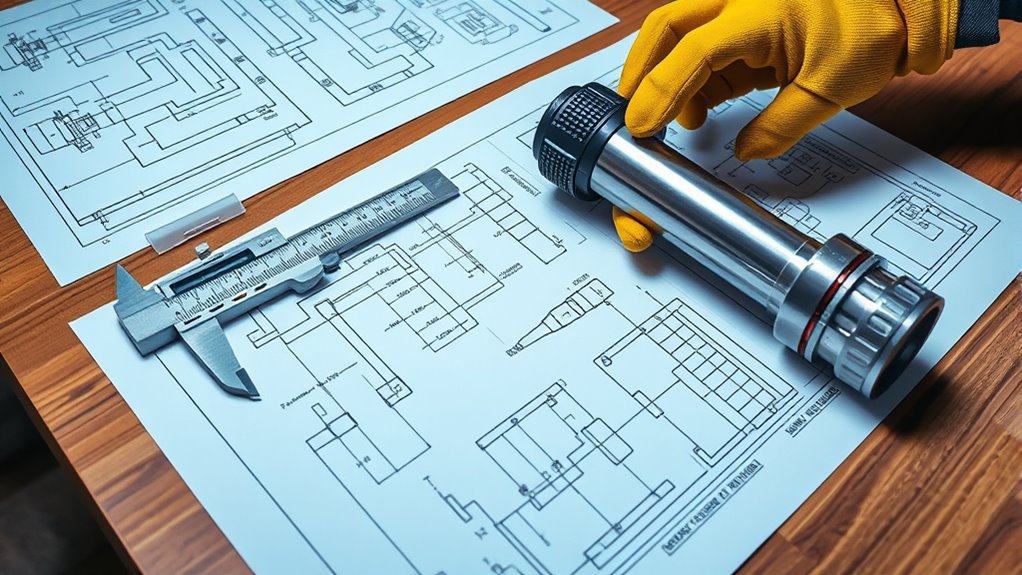
Have you ever wondered how engineers guarantee water flows efficiently and safely through infrastructure? It all begins with understanding the importance of proper pipe sizing, which is vital for maintaining an ideal flow rate. When designing a hydraulic system, you need to consider how pipe friction affects water movement. Pipe friction is the resistance that water encounters as it moves through pipes, influenced by factors such as pipe material, diameter, and roughness. If pipes are too narrow, the flow rate slows down considerably because increased friction causes pressure drops. Conversely, oversizing pipes might lead to unnecessary costs without substantial benefits. Striking the right balance ensures that water moves smoothly without waste or risk of system failure.
To achieve this, engineers perform detailed calculations that account for pipe friction, often using the Darcy-Weisbach equation or Hazen-Williams formula. These tools help determine how much head loss occurs due to friction at a given flow rate. By knowing the desired flow rate—how much water needs to pass through the system in a specific time—you can select a pipe diameter that minimizes pressure loss while keeping costs reasonable. Proper pipe sizing guarantees that water flows at a steady, controlled rate, preventing issues like water hammer or pipe bursting, which can occur if flow velocities are too high. Additionally, understanding fluid dynamics is essential for optimizing pipe design and ensuring efficient operation.
Engineers use Darcy-Weisbach and Hazen-Williams formulas to optimize pipe sizing and prevent system failures.
When considering flow rate, it’s essential to recognize that increasing pipe diameter reduces pipe friction and allows for higher flow rates without excessive pressure drops. This is why larger pipes are often used in main lines, where large volumes of water need to be transported efficiently. Smaller pipes, on the other hand, are suitable for branch lines or delivery points, where the flow requirements are lower. By carefully matching pipe size to flow rate, you prevent unnecessary energy consumption and extend the lifespan of the entire system.
Another aspect to keep in mind is the type of fluid being transported. Water with impurities or varying temperatures can influence pipe friction levels, so material selection and surface finish are also important considerations. When designing your hydraulic system, always factor in future expansion or increased flow demands, which might require resizing or upgrading pipes down the line. Properly addressing pipe friction and flow rate from the start helps guarantee your infrastructure operates reliably, efficiently, and safely over the long term.
Top picks for "hydraulic design fitting"
Open Amazon search results for this keyword.
As an affiliate, we earn on qualifying purchases.
Frequently Asked Questions
How Do Pipe Materials Affect Hydraulic Performance?
Your choice of pipe materials directly impacts hydraulic performance through material compatibility and corrosion resistance. Using compatible materials guarantees smooth flow and reduces wear, while corrosion-resistant pipes maintain their integrity over time. When you select appropriate materials, you minimize pressure drops and prevent leaks, which keeps your system efficient and reliable. Always consider these factors to optimize flow, reduce maintenance, and extend the lifespan of your piping system.
What Are Common Signs of Hydraulic System Inefficiency?
You’ll notice hydraulic system inefficiency through signs like reduced flow and increased energy use. Regular pump maintenance helps prevent performance drops, while fluid contamination can cause blockages and wear. Keep an eye on unusual noises, vibrations, and pressure drops, as these indicate issues. Addressing these early guarantees your system runs smoothly, saves energy, and extends component life. Consistent monitoring and maintenance are key to preventing costly repairs.
How Does Pipe Length Influence Pressure Loss?
You’ll notice that longer pipe lengths increase pressure loss because the flow encounters more friction. As the pipe length grows, your system needs more energy to maintain the same flow rate, especially if the pipe diameter stays the same. Keep in mind that a smaller pipe diameter amplifies this effect, causing even higher pressure drops. To minimize pressure loss, choose appropriate pipe lengths and diameters based on your flow rate needs.
What Safety Considerations Are Vital in Pipe Sizing?
Think of pipe sizing as crafting a sturdy bridge—you need to guarantee pressure safety and material compatibility to prevent collapse. You should select pipes that withstand pressure fluctuations without bursting and match materials to the fluid’s nature to avoid corrosion or degradation. Always consider safety margins to accommodate unexpected surges, and verify that fittings and pipes are compatible to maintain system integrity and prevent failures.
How to Select Appropriate Fittings for High-Pressure Systems?
You should select fittings suitable for high-pressure systems by considering material compatibility, guaranteeing they withstand the system’s pressure and fluid type. Choose fitting types designed for high-pressure applications, such as flanged, threaded, or compression fittings, based on your system’s needs. Always verify pressure ratings and compatibility with your piping materials to prevent leaks or failures, and consult manufacturer specifications to ensure safety and performance.
Conclusion
As you size pipes and fittings, imagine the flow of water like a steady river carving its path. When you choose the right dimensions, you’re guiding this river smoothly, avoiding turbulence and pressure loss. Think of your design as a well-orchestrated dance, where each component moves seamlessly. Trust that precise sizing creates a resilient system, much like a stream finding its natural course—efficient, reliable, and flowing effortlessly toward its destination.