
To balance your water chemistry, start by testing your pH, alkalinity, and chlorine levels weekly using reliable test strips or a digital tester. Adjust pH with soda ash to raise it or muriatic acid to lower it, ensuring levels stay between 7.2 and 7.6. Keep alkalinity between 80-120 ppm to stabilize pH. Regular testing and gradual adjustments help keep your water clear and safe, and you’ll find out more ways to maintain perfect balance as you continue.
Key Takeaways
- Regularly test water pH, alkalinity, and sanitizer levels at least weekly using reliable test methods.
- Maintain pH levels between 7.2 and 7.6 for optimal sanitizer effectiveness and equipment protection.
- Adjust alkalinity to 80-120 ppm to buffer pH and prevent swings, using appropriate chemicals.
- Correct low pH with pH increasers (soda ash) and high pH with acids like muriatic acid or sodium bisulfate.
- Continuously monitor and adjust water chemistry to keep water clean, balanced, and safe for swimmers.
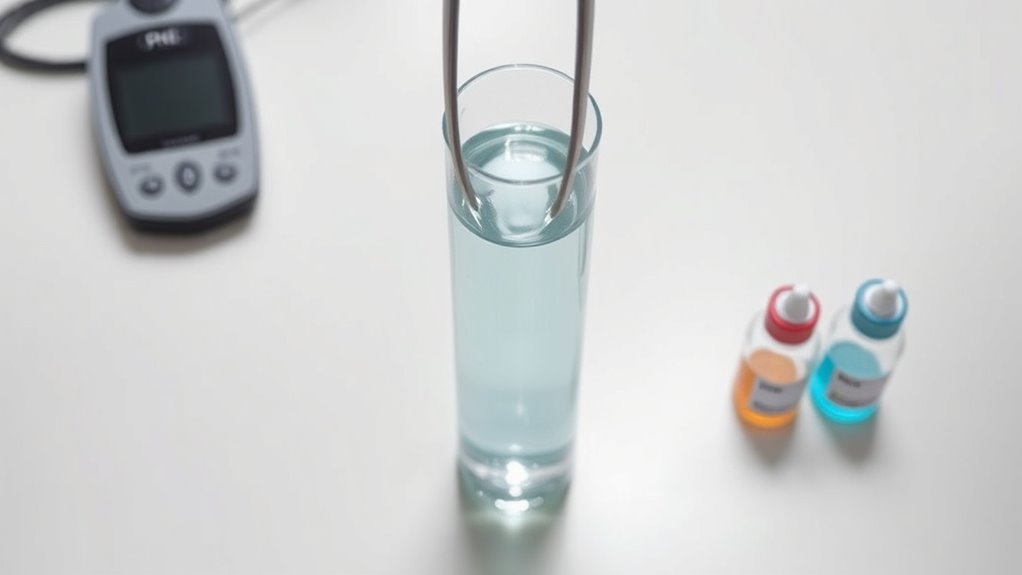
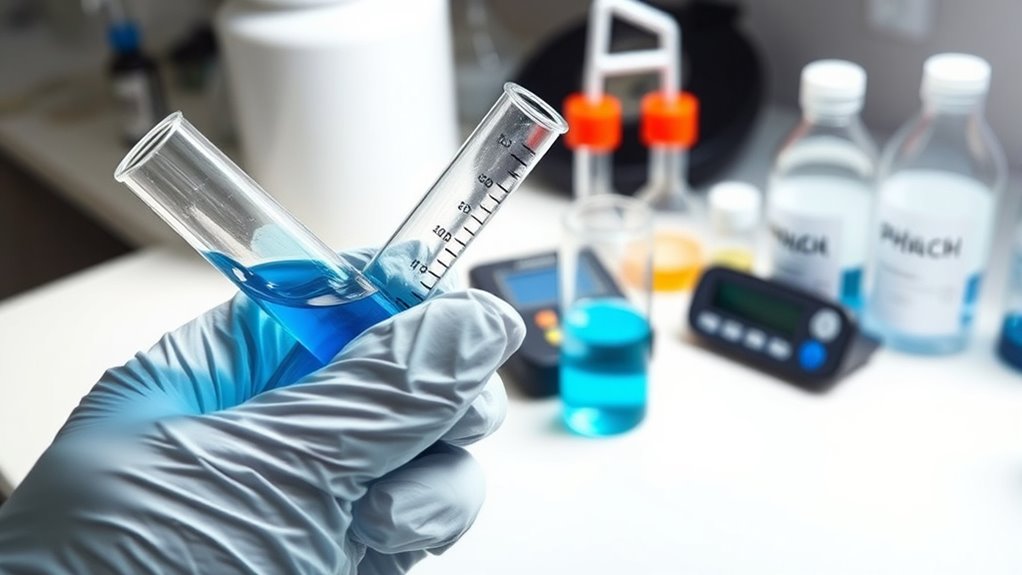
Have you ever wondered why maintaining proper water chemistry is essential for a healthy pool or spa? The key lies in keeping your water balanced, which involves regular testing and adjustments. One of the most critical aspects is pH levels, which directly affect water quality, comfort, and equipment longevity. When you test your water, you get a clear picture of its current state, allowing you to make informed decisions. Water testing should be a routine part of your maintenance, ideally performed at least once a week, especially during peak swimming season. Use reliable test strips or a digital tester to measure pH, alkalinity, and chlorine levels. This step helps you identify imbalances early before they cause problems like cloudy water, algae growth, or skin irritation.
Once you’ve tested your water, the next step is pH adjustment. The pH scale ranges from 0 to 14, with 7 being neutral. For pools and spas, the ideal pH falls between 7.2 and 7.6. If your test shows the pH is too low, meaning the water is acidic, you need to raise it using pH increasers like soda ash. Conversely, if the pH is too high, making the water alkaline, you should lower it with pH decreasers such as muriatic acid or sodium bisulfate. Proper pH adjustment ensures that sanitizers like chlorine work effectively, prevents corrosion or scaling of equipment, and keeps the water comfortable for swimmers. Always add chemicals gradually and in small amounts, retesting the water afterward to confirm you’ve reached the desired level.
In addition to pH, pay attention to alkalinity, which acts as a buffer for pH stability. Maintaining proper alkalinity levels (usually between 80 and 120 ppm) helps prevent sudden pH swings, making your water easier to balance. When you perform water testing, check alkalinity as well, and adjust it if necessary, using appropriate chemicals. Regular testing and adjustments create a stable environment, reducing the frequency of more extensive chemical treatments and saving you time and effort in the long run. Monitoring water quality is crucial because it helps detect pollutants and imbalances early, thereby maintaining a safe and comfortable swimming environment.
Balancing water chemistry isn’t a one-time task; it requires ongoing attention. By routinely testing your water and making precise pH adjustments, you ensure your pool or spa remains inviting, safe, and well-maintained. Keeping these fundamentals in check also prolongs the life of your equipment and minimizes chemical costs. Remember, consistency is key—staying on top of water testing and pH adjustment will give you clear, healthy water that’s perfect for relaxing or swimming with peace of mind.
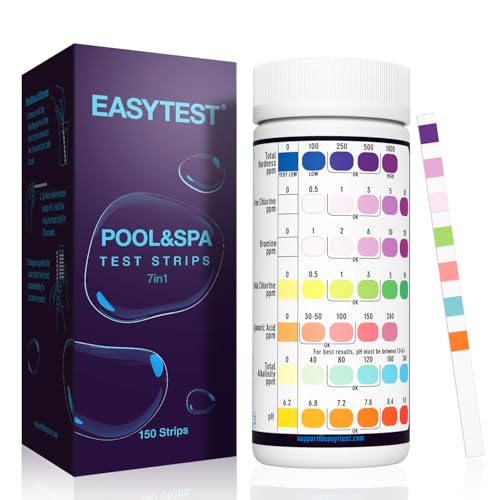
EASYTEST 7-Way Pool Test Strips, 150 Strips Water Chemical Testing for Hot tub and Spa, Accurate Test Bromine, Total Alkalinity, pH, Free Chlorine, Total Hardness, Cyanuric Acid, and Total Chlorine
AFFORDABLE 150 STRIPS: This water chemical testing kit contains 150 test strips. Enough balanced for your swimming pool,…
As an affiliate, we earn on qualifying purchases.
As an affiliate, we earn on qualifying purchases.
Frequently Asked Questions
How Often Should I Test My Water Chemistry?
You should test your water chemistry at least once a week to catch pH fluctuation early and prevent mineral buildup. Regular testing helps you maintain proper balance and address issues before they worsen. If you notice changes in water clarity or experience equipment problems, test more often. Consistent checks keep your water healthy, extend equipment life, and guarantee a safe, enjoyable environment.
What Are the Signs of Imbalanced Water Chemistry?
You’ll notice signs of imbalanced water chemistry through pH fluctuation, which can cause discomfort for aquatic life and damage equipment. Additionally, excessive algae growth often indicates nutrient imbalance and poor water quality. If you see murky water, foul odors, or frequent algae blooms, it’s a clear sign you need to test and adjust your water chemistry. Regular checks help prevent these issues and keep your water balanced and healthy.
Can Natural Remedies Replace Chemical Treatments?
Natural remedies can help support your water chemistry, but they typically can’t fully replace chemical treatments. While remedies like adding natural enzymes or using beneficial bacteria may improve water quality, chemical treatments are often necessary for precise control and quick correction of imbalances. You should view natural remedies as complementary tools rather than complete substitutes, ensuring your water remains safe and balanced with a combination of both approaches.
How Do Temperature Changes Affect Water Chemistry?
Temperature changes are like a rollercoaster for your water’s chemistry, causing pH fluctuations and disrupting mineral balance. As water heats up, it releases dissolved gases, often lowering pH, while cooling can cause minerals to precipitate, affecting clarity. You need to observe these shifts closely, adjusting chemicals accordingly to maintain a stable environment. Staying vigilant ensures your water remains balanced, safe, and inviting for whatever use you have in mind.
What Equipment Is Best for Accurate Water Testing?
You should use reliable test kits and digital meters for accurate water testing. Test kits are great for quick, on-the-spot results, especially for pH, chlorine, and alkalinity levels. Digital meters provide precise readings for parameters like pH, conductivity, and TDS, making them ideal for detailed analysis. Combining both ensures you get extensive, accurate data, helping you maintain ideal water chemistry effectively.
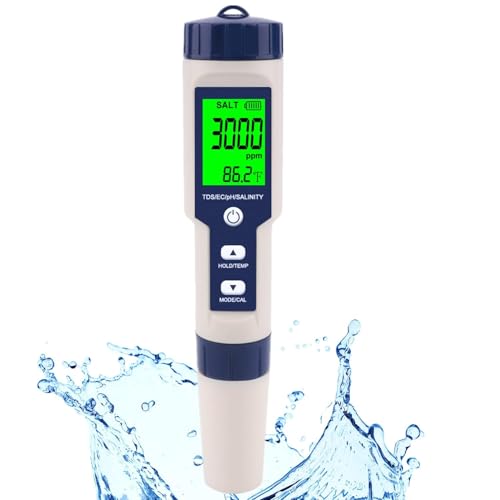
Pool Salt Tester & PH Meter, Hofun Digital Salinity Meter and PH Tester for Aquarium and Pool Saltwater Water, 5 in 1 Salinity PH Temp EC and TDS Meter, Aquarium Swimming Pool Hot Tub, High Accuracy
Wide Usage PH Meter : Hofun ph meter is an essential tool to improve your life quality. This…
As an affiliate, we earn on qualifying purchases.
As an affiliate, we earn on qualifying purchases.
Conclusion
Balancing your water chemistry is like tuning a fine instrument—you need patience and precision. When you follow these steps, you’ll create a safe, clear, and inviting environment for your pool or spa. Don’t forget, regular testing and adjustments keep everything in harmony. With a little effort, you’ll enjoy pristine water that feels as perfect as a calm lake at sunrise. Keep at it, and you’ll turn water balancing into a simple, satisfying routine.

In The Swim pH Increaser for Pools – Granular 100% Sodium Carbonate (Soda Ash) to Raise pH Up – 45 Pounds
In The Swim pH increaser raises the total alkalinity and pH levels in your pool.
As an affiliate, we earn on qualifying purchases.
As an affiliate, we earn on qualifying purchases.

CPDI Champion 4-Pack Acidblue Muriatic Acid for Swimming Pools & Spas, 1 Gallon Each – Low-Fume pH Stabilizer & Cleaner for Concrete & Masonry Surfaces, Clears Rust & Scale Build-Up
Vapor Reduction Technology: Reduces noxious fumes by up to 90%, AcidBlue’s VRT ensures a safer, more comfortable experience…
As an affiliate, we earn on qualifying purchases.
As an affiliate, we earn on qualifying purchases.