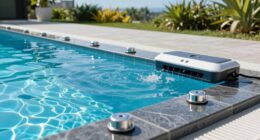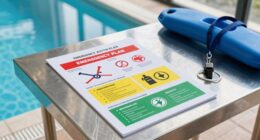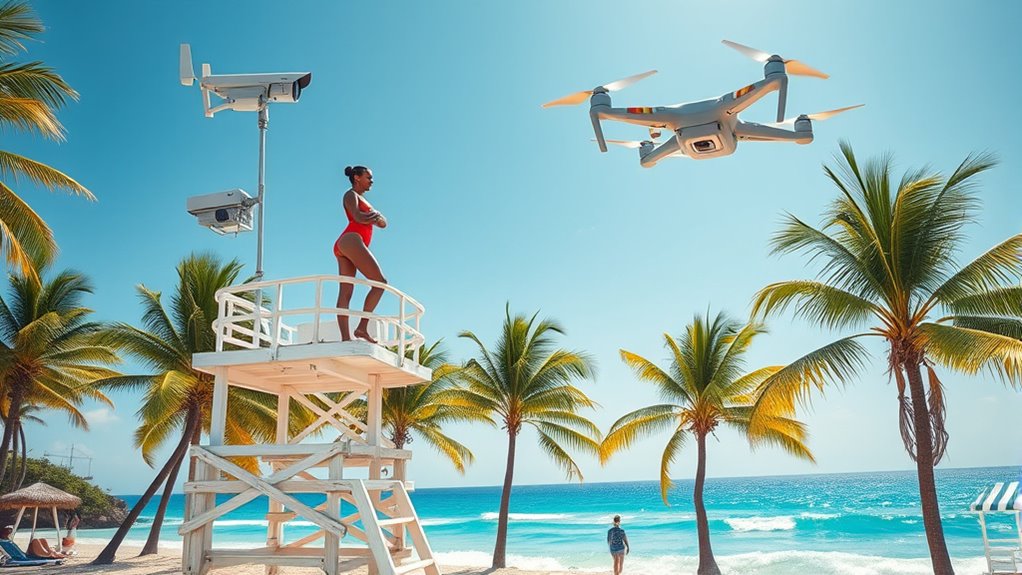

Layered safety systems combine the sharp eyes of lifeguards with advanced technology like cameras, drones, and sensors to keep water environments safer. Lifeguards spot hazards and respond quickly, while tech monitors wide areas and detects emergencies early. When they work together, response times improve and safety becomes more reliable. If you want to discover how this integrated approach can save lives, keep exploring how these layers work seamlessly to protect everyone.
Key Takeaways
- Layered safety systems integrate human vigilance with advanced technology to provide comprehensive coverage and reduce oversight.
- Technological tools like drones and sensors enhance lifeguards’ ability to monitor large or crowded areas effectively.
- Real-time alerts from technology enable quick and targeted rescue responses, minimizing response times.
- Coordination between lifeguards and technological systems improves incident detection, response efficiency, and safety recordkeeping.
- Combining both elements creates a multi-layered safety net, increasing overall safety and emergency preparedness in water environments.
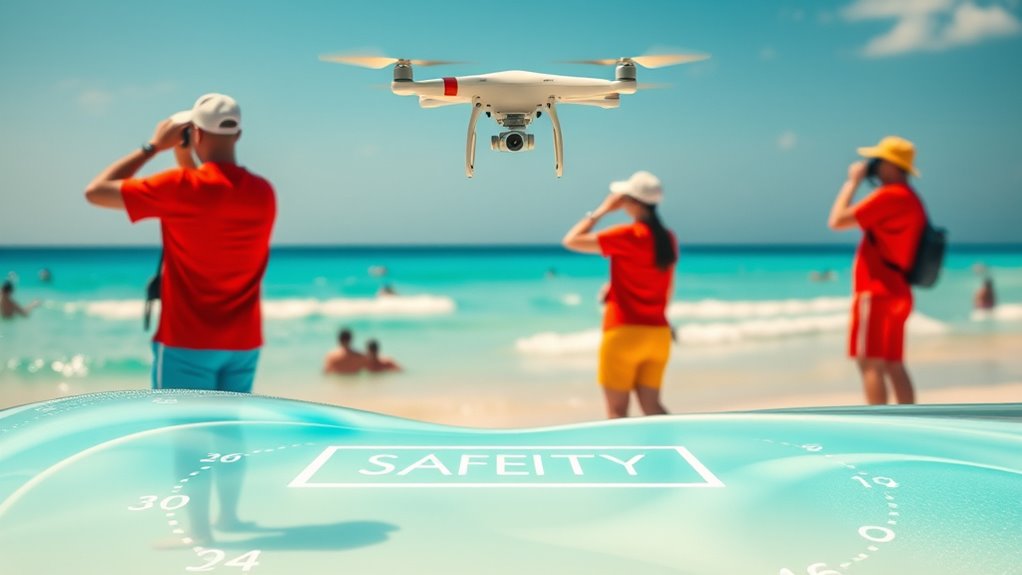
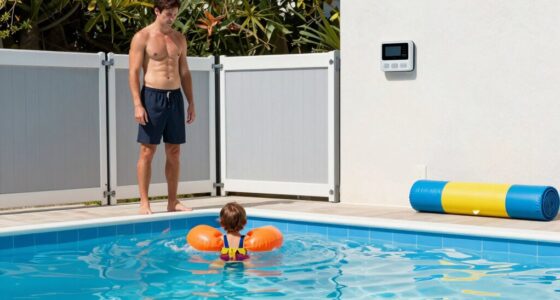
Have you ever wondered how complex safety risks are effectively managed in high-stakes environments? When it comes to water safety, especially in busy pools, lakes, or beaches, the answer lies in layered safety systems that combine human vigilance with advanced technology. These systems are designed to minimize accidents and ensure quick, effective responses when emergencies happen. Imagine you’re overseeing a water rescue; you rely on well-trained lifeguards following strict safety protocols, but you also benefit from technology that enhances their ability to detect and respond to dangers swiftly. This layered approach creates a safety net that reduces the chances of oversight and delays, ultimately saving lives.
Lifeguards are the frontline defenders in water safety. They are trained extensively in water rescue techniques and are familiar with safety protocols that dictate how to identify potential hazards, assist distressed swimmers, and prevent accidents before they escalate. Their presence alone acts as a deterrent to risky behavior and provides immediate assistance when needed. However, even the most vigilant lifeguards can face limitations, especially in crowded or large areas. This is where technology complements their efforts. Surveillance cameras, drone patrols, and underwater sensors can monitor wide zones continuously, offering real-time data that alerts lifeguards to emerging threats or individuals in distress. When these systems detect anomalies—such as a swimmer struggling or unusual activity—they instantly notify personnel, enabling rapid, targeted responses.
Water rescue operations benefit immensely from this layered setup. Safety protocols dictate how to coordinate between human responders and technological alerts, ensuring a seamless response. For example, if a drone spots a swimmer in trouble, the lifeguard on duty receives an instant alert, allowing them to act swiftly rather than relying solely on visual observation. This integrated system reduces response times and enhances the effectiveness of rescue efforts. It also provides a record of incidents, which can be analyzed to improve safety measures and prevent future accidents. Additionally, implementing advanced safety measures like emergency communication systems can further streamline rescue operations and ensure swift coordination among responders.

Underwater Drone, Mini S submarine drone with 4K+EIS Image Stabilization Camera for Real-Time Viewing Depth & Temperature Data, Direct-Connect Remote Controller, Dive to 330ft Underwater, Portable ROV
【More clearer And More Stable】GLADIUS MINI S captures epic moments with 4K HD video and 12 MP photos….
As an affiliate, we earn on qualifying purchases.
As an affiliate, we earn on qualifying purchases.
Frequently Asked Questions
How Do Layered Safety Systems Adapt to Different Aquatic Environments?
You adapt layered safety systems to different aquatic environments through environmental customization and system scalability. By tailoring safety measures to specific settings—like pools, lakes, or oceans—you guarantee maximum protection. You can scale the system’s technology and staffing levels based on size, user activity, and potential risks. This flexibility allows you to maintain effective safety coverage, whether managing a small community pool or a vast open-water area.
What Training Is Needed for Lifeguards Working With Advanced Technology?
Think of training like a lighthouse guiding you through new waters. You need to develop technological proficiency to operate advanced safety tools effectively. This includes understanding how to use surveillance systems, alarm integrations, and communication devices. Additionally, you must learn updated emergency protocols tailored to tech-enabled rescue efforts. Regular drills, hands-on practice, and ongoing education guarantee you’re confident and prepared to respond swiftly when every second counts.
How Do Safety Systems Handle False Alarms or False Detections?
Safety systems handle false alarms and false detections through sensor calibration and smart algorithms. You should regularly calibrate sensors to guarantee accuracy and reduce false alarms. When a false alarm occurs, the system often prompts verification, either through additional sensors or manual checks by lifeguards. This layered approach minimizes disruptions, ensuring that genuine emergencies are prioritized while false alarms are efficiently managed without compromising safety.
What Are the Maintenance Requirements for Technological Safety Equipment?
Your safety equipment needs regular maintenance to perform flawlessly. You should routinely check sensor calibration to guarantee accuracy and reliability. Software updates are essential too, as they fix bugs and improve system performance. Keep an eye on battery life and physical components for wear and tear. By staying proactive, you prevent catastrophic failures and make certain your safety system remains as dependable as a fortress. Routine maintenance is your best defense.
How Do Layered Safety Systems Improve Response Times During Emergencies?
Layered safety systems improve response times during emergencies through emergency coordination and system redundancy. When an incident occurs, technology quickly detects and alerts staff, enabling faster action. Meanwhile, lifeguards and backup systems guarantee continuous coverage if one fails. This integrated approach reduces delays, allowing responders to act swiftly and efficiently, ultimately enhancing safety and minimizing risks for everyone involved.

Superior Underwater Distance Sensor Perfect for Swimming Pools Detecting Up to 6 Meters Requires DC5 24V Ultrasonic (UART Controlled ≤7mA 14ms)
SENSOR ADVANTAGE: The ultrasonic underwater ranging sensor has the advantages of compact size, small blind spot (minimum 2cm),…
As an affiliate, we earn on qualifying purchases.
As an affiliate, we earn on qualifying purchases.
Conclusion
So, next time you’re at the pool, remember: trusting just a lifeguard or a camera isn’t enough. Why not enjoy the thrill of pretending safety is a solo act? Layered systems might seem like overkill, but hey, who doesn’t love a good safety net? After all, if technology and lifeguards can’t keep you safe, maybe it’s time to reconsider your swimming skills—or just stay dry. Safety’s better with backup, right?

FAMVIVA 2K Security Camera, Outdoor/Indoor for Home, Pet, Baby, Nanny, IP65 Waterproof Color Night Vision, White Light & Siren, Recording, Motion Detection, Compatible with Alexa, White-4P
[IP65 Waterproof & Versatile Home Security Camere]-Designed for durability, our Famviva 2K security camera is IP65 waterproof, ensuring…
As an affiliate, we earn on qualifying purchases.
As an affiliate, we earn on qualifying purchases.

Medical Alert System for Seniors – Advanced Mini Device with Automatic Fall Detection, 24/7 Monitoring, GPS Tracking, Emergency Alert Pendant Necklace, SOS Button, Caregiver App, Waterproof | Black
EASY ACTIVATION + MONTHLY SUBSCRIPTION: Elevate your safety and security with our straightforward medical alert pendants. For just…
As an affiliate, we earn on qualifying purchases.
As an affiliate, we earn on qualifying purchases.