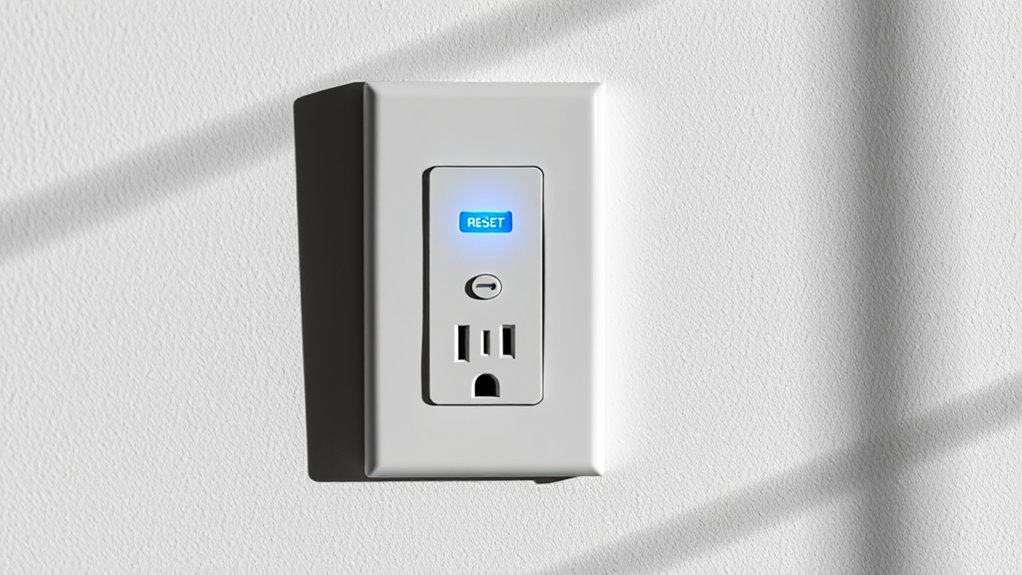

To follow GFCI guidelines, guarantee the device is installed in all wet or damp areas like bathrooms, kitchens, and outdoor outlets. Regularly test the GFCI by pressing the test button to confirm it trips properly, and replace it immediately if it doesn’t. Make sure wiring is up to code and in good condition to prevent unwanted trips or electrical hazards. Proper installation and maintenance help keep your home safe—discover more about ensuring their effectiveness here.
Key Takeaways
- Install GFCIs in all areas exposed to water or moisture, such as bathrooms, kitchens, and outdoor outlets.
- Regularly test GFCIs by pressing the test button to ensure proper trip function.
- Replace or repair GFCIs immediately if they fail to trip during testing.
- Ensure proper wiring and professional inspection to prevent electrical faults and leaks.
- Follow local electrical codes and manufacturer instructions for correct GFCI installation and maintenance.
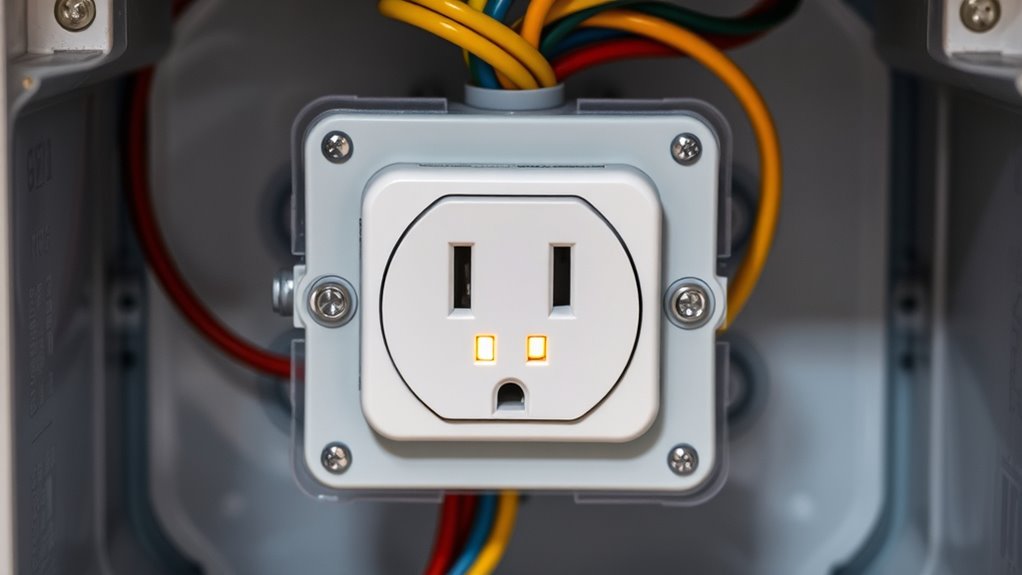
Ground-Fault Circuit Interrupters (GFCIs) are essential safety devices designed to protect you from electrical shocks, especially in areas where water and electricity may come into contact. These devices work by constantly monitoring the flow of electricity through a circuit, and they can quickly shut off power if they detect any imbalance. This rapid response is crucial in preventing severe shocks or electrocutions, particularly in wet environments like bathrooms, kitchens, and outdoor spaces. Understanding how GFCIs function and their importance is key to maintaining a safe home or workspace.
One of the core functions of GFCIs is leakage detection. Unlike traditional circuit breakers that trip based on overcurrent or short circuits, GFCIs are specifically designed to sense even tiny leaks of current from the wiring system. When water, damaged insulation, or faulty appliances cause current to escape the intended path, the GFCI detects this imbalance — often just a few milliamps — and trips almost instantly. This quick response minimizes the risk of shocks and prevents potential injuries. In addition to protecting individuals, GFCIs contribute significantly to overall wiring safety by early detection of wiring faults or deterioration that could lead to more severe hazards if left unaddressed. Regular testing and proper installation are essential components of ensuring their effectiveness.
GFCIs detect tiny current leaks to prevent shocks and wiring hazards.
Proper installation and regular testing of GFCIs are vital for ensuring their effectiveness. When installed correctly, GFCIs provide a reliable line of defense against electrical faults. You should verify that GFCIs are installed in all recommended areas, such as bathrooms, kitchens, garages, and outdoor outlets, where water exposure is frequent. Regular testing is equally important; pressing the test button simulates a fault, ensuring the device functions properly. If the GFCI doesn’t trip during testing, it indicates a malfunction, and you should replace or repair it immediately to maintain safety standards.
Wiring safety is another critical aspect linked to GFCI use. Faulty or outdated wiring can increase the likelihood of electrical leaks, which GFCIs are designed to detect and mitigate. Ensuring your wiring is up to code and free from damage enhances the overall safety of your electrical system. If you notice frequent tripping or other electrical issues, it might be due to wiring problems, and a professional inspection can identify potential hazards before they cause harm.

Klein Tools RT250 GFCI Outlet Tester with LCD Display, Electric Voltage Tester for Standard 3-Wire 120V Electrical Receptacles
CLEAR LCD READOUT: GFCI Receptacle Tester features a large backlit LCD readout for easy voltage reading and clear…
As an affiliate, we earn on qualifying purchases.
As an affiliate, we earn on qualifying purchases.
Frequently Asked Questions
Are GFCIS Required in Outdoor Garages?
Yes, you need GFCIs in outdoor garages to guarantee safety and comply with electrical code. Installing GFCIs helps prevent electrical shocks by shutting off power quickly if a ground fault occurs. For garage safety, make sure all outlets, especially those outdoors, are GFCI protected. This not only meets the electrical code but also minimizes risks associated with moisture and outdoor conditions, keeping you safe while using electrical tools or appliances.
How Often Should GFCIS Be Tested for Safety?
Think of your GFCI as a vigilant guardian watching over your safety. You should test your GFCI monthly to verify it’s functioning properly. Regular testing is essential for safety maintenance, catching potential issues before they become hazards. By making this a routine, you keep your home’s electrical system protected, just like a guardian keeps watch over what’s precious. Stay vigilant and test your GFCI regularly for peace of mind.
Can GFCIS Be Installed in Wet or Damp Locations?
Yes, you can install GFCIs in wet or damp locations. Just guarantee they have weather-resistant features and are rated for such environments, which helps prevent moisture damage. During installation, consider proper weatherproof enclosures and sealing methods to enhance durability. Follow the manufacturer’s instructions for safe installation, and remember that GFCIs in these areas help protect you from electrical shock while enduring the challenges of moisture exposure.
Do GFCIS Protect Against All Electrical Faults?
You might think GFCIs protect against all electrical faults, but that’s not the case. They’re specifically designed to detect ground faults—those dangerous leaks of current to the ground that threaten shock hazards. When a ground fault occurs, the GFCI quickly shuts off power, providing essential circuit protection. However, it doesn’t guard against overloads or short circuits, so you still need other safety devices for thorough electrical safety.
What Are the Common Signs of a Faulty GFCI?
You’ll notice a faulty GFCI if the indicator lights are flickering or stay off when they should be on. Additionally, if it trips frequently without a clear reason, that’s a sign it’s malfunctioning. These issues indicate internal problems, possibly due to wiring faults or age. Regularly test your GFCI and substitute it if you see these signs to ensure safety and proper protection.

Amazon Basics Weather-Resistant Tamper-Resistant GFCI Receptacle with LED Indicator, Self-Test Feature, Ground Fault Circuit Interrupter for Indoor or Outdoor Use, 20 Amp, White
GFCI power outlet detects ground faults and shuts off power to prevent serious electric shock
As an affiliate, we earn on qualifying purchases.
As an affiliate, we earn on qualifying purchases.
Conclusion
By following these GFCI guidelines, you’re not just safeguarding your home — you’re creating a fortress against electrical hazards. Think of it as having a superhero protecting every outlet, every time. With proper installation and regular testing, you’ll drastically reduce the risk of shocks and fires. Don’t wait for disaster to strike; stay proactive and keep your loved ones safe. Remember, this small effort is your ultimate shield in the battle against dangerous electrical accidents.

ELEGRP GFCI Outlet 20 Amp, Self-Test GFI Electrical Outlet with Thinner Design, TR Tamper Resistant GFCI Receptacle, Ground Fault Circuit Interrupters with Wall Plate, UL Listed, Matte White, 1 Pack
✅【Innovative Dual Protection System】Features twin solenoid and double silicon controlled rectifier (SCR), ensuring an always-on GFCI protection to…
As an affiliate, we earn on qualifying purchases.
As an affiliate, we earn on qualifying purchases.

OAONAN GFCI Replacement Plug Assembly Auto Reset 15 Amp 2 Prongs, 5 Years Warranty, Ground Fault Circuit Interrupter Safety Plug for Pressure Washer, Hot Tub, Air Conditioner, Hair Dryer – Black
Enhanced Safety Protection – This GFCI replacement plug is equipped with surge protection and lightning protection, designed to…
As an affiliate, we earn on qualifying purchases.
As an affiliate, we earn on qualifying purchases.