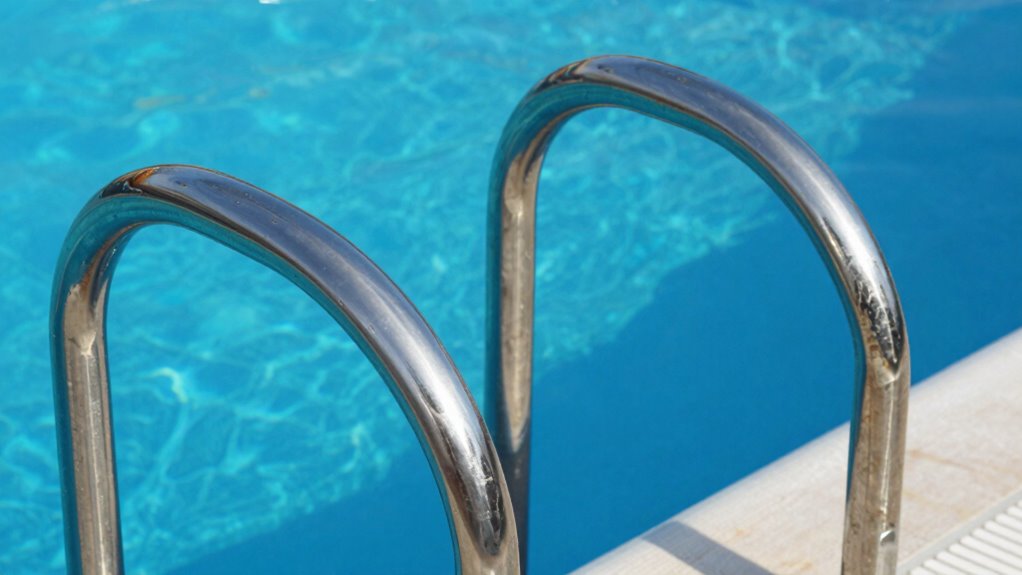
If you’re choosing between 304 and 316 stainless steel for pool rails, 316 offers better resistance to corrosion, especially in saltwater and chlorinated environments, thanks to its molybdenum content. While 304 is suitable for less aggressive conditions, it’s more prone to pitting and rust over time. Understanding how each performs in pool environments helps you make a durable choice—keep going to see which steel suits your pool best.

Get pool and patio gear delivered free with Prime
- Fast, free delivery on millions of items
- Prime Video, Amazon Music and more included
- Member-only deals all year
Key Takeaways
- 316 stainless steel contains molybdenum, providing superior resistance to chlorides and saltwater compared to 304 stainless steel.
- 316 is more corrosion-resistant in harsh environments like saltwater pools, reducing rust and pitting over time.
- 304 may corrode faster in high-chloride or salt conditions, especially if pool chemistry isn’t properly maintained.
- 316’s higher alloy content makes it more durable and requires less maintenance than 304 in corrosive environments.
- For saltwater or chemically harsh pools, 316 stainless steel is the better choice for long-term corrosion resistance.
As an affiliate, we earn on qualifying purchases.
Which Stainless Steel Grade Is Better for Pool Rails?
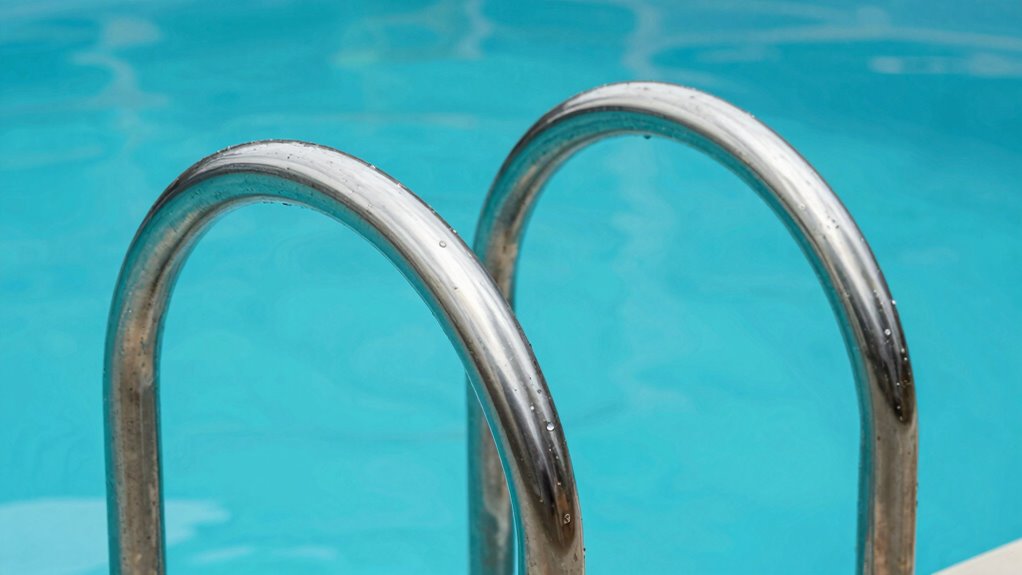
When choosing stainless steel for pool rails, selecting the right grade is essential to guarantee durability and resistance to corrosion. During pool installation, opt for a grade that withstands harsh pool environments. Grade 316 stainless steel is generally better suited for this purpose because it offers superior corrosion resistance, especially in chlorinated water. To keep your pool rails in top condition, follow maintenance tips like regular cleaning with non-abrasive cleaners and avoiding harsh chemicals. Proper maintenance prevents buildup and corrosion, extending the life of your rails. While grade 304 stainless steel may work for less demanding environments, investing in grade 316 ensures your pool rails stay sturdy and rust-free longer, making it the smarter choice for long-term durability and reduced maintenance efforts. corrosion resistance is a key factor to consider when selecting the appropriate stainless steel grade for pool applications. Additionally, understanding material composition can help you make more informed decisions about which stainless steel grade is best suited for your specific pool environment. Recognizing the importance of material properties can further enhance your choice for longevity and performance. For example, environmental factors such as exposure to saltwater or chemicals can significantly influence the durability of the stainless steel used.
As an affiliate, we earn on qualifying purchases.
What Are the Key Differences Between 304 and 316 Stainless Steel?
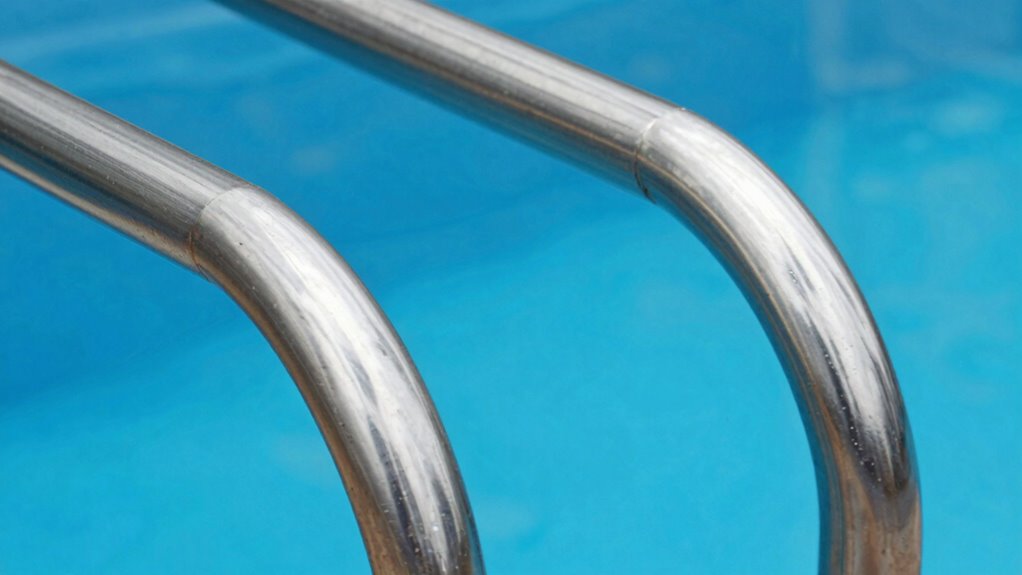
When choosing between 304 and 316 stainless steel for your pool rails, understanding their corrosion resistance is key. The main differences lie in their material composition, which affects how well they withstand exposure to water and chemicals. Let’s explore how these variations impact durability and suitability for your pool environment.
Corrosion Resistance Levels
Understanding the corrosion resistance levels of stainless steel is essential when selecting pool rails, especially between 304 and 316 grades. 316 stainless steel offers superior pitting resistance, making it better suited for chlorinated or salty pool environments. This enhanced resistance means it’s less likely to develop rust or corrosion over time, preserving both durability and appearance. Conversely, 304 stainless steel, while corrosion-resistant in general, is more vulnerable to pitting in aggressive pool conditions. This can compromise its aesthetic appeal, leading to stains or surface deterioration. If maintaining a pristine look and long-lasting performance are priorities, 316 stainless steel is the better choice. Its higher corrosion resistance ensures your pool rails stay attractive and intact even after prolonged exposure to water and chemicals.
Material Composition Differences
The primary difference between 304 and 316 stainless steel lies in their chemical compositions, which directly impact their corrosion resistance and suitability for pool environments. The alloy differences are mainly the addition of molybdenum in 316, enhancing its resistance to chlorides and harsh chemicals. In contrast, 304 contains chromium and nickel but lacks molybdenum, making it less resistant to corrosion in aggressive conditions. Manufacturing processes also vary slightly; 316 often undergoes more controlled heat treatments to optimize its corrosion-resistant properties. These composition differences mean that 316 is better suited for aquatic and high-chloride environments, while 304 is suitable for general-purpose applications. Understanding these alloy differences helps you choose the right stainless steel for your pool rails. corrosion resistance is a crucial factor when selecting materials for aquatic environments. Additionally, material composition differences significantly influence durability and longevity in corrosive settings.
As an affiliate, we earn on qualifying purchases.
How Do Pool Chemicals and Salt Affect Stainless Steel Rails?
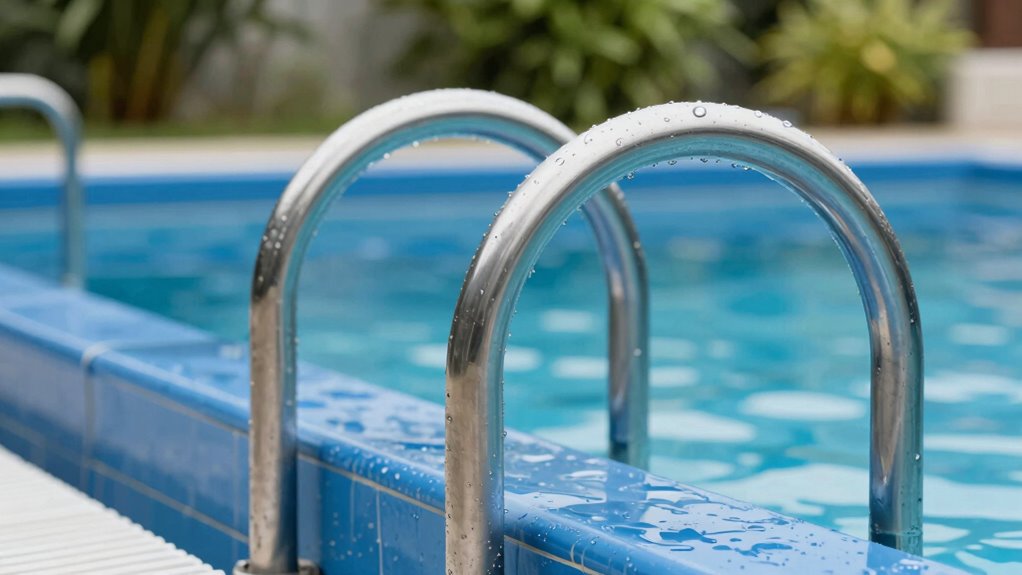
Pool chemicals can accelerate corrosion on stainless steel rails if not properly balanced, so it’s important to monitor their levels regularly. Salt, especially in saltwater pools, can also cause rust over time if your rails aren’t made from corrosion-resistant alloys like 316. Understanding how these elements interact with your rails helps you keep them looking great and lasting longer. Additionally, Free Floating debris or algae buildup can also contribute to corrosion if not properly cleaned and maintained. Regular inspections and maintenance can further prevent surface deterioration caused by these factors. Being aware of corrosion mechanisms can help you take proactive steps to protect your pool rails over time. Proper material selection plays a critical role in how well your rails resist these corrosive influences and extends their lifespan. Knowing how environmental factors impact stainless steel can also inform your maintenance practices to enhance durability.
Chemical Impact on Rails
Ever wonder how pool chemicals and salt can impact your stainless steel rails? The pH balance of your pool water is vital—if it’s too low or high, it can accelerate corrosion, especially when combined with chemical treatments. Chlorine and other sanitizers can also react with the steel surface, leading to pitting or discoloration over time. Additionally, UV exposure from sunlight weakens protective oxide layers on stainless steel, making it more vulnerable to chemical damage. Salt, though less aggressive than other chemicals, can still contribute to corrosion if the pH isn’t properly maintained. To protect your rails, keep the pH balanced, limit chemical overuse, and minimize prolonged sun exposure. Proper maintenance guarantees your stainless steel rails stay shiny and durable.
Salt Corrosion Resistance
While maintaining proper pH levels helps prevent corrosion, salt itself can pose a threat to stainless steel pool rails if not managed properly. Salt accelerates marine corrosion, especially in environments with high salt exposure, like outdoor pools. Stainless steel alloys like 304 and 316 are made through specific manufacturing processes that influence their resistance to salt-induced damage. Salt can penetrate the protective oxide layer, leading to pitting and rust over time. To minimize this, consider these factors:
- Use of higher alloy content, like 316, which offers better salt resistance
- Regular rinsing of rails to remove salt deposits
- Avoiding harsh chemical combinations that can weaken the steel
- Proper maintenance to prevent salt buildup and corrosion
Understanding how salt affects your rails helps extend their lifespan and maintain their appearance.
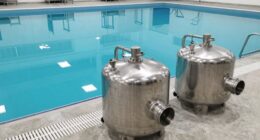
saltwater pool stainless steel rail
As an affiliate, we earn on qualifying purchases.
As an affiliate, we earn on qualifying purchases.
Which Steel Lasts Longer in Pool Environments?
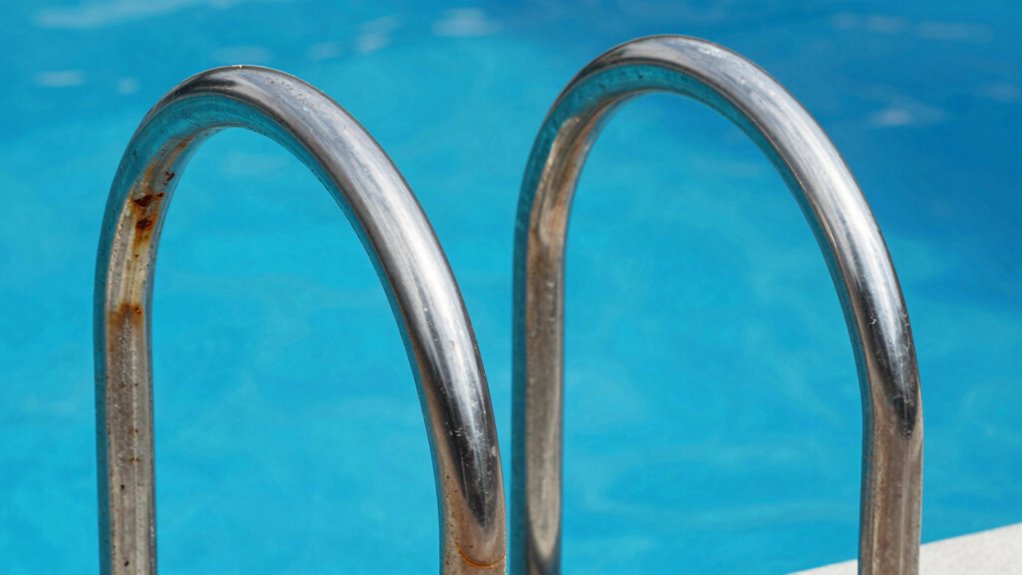
When choosing stainless steel for pool rails, durability in harsh environments is crucial. You want a material that withstands constant exposure to chlorine, water, and weather without deteriorating. Typically, 316 stainless steel lasts longer in pool environments because of its superior corrosion resistance, especially against salt and chlorinated water. Proper pool design plays a role in extending the life of your rails—using smooth, rounded edges prevents corrosion from trapping debris. Installation tips also matter; ensure the rails are securely anchored and avoid areas prone to standing water or chemical buildup. Regular cleaning and inspection help catch early signs of wear, but selecting the right steel from the start ensures your pool rails stay functional and attractive longer, reducing replacements and maintenance costs over time. Additionally, choosing a high-quality grade like 316 stainless steel can provide better resistance to pool corrosion and extend the lifespan of your fixtures. Incorporating corrosion-resistant materials into your pool design further enhances durability and reduces long-term costs. Being aware of environmental factors such as chlorine levels can also help you maintain the integrity of your pool fixtures and prolong their lifespan. Applying protective coatings regularly can also further prevent corrosion and boost the longevity of your pool rails, especially in environments with fluctuating chemical levels.
How Do Cost and Maintenance Compare for 304 and 316 Rails?

Choosing the right stainless steel for your pool rails involves weighing both initial costs and ongoing maintenance. Generally, 304 stainless steel has a lower cost comparison upfront, making it attractive for budget-conscious projects. However, its maintenance requirements can be higher if exposed to harsh pool environments, leading to potential corrosion over time. Conversely, 316 stainless steel costs more initially but offers superior resistance, reducing the need for frequent upkeep.
- 304 steel has lower purchase costs but may require more cleaning and protective coatings
- 316 steel’s higher price reflects its corrosion resistance and longevity
- Maintenance for 304 involves regular inspections and treatments
- 316 reduces maintenance needs, saving time and effort in the long run
Understanding these factors helps you choose the best option for your pool’s environment and budget.
When Should You Use 304 Versus 316 Stainless Steel?
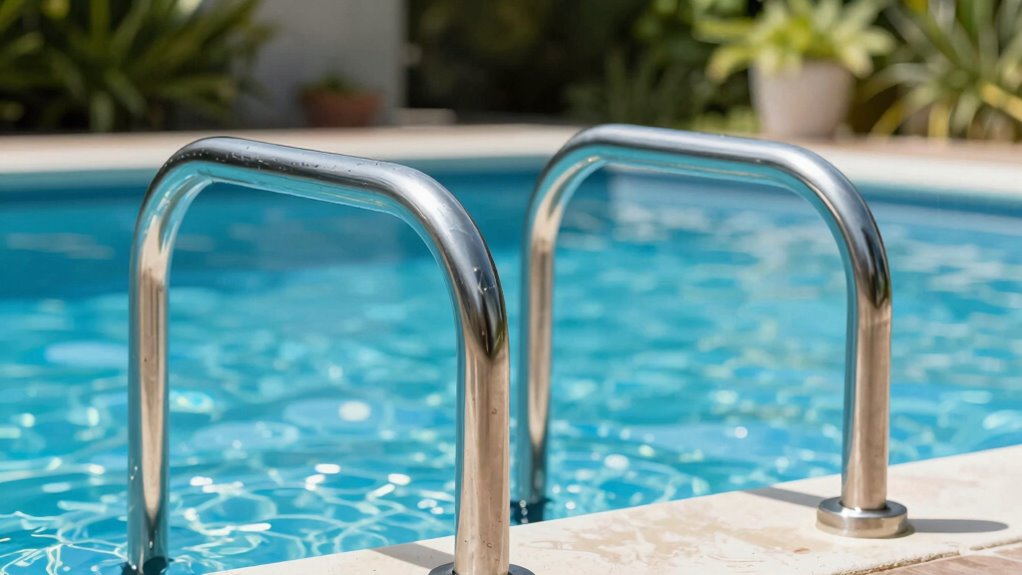
Opting for 304 stainless steel is ideal if your pool environment is relatively mild and cost is a primary concern. It offers good corrosion resistance in less aggressive conditions, making it suitable for pools with minimal exposure to salt or chemicals. Using 304 enhances pool safety by providing a sturdy, durable barrier that prevents accidents. It also maintains aesthetic appeal with its sleek, shiny finish, adding a modern touch to your pool area. Choose 304 if you want a cost-effective solution that requires less maintenance and is suitable for inland pools or shaded environments where corrosive elements are limited. However, if your pool is exposed to saltwater or more aggressive chemicals, upgrading to 316 stainless steel may be a safer long-term investment. Additionally, understanding the corrosion resistance properties of each grade can help you make a more informed decision for your specific pool environment, especially considering marine-grade stainless steel for highly corrosive conditions.
How Do 304 and 316 Perform Against Pool Chemicals and Salt?
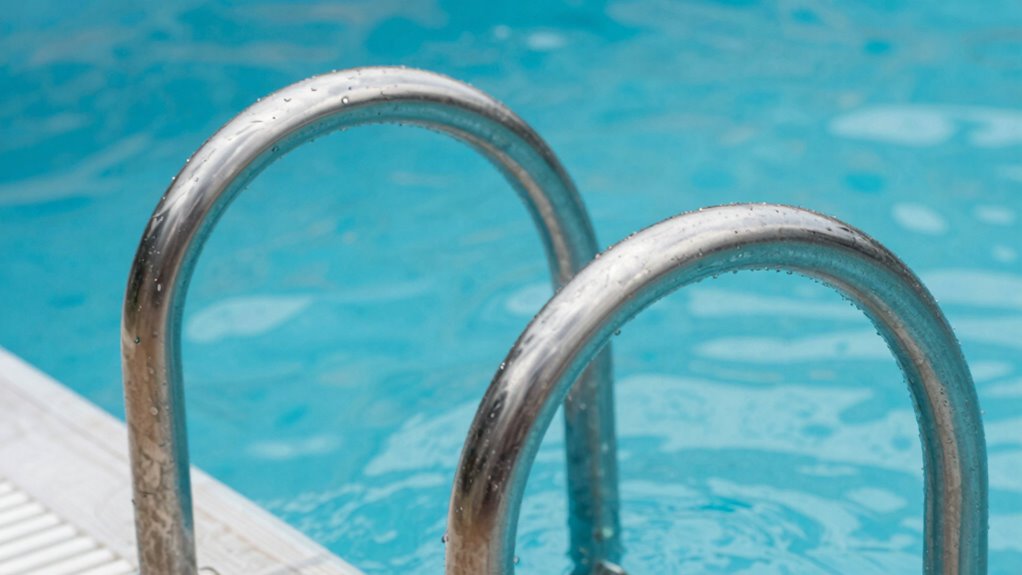
Both 304 and 316 stainless steel vary substantially in how they withstand pool chemicals and salt exposure. You’ll notice that pH level variations can impact their corrosion resistance, especially with frequent changes. 304 performs well in less aggressive environments but may falter with prolonged salt exposure. 316 is more resistant thanks to its molybdenum content, making it better suited for saltwater pools. UV light effects can accelerate surface deterioration, particularly if protective coatings aren’t maintained. corrosion resistance is a key factor to consider when choosing the right stainless steel for your pool environment.
304 resists less in saltwater and fluctuating pH, while 316 offers better corrosion protection for pools.
- pH fluctuations can cause pitting in 304 steel
- Saltwater environments challenge both but more so for 304
- UV exposure may weaken finishes over time
- 316 resists corrosion better in high salt and chemical conditions
How to Choose the Best Stainless Steel for Your Pool Rails

When selecting the best stainless steel for your pool rails, it’s vital to take into account the environment in which they’ll be installed. Your pool design influences the type of stainless steel that will withstand exposure to chlorine, salt, and moisture. Consider installation considerations like proximity to the water and potential corrosion risks. For saltwater pools or harsh chemical environments, 316 stainless steel offers superior corrosion resistance. If your pool is in a less aggressive setting, 304 stainless steel may suffice and offer cost savings. Confirm your chosen material aligns with your pool’s specific conditions, and consult with installation professionals to determine the best fit. Proper selection helps maintain durability, safety, and the aesthetic appeal of your pool rails over time.
Frequently Asked Questions
Can Environmental Factors Influence Stainless Steel Corrosion Differently for 304 and 316?
Environmental factors like a marine environment or industrial exposure can influence stainless steel differently. You’ll find that 316 stainless steel resists corrosion better in these harsh conditions due to its higher molybdenum content. While 304 might handle everyday pool use well, it’s more vulnerable to saltwater and chemicals. So, if your pool faces salt or industrial runoff, opting for 316 helps guarantee your rails stay corrosion-free longer.
Are There Specific Pool Types Where One Grade Is Significantly Better?
You’ll find 316 stainless steel better suited for saltwater pools because it resists corrosion from salt and chemicals, reducing maintenance headaches. For chlorinated pools, 304 stainless steel works fine and is more budget-friendly, especially if material costs matter. In freshwater pools, either grade performs well, but choosing 316 can save you time and effort on long-term pool maintenance, even if it’s a bit pricier upfront.
How Does Fabrication Method Impact Corrosion Resistance of Stainless Steel Rails?
Fabrication methods, like welding techniques and surface finishing, considerably shape a stainless steel rail’s resistance to corrosion. Proper welding prevents weak spots that invite rust, while smooth surface finishing eliminates crevices where corrosive elements can hide. You’ll want skilled welding and fine polishing to maximize durability. When you choose high-quality fabrication, you boost your pool rail’s resilience, ensuring it withstands water’s wrath and remains pristine for years to come.
What Are the Environmental Sustainability Considerations for 304 Versus 316 Stainless Steel?
When choosing between 304 and 316 stainless steel, consider their environmental sustainability. Both can be recycled, supporting eco-friendly manufacturing practices. However, 316 often has a slight edge because it’s more durable and less likely to need replacement, reducing waste. Opt for suppliers committed to responsible sourcing and recycling practices, so your pool rails not only resist corrosion better but also align with sustainable choices.
Do Local Water Conditions Require Special Stainless Steel Treatments or Coatings?
If your local water has high chloride or aggressive chemicals, you’ll need special coatings or treatments for your stainless steel pool rails. These coatings create a barrier that prevents corrosion and prolongs the lifespan of your rails. Regular maintenance and choosing the right stainless steel grade—like 316, which resists chlorides better—also help. Stay proactive by testing water quality and applying protective coatings when necessary for peak durability.
Conclusion
Choosing between 304 and 316 stainless steel for your pool rails depends on your environment and budget. For instance, if your pool is saltwater, 316’s superior corrosion resistance will save you money long-term. Imagine installing 304 rails, only to find them corroding after a few seasons—switching to 316 could have prevented that. Invest in the right steel now, and your pool rails will stay sleek and durable for years to come.
Halloween Picks
halloween
As an affiliate, we earn on qualifying purchases.