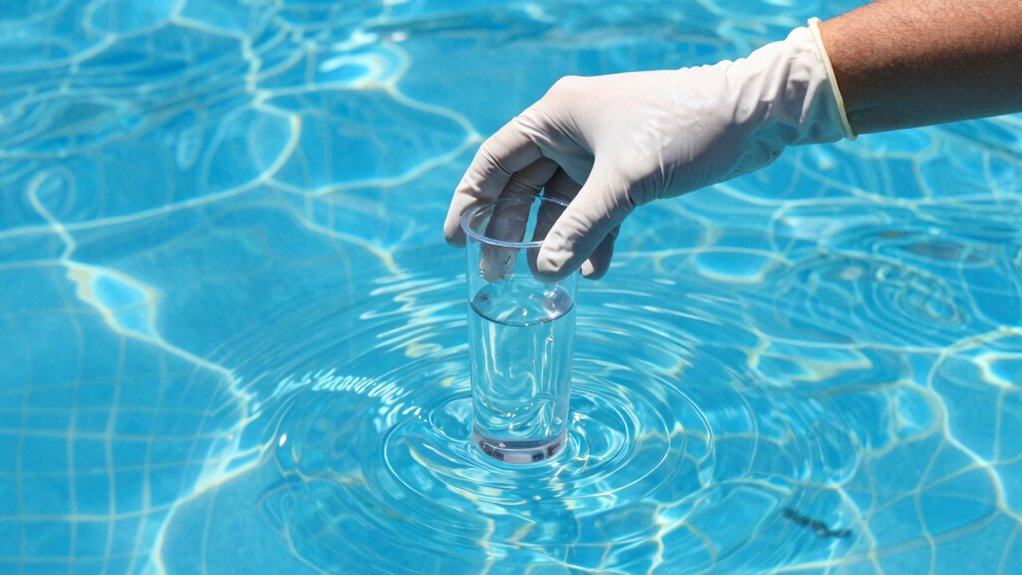

To guarantee your pool remains safe and easy to maintain, you should regularly check water clarity, focusing on whether it’s clear and free of cloudiness or debris. Cloudy water signals issues like algae growth or chemical imbalance, which can hide hazards. Testing and adjusting pH levels is vital because proper pH helps keep water clear and safe. Keeping an eye on water clarity is your first step; if you continue, you’ll discover more ways to keep your pool pristine.

Get pool and patio gear delivered free — and shop member deals
- Fast, free delivery on millions of items
- Access to Prime Big Deal Days deals on October 6–7
- Prime Video, Amazon Music and more included
Key Takeaways
- Regularly test and monitor pH levels to prevent algae growth and maintain water clarity.
- Keep water chemistry balanced to reduce the need for excessive chemicals and ensure safety.
- Check for cloudiness or haziness as signs of poor water quality and potential hazards.
- Adjust pH promptly to optimize sanitizer effectiveness and prevent water clouding.
- Perform routine maintenance to remove debris and support clear, safe swimming conditions.
Have you ever wondered how clear the water really is? It’s a good question because water clarity isn’t just about looks—it’s a sign of your pool’s overall health and safety. When water looks cloudy or murky, it’s often a sign that something’s off. One common culprit is pool algae, which can quickly turn clear water into a hazy mess if not managed properly. Algae thrives when water isn’t balanced, so keeping your water free of algae is essential. But it’s not just about removing algae; it’s also about maintaining proper water pH levels. If pH levels are too high or too low, it throws off the chemical balance, creating ideal conditions for algae growth and other issues. Regularly testing your water pH levels helps you catch these problems early, ensuring your water stays sparkling and safe. Proper water testing is key to maintaining these conditions effectively.
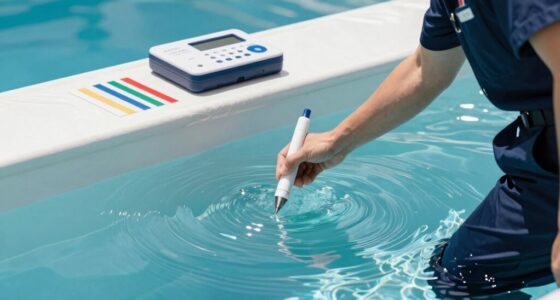
You need to pay attention to the water’s pH because it directly impacts the effectiveness of your sanitizers. If the pH is too high, chlorine becomes less effective at killing bacteria and algae, which can lead to water cloudiness. On the other hand, if the pH is too low, it can cause skin irritation and damage your pool equipment. The goal is to keep the pH in the ideal range—usually between 7.2 and 7.6—so your chemicals work efficiently and your water stays clear. Testing your water regularly is simple and essential; a quick test kit can tell you whether your pH needs adjusting. When you see the water start to look dull or if algae begins to appear, it’s time to check these levels and act quickly. Maintaining proper water chemistry helps prevent these issues altogether.
Maintaining proper water pH levels isn’t just about clarity—it’s about safety. Cloudy water can hide hazards, making it difficult to see if someone is in distress or if there’s debris or algae lurking beneath the surface. By keeping your pH balanced, you help prevent algae blooms, which are often caused by unstable water conditions. A healthy, balanced pool means fewer chemical treatments and less pool algae. It also means your family and friends can swim with peace of mind, knowing the water isn’t just clear but also safe. Regular testing and adjusting your water pH levels are simple steps that make a big difference, ensuring your pool remains inviting, safe, and crystal clear for everyone to enjoy.
As an affiliate, we earn on qualifying purchases.
Frequently Asked Questions
How Often Should I Perform a Water Clarity Check?
You should perform a water clarity check at least once a week through a visual inspection. Regular checks help you monitor water quality, spot issues early, and maintain a safe swimming environment. During your inspection, look for cloudiness, algae, or debris that could indicate water quality problems. Consistent monitoring guarantees your pool stays clean, safe, and inviting, making it easier to address maintenance needs promptly.
What Tools Are Best for Measuring Water Clarity Accurately?
Tackle tricky transparency with top tools like turbidity meters and Secchi disks. Turbidity meters provide precise, professional measurements of water clarity, making them ideal for detailed analysis. Secchi disks are simple, reliable, and cost-effective, perfect for quick, on-the-spot tests. Both tools help you accurately assess water quality, ensuring safety and simplifying maintenance. Choose based on your needs—precision or practicality—and keep your water clear and safe.
Can Water Clarity Issues Indicate Other Underlying Problems?
Yes, water clarity issues often point to underlying problems like algae growth or pH imbalance. If your water becomes murky, it could mean algae is thriving due to excess nutrients or improper pH levels. Addressing these issues promptly helps prevent further complications, ensuring your pool stays safe and well-maintained. Regular clarity checks can alert you early, allowing you to correct imbalances before they escalate into more serious problems.
How Does Water Clarity Affect Chemical Treatment Effectiveness?
Poor water clarity can substantially reduce chemical treatment effectiveness because it interferes with proper chemical distribution and contact. When water isn’t clear, it’s harder to maintain a balanced chemical environment, which can lead to algae growth and other issues. You need clear water to guarantee chemicals like chlorine or algaecides work effectively, maintaining a proper chemical balance and preventing algae from thriving.
What Are Immediate Steps if Water Clarity Suddenly Decreases?
If water clarity suddenly decreases, you should first check for algae growth and clean your filter thoroughly, as debris can cause cloudiness. Skim the surface to remove floating algae and debris. Test chemical levels and adjust as needed. Regular filter maintenance helps prevent future issues. Acting quickly guarantees safety and keeps your water clear, reducing the risk of further algae growth and maintaining proper chemical balance.
As an affiliate, we earn on qualifying purchases.
Conclusion
Remember, regularly checking your water clarity is like tuning a musical instrument—you’ll catch small issues before they turn into discord. I once ignored a slight haze in my pool, only to find algae blooming later, turning my oasis into a swamp. Don’t let that happen to you. Staying vigilant guarantees your water stays crystal-clear, safe, and inviting. Think of clarity as your pool’s heartbeat—listen to it, and keep everything in perfect harmony.
As an affiliate, we earn on qualifying purchases.
As an affiliate, we earn on qualifying purchases.
Fall Picks
fall essentials
As an affiliate, we earn on qualifying purchases.