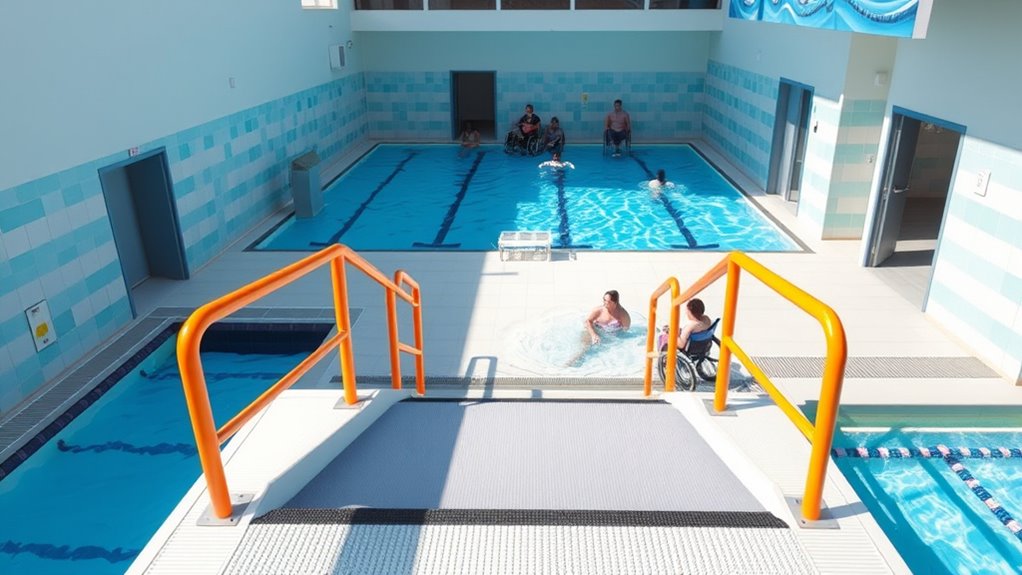

Creating an accessible and universal design for your public pool guarantees everyone can enjoy swimming safely and independently. Incorporate features like sturdy, easy-to-operate pool lifts, tactile signage with braille and textured symbols, and accessible pathways to eliminate barriers. These elements promote inclusivity, safety, and a welcoming environment for all users. To learn how to implement these features effectively and meet modern standards, explore further options and best practices available.
Key Takeaways
- Incorporate universal design principles to ensure pools are accessible to all users, regardless of ability.
- Install pool lifts that are easy to operate, sturdy, and strategically positioned for safe water entry and exit.
- Use tactile signage with braille, textured letters, and high-contrast visuals at key locations to assist visually impaired visitors.
- Design accessible pathways, controls, and amenities that promote independence and seamless navigation throughout the pool area.
- Enhance safety and inclusivity by implementing features that support diverse user needs, demonstrating commitment to universal accessibility.
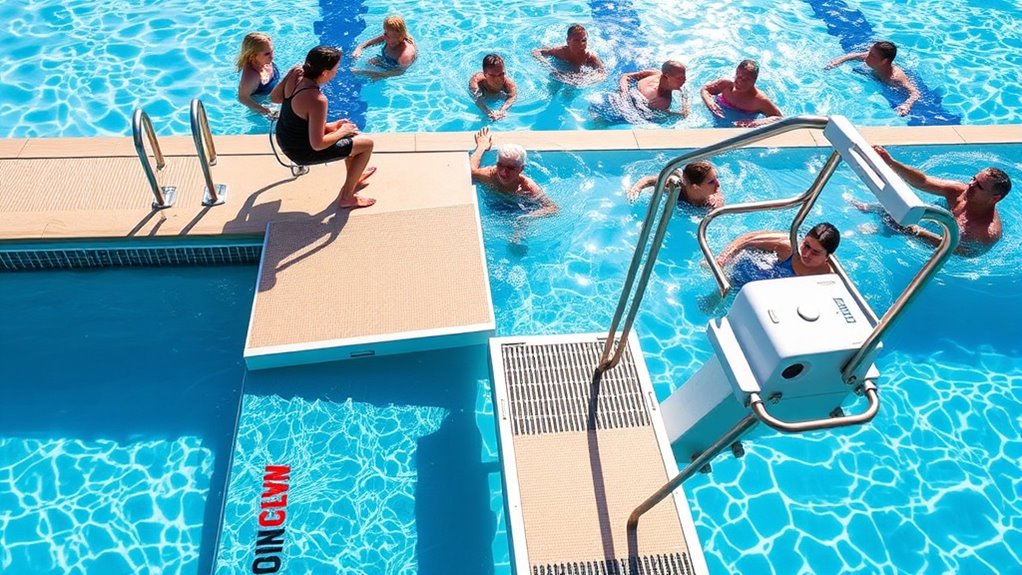
Creating accessible and universally designed public pools guarantees everyone, regardless of ability, can enjoy swimming and recreational activities. When planning or upgrading a pool, incorporating features like pool lift accessibility is essential. A pool lift provides a safe, reliable way for individuals with mobility challenges to enter and exit the water independently. These lifts should be easy to operate, sturdy, and positioned conveniently to ensure users don’t have to navigate complex or unsafe routes. Installing a variety of lifts, such as portable or permanent models, accommodates different needs and preferences. Not only does this promote inclusivity, but it also demonstrates your commitment to providing equal access for all visitors.
Alongside pool lifts, tactile signage features play a significant role in making the environment welcoming and navigable for people with visual impairments. Tactile signage includes textured letters, braille, and raised symbols that can be felt and read through touch. These signs should be strategically placed at key points around the pool area—near entrances, locker rooms, restrooms, and pool decks—to guide users effectively. Clear, consistent tactile signage reduces confusion, helps visitors locate accessible features, and enhances overall safety. When designing these signs, use high-contrast colors and durable materials to withstand the outdoor environment, ensuring they remain visible and functional over time.
Implementing both pool lift accessibility and tactile signage features aligns with universal design principles, which aim to make spaces usable by everyone. You should consider the entire user experience, from entry points to poolside amenities, ensuring that navigation and participation are seamless for individuals with diverse abilities. This might involve integrating accessible pathways, lowering control panels for lifts, and ensuring that tactile signage is complemented by audible cues or visual indicators. The goal is to create an environment where no one feels excluded or overwhelmed by physical barriers.

Aqua Creek Ranger 2 Pool Lift 350 lbs Weight Capcity No Anchor White with Blue Seat
As an affiliate, we earn on qualifying purchases.
As an affiliate, we earn on qualifying purchases.
Frequently Asked Questions
How Cost-Effective Are Universal Design Features for Public Pools?
Universal design features for public pools are quite cost-effective when you do a thorough cost-benefit analysis. They might require upfront investments, but they save money long-term by reducing the need for future modifications. Plus, you can tap into various funding opportunities aimed at improving accessibility. Overall, integrating universal design benefits everyone and makes financial sense, especially when you consider the broader community impact and potential grants available.
What Maintenance Challenges Are Associated With Accessible Pool Equipment?
You’ll face maintenance challenges with accessible pool equipment, mainly related to ensuring proper pool chemical maintenance and equipment durability. Regularly checking and adjusting chemicals is essential to prevent corrosion or damage to specialized devices like ramps or lifts. Additionally, durable, weather-resistant materials are crucial to withstand frequent use and exposure. Staying vigilant with routine inspections and timely repairs helps keep accessible equipment functioning smoothly and extends its lifespan.
Are There Specific Regulations for Accessibility in Different Regions?
Regional standards and accessibility legislation vary across regions, so you need to verify local regulations for your area. These laws often specify requirements for accessible features like ramps, lifts, and signage in public pools. By understanding and complying with regional standards, you ensure your pool remains accessible to everyone, avoids legal issues, and provides a welcoming environment. Stay informed about updates to accessibility legislation to keep your pool compliant and inclusive.
How Do Universal Design Features Impact Overall Pool Safety?
Universal design features are the sturdy foundation of a safe swimming environment, like the bedrock beneath a bridge. They substantially improve pool safety by ensuring everyone can access and use the pool safely. Accessible features, such as ramps and handrails, help prevent accidents and promote confidence for all swimmers. When implemented correctly, these features create an inclusive space where safety isn’t compromised, and everyone can enjoy the water securely.
What Training Is Needed for Staff to Support Disabled Swimmers Effectively?
You need to provide staff with thorough training on accessibility awareness and proper support techniques for disabled swimmers. This includes understanding different disabilities, using adaptive equipment, and communicating effectively. Staff training should also cover emergency procedures and safety protocols tailored to diverse needs. By doing so, you guarantee your team confidently assists disabled swimmers, creating an inclusive environment that prioritizes safety and comfort for everyone.

Custom ADA Compliant Tactile Sign – 4"x8" Black, Braille, Indoor/Outdoor, Easy Install, Made in USA
ADA Compliant Design – Raised tactile letters and Grade II Braille meet federal accessibility standards
As an affiliate, we earn on qualifying purchases.
As an affiliate, we earn on qualifying purchases.
Conclusion
By prioritizing accessibility and universal design, you create public pools that everyone can enjoy safely and comfortably. Did you know that over 80% of people with disabilities face barriers when trying to access aquatic facilities? Incorporating ramps, lifts, and clear signage not only benefits those with mobility challenges but also enhances the experience for all users. By making these changes, you guarantee your pool is inclusive, welcoming, and truly accessible for everyone.

MEWTOGO 10ft Anti-Slip Wooden Pool Walkway for Above Ground Pools – Weather-Resistant Carbonized Wood Roll-Up Pathway, Helps Keep Dirt & Mud Out, Boardwalk for Pool Ladder Area (Brown)
Extra-Long 10FT Walkway for Poolside Access: Designed with a generous 10 ft length and 16.5 in width, this…
As an affiliate, we earn on qualifying purchases.
As an affiliate, we earn on qualifying purchases.

Commercial Pool Safety Line with Hooks, 3ft Floating Divider Rope & Buoys – Essential Pool Safety Equipment for Hotels, Public Pools & Swim Schools
Enhance safety with our versatile Pool Safety Ropes. Perfect for swimming pools, they effectively divide lanes and mark…
As an affiliate, we earn on qualifying purchases.
As an affiliate, we earn on qualifying purchases.