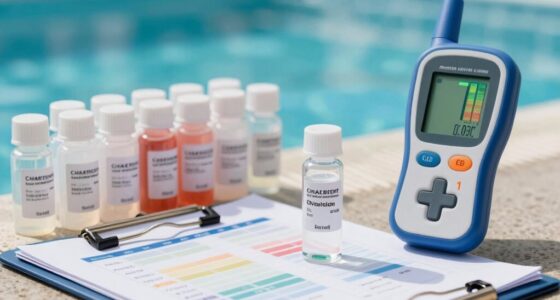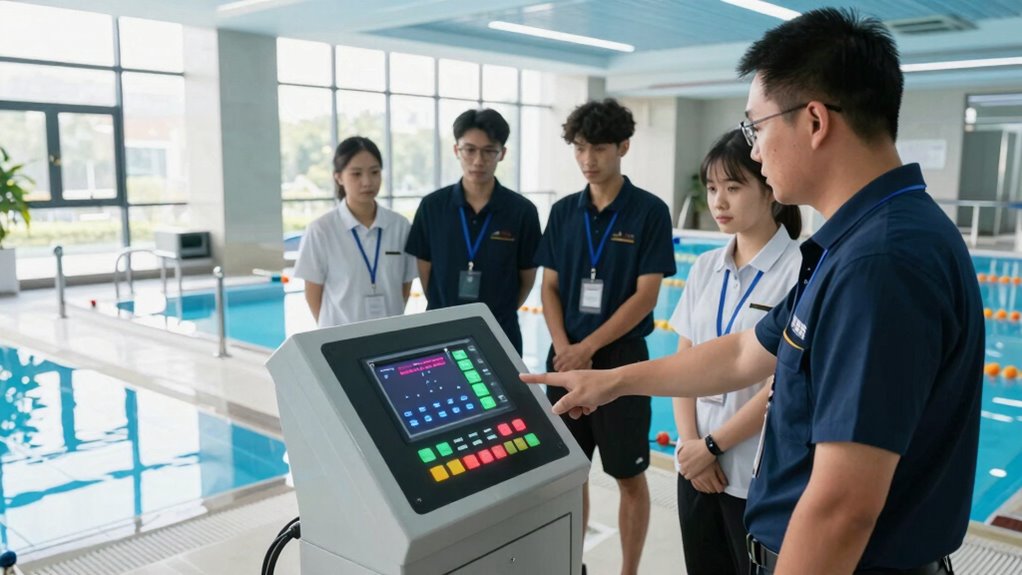

The smartest way to teach new staff the basics of pool systems is through hands-on training combined with visual aids like diagrams and real-world examples. Focus on hydraulic flow, chemical balance, and system components to build a strong understanding. Encourage questions and ongoing practice to reinforce skills. By emphasizing troubleshooting and maintenance routines, you’ll set your team up for success—if you follow these steps, you’ll discover how to develop confident, knowledgeable staff for ideal pool care.
Listen free for 30 days with Audible
Thousands of audiobooks and originals — cancel anytime.
As an affiliate, we earn on qualifying purchases.
Key Takeaways
- Use visual aids and diagrams to clearly demonstrate water flow, filtration, and system components.
- Incorporate hands-on training with real equipment for practical understanding of hydraulic and chemical processes.
- Emphasize the interconnection between hydraulic flow and chemical balance for comprehensive pool management.
- Provide quick reference checklists and routine inspection guides to reinforce daily maintenance practices.
- Foster ongoing learning through regular reviews, safety protocols, and encouraging questions for continuous improvement.
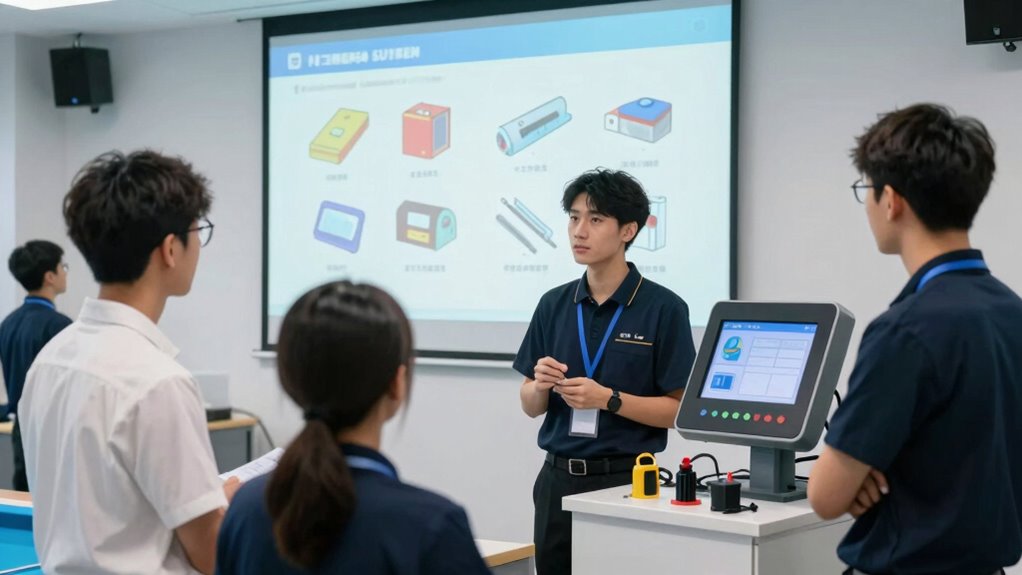
Training new staff on pool systems can be challenging, but using a smart, structured approach makes the process more effective and efficient. The key is to break down complex concepts into manageable steps, focusing on the core functions that keep a pool safe and functional. Start by emphasizing the importance of understanding hydraulic flow, which is the movement of water through the pool’s circulation system. Explain how water is drawn from the pool, filtered, and then returned, highlighting the role of pumps, skimmers, and return jets. Use visual aids or diagrams to show how hydraulic flow works in real time, so your staff can see the path water takes and grasp how disruptions can affect water quality. Understanding hydraulic flow is essential for effective troubleshooting and system maintenance.
Understand hydraulic flow to ensure proper water movement and maintain pool safety and clarity.
Once they understand hydraulic flow, shift focus to chemical balance, which is equally essential for maintaining safe and inviting pool water. Stress that proper chemical levels—like pH, chlorine, alkalinity, and stabilizer—are crucial to prevent algae growth, bacteria, and corrosion. Demonstrate how to test water using reliable kits, interpret the results accurately, and adjust chemical levels accordingly. Reinforce that maintaining chemical balance isn’t a one-time task but an ongoing process that requires regular monitoring. Practical demonstrations, coupled with hands-on practice, help your new staff develop confidence in managing chemical adjustments safely and effectively. Incorporating system diagnostics can further enhance their ability to identify underlying issues early.
Throughout the training, connect hydraulic flow and chemical balance by explaining how they work together. For example, improper hydraulic flow can lead to dead zones where chemicals don’t circulate properly, resulting in uneven chemical distribution. Conversely, poor chemical balance can cause corrosion or scaling that impairs the system’s flow. Make sure your staff understands that both aspects are interconnected and equally important for pool health. Recognizing the importance of system components is crucial, as the failure of any part can compromise overall system performance. Emphasizing the role of proper system design can help them better understand how each component contributes to the pool’s overall operation. Encourage questions and provide real-world scenarios to challenge their understanding, so they can troubleshoot common issues confidently.
Finally, instill a mindset of continuous learning and vigilance. Regularly review system components, safety protocols, and best practices. Offer quick reference guides or checklists that staff can use daily for routine inspections. By combining clear explanations, visual learning tools, hands-on practice, and ongoing support, you guarantee your team not only learns the basics of pool systems but also develops the skills to keep the pool safe, clean, and well-maintained. This structured approach makes training both thorough and memorable, setting your staff up for success from day one.
As an affiliate, we earn on qualifying purchases.
Frequently Asked Questions
How Long Does It Typically Take for New Staff to Become Proficient?
It typically takes new staff around a few weeks to become proficient in pool maintenance and safety protocols. During this time, you’ll see them gaining confidence, understanding system components, and practicing routine tasks. Consistent training, hands-on experience, and clear instructions help speed up the process. With dedication, your team will quickly master the essentials, ensuring they maintain safe, clean pools while following safety protocols effectively.
What Common Mistakes Should New Staff Watch Out For?
You should watch out for neglecting proper pool maintenance routines, which can lead to water quality issues. Forgetting safety protocols, like checking for electrical hazards or ensuring proper chemical handling, poses risks to everyone. Also, rushing through tasks or skipping detailed inspections can cause costly mistakes or safety incidents. Stay diligent, follow safety guidelines, and double-check your work to prevent common errors and maintain a safe, clean pool environment.
Are There Recommended Tools or Apps for Training Purposes?
You should consider using virtual simulations and interactive quizzes for training. Virtual simulations allow your staff to practice troubleshooting and system management in a realistic, risk-free environment. Interactive quizzes reinforce learning, test understanding, and keep trainees engaged. These tools make complex concepts easier to grasp and help identify knowledge gaps quickly. Incorporating them into your training program guarantees your staff becomes confident and competent in handling pool systems efficiently.
How Do You Adapt Training for Staff With No Prior Experience?
Like training a young Jedi, you adapt by using mentorship programs and interactive simulations. Pair inexperienced staff with seasoned pros to foster hands-on learning and build confidence. Incorporate interactive simulations to mimic real-world scenarios, making complex concepts easier to grasp. This personalized approach helps newcomers learn efficiently, boosts engagement, and guarantees they develop the skills needed to master pool systems quickly and confidently.
What Ongoing Support Is Provided After Initial Training Completion?
After initial training, you provide ongoing support through continuous mentorship, ensuring staff feel confident and competent. You establish feedback loops, encouraging staff to share challenges and ask questions regularly. This approach helps identify areas needing reinforcement and keeps knowledge fresh. By maintaining consistent communication, you foster a learning environment where staff can grow, stay motivated, and improve their skills over time.
As an affiliate, we earn on qualifying purchases.
Conclusion
By simplifying concepts, engaging with hands-on practice, and reinforcing key points, you create a learning experience that sticks. By making training clear, making instructions concise, and making learning interactive, you guarantee new staff understand, remember, and apply the basics of pool systems with confidence. When you focus on clarity, consistency, and connection, you set your team up for success. And in doing so, you turn training into a foundation for excellence that lasts.
As an affiliate, we earn on qualifying purchases.
As an affiliate, we earn on qualifying purchases.
NFL season / tailgating Picks
team gear
As an affiliate, we earn on qualifying purchases.