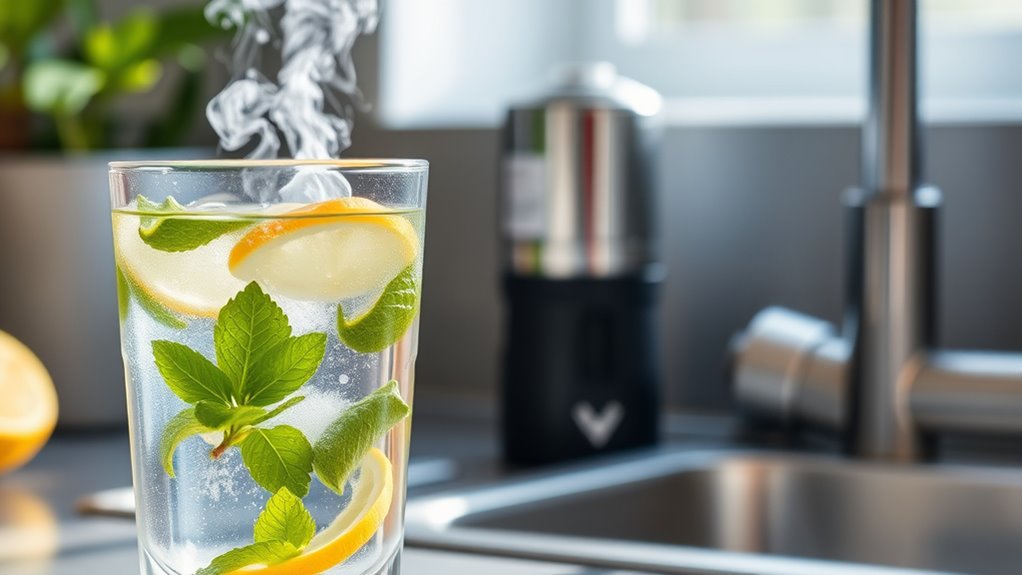
To reduce chlorine odor indoors, open windows and doors to increase airflow, and turn on exhaust fans to promote air circulation. Use activated charcoal or bowls of baking soda to absorb the smell, and consider placing vinegar or citrus peels nearby for natural neutralization. Running water to flush out vapors or adding chlorine neutralizers like sodium thiosulfate can also help. Keep exploring for more effective ways to eliminate that lingering scent efficiently.
Key Takeaways
- Increase ventilation by opening windows, doors, and using exhaust fans to disperse chlorine vapors.
- Use activated charcoal, baking soda, or commercial odor absorbers to trap and neutralize chlorine odors.
- Allow chlorine vapors to naturally dissipate by airing out the affected area over time.
- Place vinegar or citrus peels in open bowls to chemically react with and neutralize chlorine smells.
- Dilute chlorine vapors by running water or applying neutralizers like sodium thiosulfate to reduce odor intensity.
Chlorine odor can be unpleasant and persistent, but there are effective techniques to minimize or eliminate it. When dealing with lingering chlorine smells, understanding how to perform chlorine neutralization is key. Chlorine molecules are volatile, so they readily evaporate into the air, creating that sharp, chemical scent. To combat this, you want to encourage odor absorption and neutralize the chlorine before it becomes overwhelming. One of the simplest methods involves increasing ventilation. Opening windows and turning on exhaust fans helps air out the space, allowing chlorine vapors to disperse more quickly. This natural approach reduces the concentration of chlorine in the air, making the smell less noticeable over time.
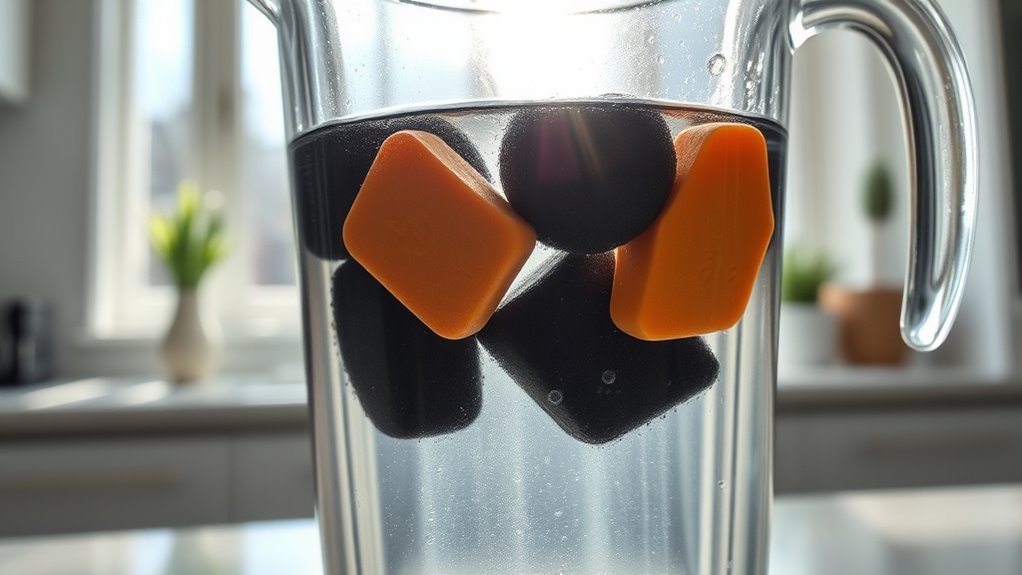
In addition to ventilation, using odor absorbents can considerably improve the situation. Activated charcoal and baking soda are popular choices because they effectively trap odor molecules through porous surfaces and chemical reactions. Placing bowls of activated charcoal or baking soda around the affected area can absorb chlorine odors actively. For larger spaces, you might consider commercial odor absorbers designed specifically for chemical smells. These products often contain odor-neutralizing agents that bind with chlorine molecules, rendering them less detectable and less irritating.
If you’re dealing with chlorine in water, such as in pools or tap water, chemical neutralization can be more targeted. Adding a chlorine neutralizer, like sodium thiosulfate, directly to water sources can rapidly reduce chlorine levels. This prevents the smell from permeating indoor environments and minimizes skin or eye irritation. Always follow product instructions carefully to avoid over-neutralization, which can cause other issues. For water-related chlorine odors, running the water for a few minutes can also help dilute and dissipate chlorine vapors, especially if combined with proper ventilation.
Another effective technique involves using natural absorbents and deodorizers. Vinegar, for example, can help neutralize chlorine odors when placed in open bowls or sprayed lightly in the area. Its acidity reacts with chlorine molecules, reducing their volatility. Likewise, citrus peels or essential oils like lemon or eucalyptus can mask the smell temporarily and, in some cases, contribute to odor absorption when used with other methods. Remember, though, that masking the smell isn’t the same as neutralizing it; combining masking agents with odor absorption techniques yields the best results.
Additionally, maintaining proper faucet and water treatment practices can significantly reduce chlorine levels in household water, thereby decreasing associated odors. Ultimately, reducing chlorine odor requires a combination of strategies. Prioritize proper ventilation, utilize odor absorption materials, and apply chemical neutralizers when necessary. These steps help you regain a fresher environment and diminish that sharp, chemical scent that can linger annoyingly long.

Activated Charcoal Odor Absorber for Strong Odors in Car, Closet, Shoe, Basement. 10 Activated Charcoal Bags Odor Absorbers for Home. Bamboo Charcoals Air Purifying Bag Charcoals Deodorizer Eliminator
10 CHARCOAL DEODORIZER BAGS WITH HOOKS. Our 3.5oz bamboo charcoal bag musty smell eliminators are the perfect size…
As an affiliate, we earn on qualifying purchases.
As an affiliate, we earn on qualifying purchases.
Frequently Asked Questions
Can Certain Plants Absorb Chlorine Odor Effectively?
Yes, certain plants can absorb chlorine odor effectively through plant absorption of chlorinated compounds. Plants like pothos, peace lilies, and spider plants are known to take in chlorinated compounds from the air or water, helping to reduce chlorine odor indoors. You should place these plants in areas with strong chlorine smells to maximize their absorption, making your environment fresher and more pleasant.
Are There Natural Remedies to Neutralize Chlorine Smell?
Did you know that natural remedies can effectively neutralize chlorine smell? You can try DIY solutions like adding baking soda or activated charcoal to absorb odors, or use chemical alternatives like vitamin C tablets, which are safe and eco-friendly. These methods work quickly and are cost-effective, giving you a chemical-free way to eliminate chlorine smell. Give them a try to freshen your water naturally without harsh chemicals!
How Long Does Chlorine Odor Typically Last After Treatment?
The chlorine odor typically dissipates within 24 to 48 hours after treatment, depending on factors like water temperature and exposure to air. You can speed up chlorine dissipation by increasing aeration and sunlight exposure. Keep in mind that odor duration varies; if you notice a lingering smell beyond a couple of days, it may indicate residual chlorine or other compounds, so consider additional aeration or natural deodorizing methods to help neutralize the smell quicker.
Does Water Temperature Affect Chlorine Odor Elimination?
Water temperature acts like a key to odor elimination, revealing how quickly chlorine’s smell fades. When you increase the temperature, it speeds up chemical reactions, helping chlorine dissipate faster. Hot water encourages off-gassing, making odors vanish more swiftly, while cold water slows the process. So, if you want faster odor elimination, using warmer water can be an effective strategy, but be cautious not to make it too hot, which might cause other issues.
Can Clothing or Fabrics Retain Chlorine Smell After Washing?
Yes, clothing or fabrics can retain chlorine smell after washing, especially if not rinsed thoroughly or if the fabric is absorbent. You might notice lingering clothing odor or an unusual fabric scent. To eliminate this, try soaking clothes in a mixture of water and vinegar before washing, use odor-neutralizing detergents, and avoid overloading your washer. These steps help break down residual chlorine and restore freshness to your clothes.

Arm & Hammer Baking Soda Fresh-n-Natural Odor Eliminator, 12 oz (Pack of 3)
Effective Odor Elimination: Absorbs and destroys big odors in small spaces, keeping your home smelling fresh and clean.
As an affiliate, we earn on qualifying purchases.
As an affiliate, we earn on qualifying purchases.
Conclusion
So, next time you find yourself overwhelmed by that familiar chlorine smell, remember—it’s there to keep you safe. Instead of avoiding it, try these simple techniques to reduce the odor and enjoy your water more. Ironically, by trying to eliminate the smell, you might just miss the very protection it provides. Sometimes, a little smell isn’t a flaw but a sign that your water is doing its job. Embrace it, and stay safe.

In The Swim Chlorine Neutralizer for Swimming Pools – Quickly Reduces Chlorine Sanitizer Levels – 90% Sodium Thiosulfate – 2.25 Pounds
Reduces Free Available Chlorine
As an affiliate, we earn on qualifying purchases.
As an affiliate, we earn on qualifying purchases.

EINTTAX 4 Inch Wall Mount Bathroom Exhaust Fan, Plug in Wall Exhaust Fan, 12W 77 CFM Bathroom Window Fan with Backdraft Damper for Kitchen, Garage, Office, 34 dB, White
Efficient Ventilation: The seven-blade impeller of this bathroom exhaust fan wall mount delivers a powerful 77 CFM airflow….
As an affiliate, we earn on qualifying purchases.
As an affiliate, we earn on qualifying purchases.