
Wind speeds up evaporation by quickly removing vapor molecules from your skin or the liquid surface. This prevents the air from becoming saturated with vapor, maintaining a strong concentration gradient that pushes heat away. As vapor escapes, it takes heat energy with it, cooling the surface effectively. Without wind, vapor lingers, slowing down evaporation and heat loss. To understand how wind becomes your biggest heat thief, look further into the fascinating physics behind this process.
Key Takeaways
- Wind removes vapor molecules from the liquid surface, preventing saturation and maintaining a high evaporation rate.
- By sweeping away humid air layers, wind enhances diffusion of vapor into surrounding air.
- Wind accelerates heat loss through evaporation by transporting vapor and associated energy away from the surface.
- Increased airflow boosts the cooling effect of evaporation, lowering the temperature of the remaining liquid or skin.
- Overall, wind acts as a “heat thief” by continuously removing vapor and heat, speeding up the evaporation process.
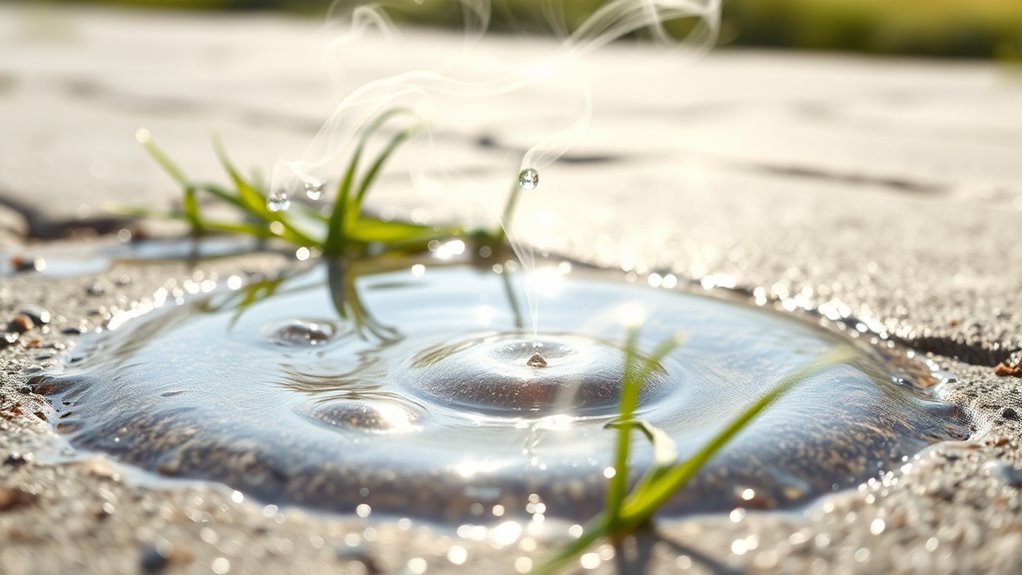
Have you ever wondered what happens at the microscopic level when a liquid turns into vapor? When you see water drying up on a hot day, it’s more than just evaporation; it’s a complex process driven by the movement and energy of countless tiny particles. At the core, evaporation occurs when individual molecules at the liquid’s surface gain enough energy to break free from the cohesive forces holding them together. These molecules, energized by heat, escape into the air as vapor. But this process isn’t just about temperature—it’s also heavily influenced by external factors like airflow, especially wind.
Wind plays a vital role because it constantly removes vapor molecules from the surface of the liquid. Imagine standing next to a boiling pot; if the air around it is still, vapor tends to linger just above the surface, creating a sort of humid cloud that slows down further evaporation. Now, picture a breeze or gust rushing past. That wind sweeps away these vapor molecules almost immediately, preventing them from accumulating and creating a saturated layer of humid air. As a result, more liquid molecules can escape into the vapor phase, speeding up the evaporation process. This is why a breeze makes water evaporate faster than still air.
Wind quickly removes vapor molecules, speeding up evaporation by preventing humid layers from forming.
The physics behind this involves the diffusion of molecules. When vapor molecules leave the liquid surface, they diffuse into the surrounding air, trying to balance the vapor pressure between the liquid and the environment. Wind increases this diffusion rate by continuously replacing the saturated air layer near the surface with drier air. Think of it like clearing a foggy window: the wind pushes away the fog, allowing clearer visibility. Similarly, wind clears away the vapor, maintaining a steep concentration gradient that favors ongoing evaporation.
Furthermore, wind’s cooling effect isn’t just about removing vapor; it also influences the temperature of the liquid itself. When vapor molecules escape, they take away heat energy, causing the remaining liquid to cool. Wind accelerates this cooling because it enhances the removal of vapor and the heat associated with it. That’s why sweating cools your skin—your sweat evaporates quickly when there’s wind, taking heat away and making you feel cooler.
In essence, wind is your biggest heat thief because it actively transports vapor away from the liquid surface, maintaining a steep concentration gradient and boosting evaporation. It doesn’t just carry vapor away; it amplifies the energy transfer that cools your skin or dries out surfaces. Understanding this microscopic dance reveals why breezes are so effective at accelerating evaporation and cooling, making wind a powerful force in the physics of evaporation.

PlayHot Portable Handheld Turbo Fan with Ice Cooling, Rechargeable Personal Fan, Up tp 12Hrs Cooling, 5 Speed 25550RPM Powerful Portable Fan for Travel, Outdoor, Camping, Hiking (Black)
One Touch Cooling to 60°F – The PlayHot hand hald fan can lower the surface temperature to 60°F…
As an affiliate, we earn on qualifying purchases.
As an affiliate, we earn on qualifying purchases.
Frequently Asked Questions
How Does Humidity Affect Evaporation Rates?
Higher humidity slows down evaporation because the air already contains more moisture, making it harder for additional water molecules to escape into the atmosphere. When humidity is low, evaporation speeds up as the dry air readily absorbs water. You’ll notice this when you sweat on a humid day—it takes longer to cool your skin—compared to a dry day where sweat evaporates quickly, helping you feel cooler faster.
Can Evaporation Occur in Frozen Conditions?
Yes, evaporation can occur in frozen conditions, but it happens very slowly. When you have ice or snow, some water molecules escape into the air, especially if the air is dry and windy. Wind removes the humid air near the surface, allowing more molecules to evaporate. So, even in freezing temperatures, evaporation still takes place, but it’s much less noticeable and occurs at a reduced rate.
What Role Does Surface Area Play in Evaporation?
Surface area plays a vital role in evaporation because the larger the area exposed, the more molecules can escape into the air. You might think a small puddle evaporates slowly, but spreading it out increases evaporation considerably. When you maximize surface area, you boost evaporation rates, helping you cool down faster or dry things more quickly. So, always consider surface area when aiming to control or speed up evaporation.
How Does Temperature Influence Evaporation Speed?
You’ll notice that as temperature rises, evaporation speeds up because warmer air holds more moisture. When the temperature increases, your body’s molecules gain energy, making it easier for water molecules to escape into the air. This means that at higher temperatures, evaporation occurs more quickly, especially if there’s wind that carries away the moist air. So, hotter conditions considerably boost evaporation rates, speeding up the cooling process.
Does Evaporation Cool Objects Equally Across Different Materials?
No, evaporation doesn’t cool objects equally across different materials. You might think all surfaces lose heat the same way, but porous or water-absorbing materials, like cloth or wood, often cool faster because they hold moisture more effectively. Non-porous materials, like metal or plastic, retain heat longer. So, the cooling effect depends on how well the material promotes moisture evaporation, not just the evaporation process itself.

Outdoor Misting Fan for Outside, 12-Inch 20000mAh Portable Water Cooling Fan for Patios Bedroom, 2 In 1 Standing & Tabletop Oscillating Fans with Mister Kit, Mist Fans with Remote/Spray/7 Gear/Timer
❄️【Powerful Misting Fan】- Ever feel like you’re melting under the sun? Say goodbye to sweaty afternoons and hello…
As an affiliate, we earn on qualifying purchases.
As an affiliate, we earn on qualifying purchases.
Conclusion
So, next time you feel the chill from a breeze, remember it’s not just wind — it’s your sneakiest heat thief. Coincidentally, that same breeze helps cool your sweat, balancing the loss. It’s a game of physics you unknowingly play every day. Understanding evaporation’s role in heat transfer makes you realize how wind quietly controls your comfort. Keep this in mind; your next gust might just be stealing more than you thought.

Ergodyne Chill-Its 6602 Evaporative Cooling Towel, Blue 13 inches x 29.5 inches
INSTANT COOLING RELIEF – Hyper-evaporative PVA easily activates with water for up to four hours of cooling
As an affiliate, we earn on qualifying purchases.
As an affiliate, we earn on qualifying purchases.

42 In Outdoor Ceiling Fan with Light, Plug-in Ceiling Fans with Waterproof IP65, Smart APP Remote Control, 6-Speed DC Motor, Dimmable 3CCT, Hanging Fans with Cord for Gazebo Patio Porch (Black)
IP65 Waterproof & Outdoor: This outdoor ceiling fan features IP65 waterproof rating, superior to IP44 for better water…
As an affiliate, we earn on qualifying purchases.
As an affiliate, we earn on qualifying purchases.