
To keep your pool water clear and equipment working well, regularly backwash and clean your filters based on pressure readings and water clarity. Turn off the pump before switching to backwash mode, and run it until the water runs clear, usually every 4-6 weeks. Maintain your filter media by rinsing or replacing it as needed. Following these best practices guarantees efficient filtration and longer-lasting equipment—discover more tips to optimize your pool maintenance.
Key Takeaways
- Regularly monitor pressure gauges and water clarity to determine optimal backwashing intervals.
- Turn off the pump before switching to backwash mode to prevent damage and ensure proper flow reversal.
- Backwash until the water runs clear, then rinse or recharge filter media as needed for optimal performance.
- Clean or replace filter media according to manufacturer guidelines, typically every 2-3 years for sand and more often for cartridges or DE.
- Conduct routine inspections and maintain a clean, debris-free pool environment to minimize filter clogging and extend media life.

Regular backwashing and filter cleaning are vital to keep your pool water clear and healthy. When you maintain your filter properly, you prevent debris and contaminants from circulating, making sure that your swimming experience remains enjoyable and safe. A key part of this process involves understanding how your filter media works and how to manage the backwash cycle effectively. The filter media, whether it’s sand, cartridge, or DE (diatomaceous earth), traps dirt and particles that could cloud your water or cause algae growth. Over time, this media becomes clogged with debris, which reduces the filter’s efficiency. That’s when a proper backwashing routine becomes essential.
Regular filter maintenance keeps pool water clear and safe.
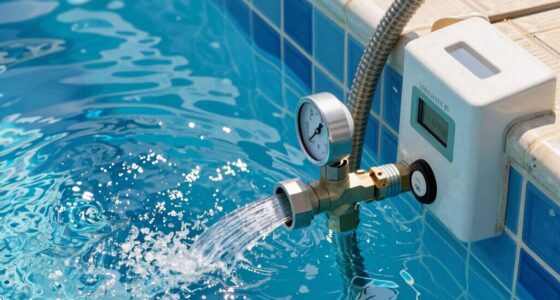
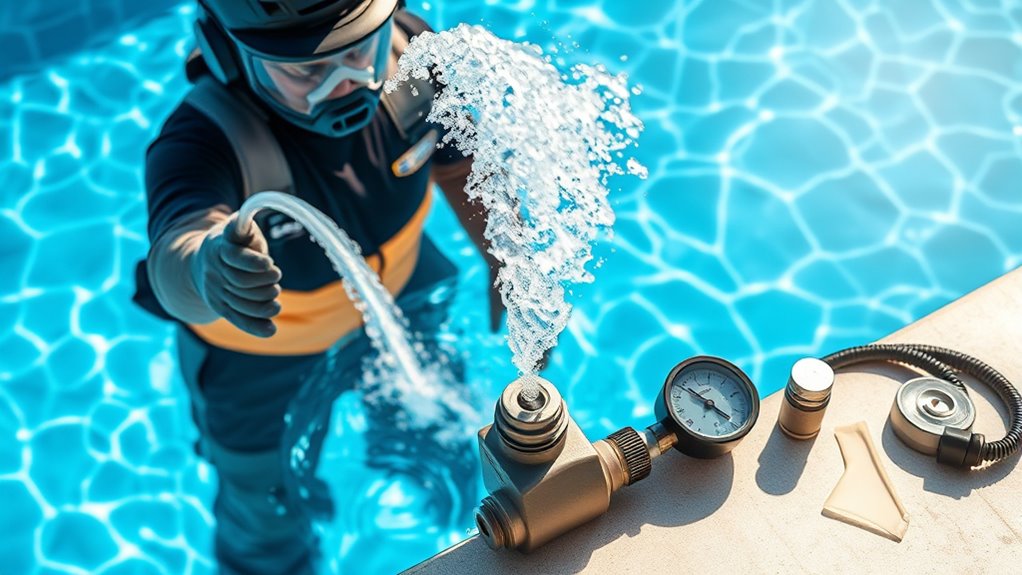
During the backwash cycle, you basically reverse the flow of water through the filter to flush out accumulated dirt and debris. Most filters have a dedicated backwash setting or valve that makes this process straightforward. When you notice the pressure gauge on your filter rising above the normal range—usually indicated by a pressure increase of 8-10 psi—it’s a sign that your media is getting clogged and needs backwashing. To start, turn off the pump, set the valve to the backwash position, and then turn the pump back on. This reverses the flow, washing out dirt and debris from the media to the waste line. It’s important to monitor the process visually; once the water in the sight glass or waste line runs clear, you can stop the cycle. This guarantees you’re not wasting water or overdoing it.
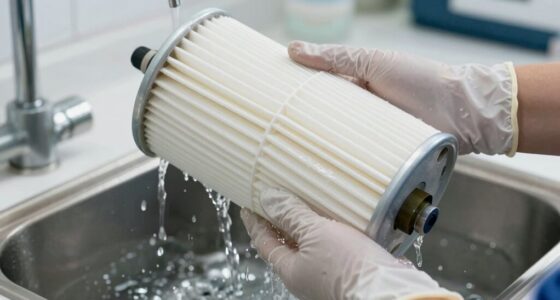
You should repeat this backwash cycle regularly, typically every 4-6 weeks, but it depends on your pool’s usage and local environmental factors. If you own a sand filter, backwashing is your primary way to clean the media, while cartridge filters require removal and cleaning of the cartridges themselves. DE filters need a more delicate approach, including a thorough rinse and sometimes media replacement. Remember, after backwashing, some filters require you to “rinse” or “recharge” the media to settle it properly before resuming normal operation. This step helps maintain the filter’s effectiveness and prolongs its lifespan. Proper filter media management is essential for optimal pool water quality.
In addition to backwashing, regularly inspecting and replacing your filter media when necessary keeps your pool water pristine. Sand usually lasts several years, but cartridges and DE media need more frequent attention. By sticking to a routine schedule and paying close attention to pressure readings and water clarity, you’ll keep your filter functioning at peak performance. Proper maintenance not only improves water quality but also extends the life of your equipment, saving you money and hassle in the long run.

262506 1-1/2-Inch 6-Way Clamp Style Valve Compatible with pentair 262506 Multiport Valve,Fit for Tagelus/Sand Dollar/Meteor Pool and Spa Sand Filter
【 Compatibility 】 The 262506 6-way clamp style valve is compatible with pentair 262506 1-1/2 inch sand filter…
As an affiliate, we earn on qualifying purchases.
As an affiliate, we earn on qualifying purchases.
Frequently Asked Questions
How Often Should I Backwash My Filter During Peak Season?
During peak season, you should backwash your filter every 24 to 48 hours to maintain ideal water clarity. Regular filter maintenance prevents debris buildup, ensuring your pool stays clear and safe. Keep an eye on pressure gauges; if you notice a rise of 8-10 psi, it’s time to backwash. Consistent cleaning helps your filter perform efficiently and keeps your water sparkling clean throughout busy swimming periods.
Can Improper Backwashing Damage My Pool Filter?
Sure, jerking the valve wildly during backwash might make your filter’s ego deflate, but it can also cause real filter damage. Improper backwashing risks include cracking or breaking internal parts, leading to costly repairs. You don’t want your filter to become a fragile snowflake, so follow the manufacturer’s instructions carefully. Proper backwashing keeps your pool sparkling and your filter happy, preventing damage and costly replacements.
What Are Signs My Filter Needs Cleaning Besides Pressure Increase?
Besides pressure increase, you might notice a decline in filter clarity, making your pool water look cloudy or dull. Algae buildup can also be a sign that your filter needs cleaning, especially if algae starts appearing despite regular maintenance. If you see reduced water flow or persistent debris in your pool, it’s time to clean the filter. Regular cleaning guarantees ideal flow, clear water, and prevents algae from accumulating.
Is There a Difference Between Backwashing and Rinsing?
You might think backwashing and rinsing are the same, but they’re actually different steps. Backwashing reverses filter flow to remove debris buildup, cleaning the filter thoroughly. Rinsing follows, using normal flow to clear any loosened particles. Rinsing helps guarantee the filter’s surface is clean and debris-free, maintaining ideal flow and filtration. Both are essential for effective filter maintenance, preventing clogs and ensuring clear water.
How Do I Know When to Replace My Filter Media?
You should replace your filter media when you notice a decline in water quality, such as cloudy water or increased flow resistance. Typically, media replacement is needed when filter longevity reaches its limit, often after 3-5 years depending on usage. Regularly inspect your filter, and if cleaning no longer restores clarity or flow, it’s time for media replacement to maintain peak filtration performance.

Aqua Comb Pool Filter Cartridge Cleaning Tool
DESIGNED AND BUILT FOR LONG LIFE AND USE: The Aqua Comb body is made of UV protected ABS…
As an affiliate, we earn on qualifying purchases.
As an affiliate, we earn on qualifying purchases.
Conclusion
Think of your filter like a garden’s soil—it needs regular turning to stay healthy. When you backwash and clean it properly, you’re giving it a fresh start, just like aerating soil helps plants thrive. I once saw a pool where neglect caused the filter to clog, turning water cloudy. Regular maintenance keeps your system running smoothly, ensuring clean water flows effortlessly—like a well-tended garden flourishing under the sun. Keep up with your filter care, and it’ll reward you with crystal-clear results.

Pentair Inner, Outer Cartridge Pack, Sta-Rite System:3, 300 sq ft Pool and spa Filter 170145
✅ Genuine OEM Pentair STA-RITE Inner and Outer Set – Sta-Rite 25021-0200S & 25022-0201S System 3 S7M120 Modular…
As an affiliate, we earn on qualifying purchases.
As an affiliate, we earn on qualifying purchases.

SENCTRL 0-60 Psi Pool Filter Pressure Gauge, 2 inches Dial, 1/4 NPT Lower Mount, Stainless Steel Case, Waterproof, Clean Filter Indicator, for Swimming Water Pump Spa Aquarium Pressure Test
PRV-Tex Series: The circular dial is encased in a 304 stainless steel casing, providing robustness and corrosion resistance….
As an affiliate, we earn on qualifying purchases.
As an affiliate, we earn on qualifying purchases.