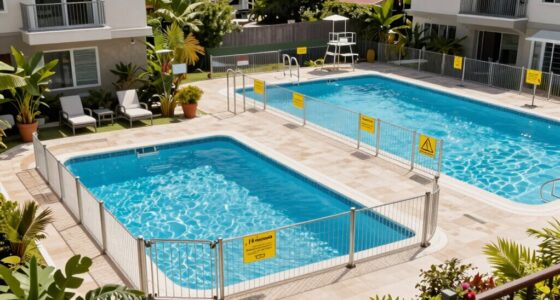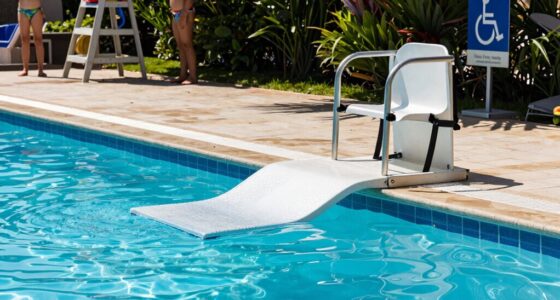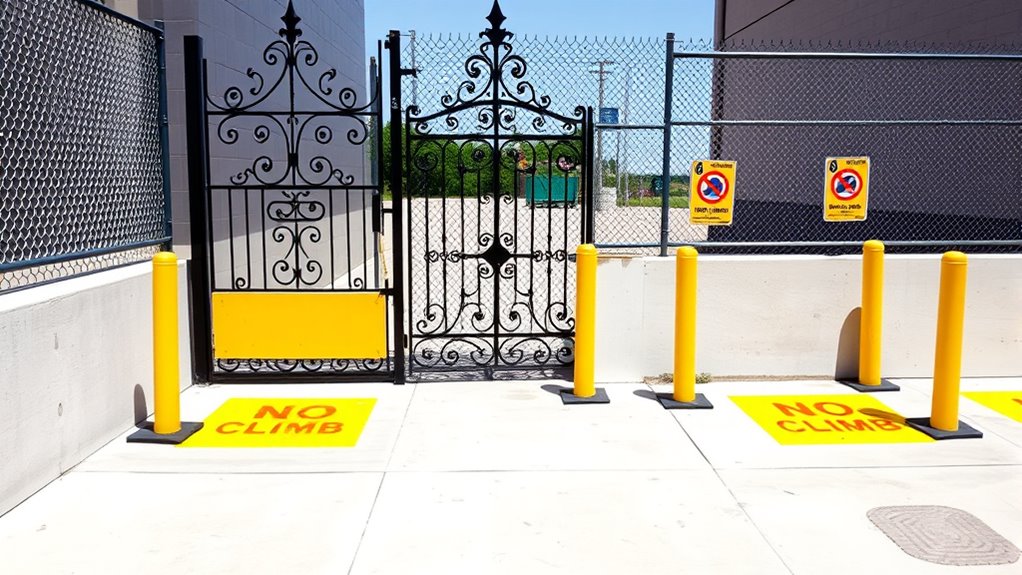

To meet barrier requirements, you need to contemplate proper heights, secure gates, and no climb zones. Typically, barriers should be between 4 and 8 feet high to prevent easy bypass, with taller ones for high-security areas. Gates must be sturdy, properly positioned, and equipped with reliable locks or access controls. “No climb” zones use smooth surfaces and anti-climb features to deter scaling. Understanding these standards helps you design effective security—if you look closer, you’ll find all the details you need.
Key Takeaways
- Barrier heights typically range from 4 to 8 feet, depending on security needs and regulations.
- Gates should be sturdy, properly positioned, and equipped with lockable and automated access control features.
- “No Climb” zones use smooth, angled, or anti-climb materials to prevent scaling and unauthorized bypass.
- Regulations specify minimum barrier heights to prevent easy climbing while balancing operational practicality.
- Regular inspection and maintenance of barriers, gates, and anti-climb features ensure ongoing security effectiveness.
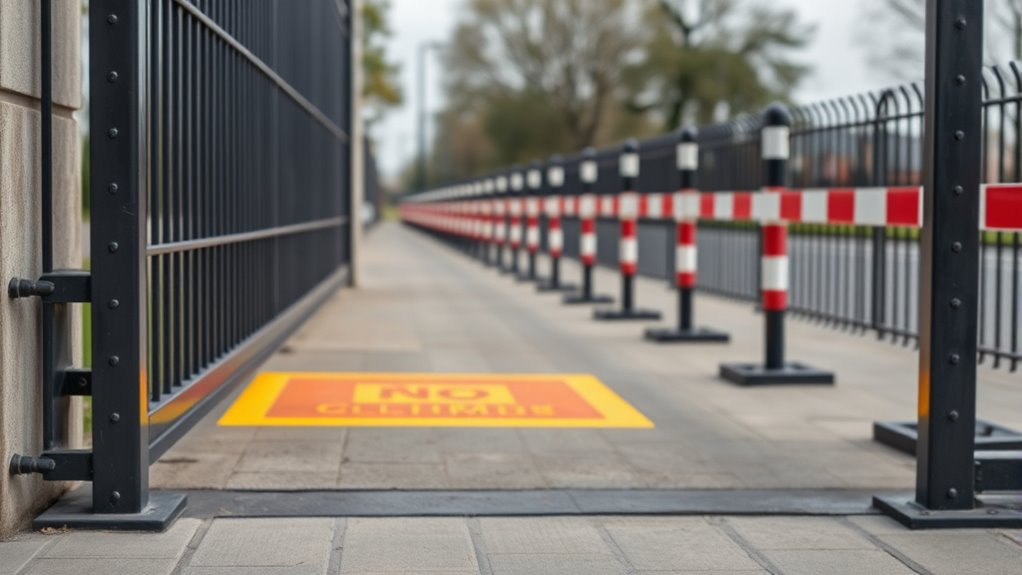
Have you ever wondered what it takes to make sure that barriers effectively prevent unauthorized access or protect people and property? The first step is understanding that the height of a barrier plays a pivotal role. If it’s too low, determined individuals might easily climb over or bypass it. Regulations typically specify minimum heights based on the type of property or hazard involved, often ranging from 4 to 8 feet. For high-security areas, barriers may need to be even taller to deter attempts at breach. It’s essential to balance practicality with security—making the barrier tall enough to serve its purpose without becoming an obstacle for authorized personnel. You should also consider the terrain; uneven ground or slopes may require additional measures to guarantee consistent security levels.
Gates are another critical element in barrier design. They must be sturdy, secure, and positioned properly to control access points effectively. When installing gates, you need to think about how they’ll be operated—manual or automated—and make sure they can withstand attempted breaches. Security features like lockable mechanisms, access control systems, and alarms should be integrated seamlessly. Proper placement is key: gates should be located where they can serve as effective checkpoints, minimizing weak spots that intruders could exploit. Regular maintenance is necessary to guarantee gates function smoothly and retain their strength over time. If you’re in charge of security, you’ll want to evaluate whether the gate design matches the threat level and adjust accordingly.
“No climb” zones are designed to prevent people from scaling barriers using objects or natural features. These zones often incorporate features such as smooth surfaces, angled barriers, or materials that are difficult to grip. For example, adding anti-climb mesh or spikes can greatly reduce the likelihood of climbing. It’s also common to see barriers topped with pointed or rounded features that make climbing unsafe or impossible. When designing these zones, consider the environment and potential tools or objects that might be used to bypass the barrier. The goal is to create a physical obstacle that discourages climbing altogether, reducing the risk of unauthorized access or accidents. Regular inspection and maintenance are essential to guarantee these zones retain their anti-climb effectiveness over time.

4 Panels Safety Barricade,7.8 FT Foldable Security Sign Barrier
- Durable Waterproof Material: High-density 600D oxford fabric with waterproof coating
- Impact and UV Resistant Frame: High-strength PVC tubes with UV protection
- Adjustable Length and Height: Extendable up to 70 inches, 39 inches high
As an affiliate, we earn on qualifying purchases.
As an affiliate, we earn on qualifying purchases.
Frequently Asked Questions
Are There Specific Materials Recommended for Barrier Construction?
You should use durable, weather-resistant materials like galvanized steel, aluminum, or high-quality plastics for barrier construction. These materials guarantee longevity and safety, resisting corrosion and vandalism. Avoid weak or easily breakable options like thin wire or flimsy plastic. Properly installed barriers made from sturdy materials effectively prevent unauthorized access and climbing, helping you maintain safety standards and compliance with regulations.
How Do Barrier Requirements Vary by Property Type?
Barrier requirements differ based on your property type. For residential properties, you might need lower fences with gates that restrict access, while commercial or public spaces often require taller barriers and specialized “No Climb” zones for added security. You should check local regulations to guarantee compliance, as requirements can vary widely. Always consider the purpose of the barrier and the specific safety needs of your property when planning your installation.
Can Existing Fences Be Retrofitted to Meet New Standards?
Yes, existing fences can often be retrofitted to meet new standards. About 75% of property owners have successfully upgraded their barriers, ensuring safety and compliance. You might need to add height extensions, install self-latching gates, or reinforce “No Climb” zones. Start by evaluating your current fence, then consult local regulations to identify specific modifications. Retrofitting not only enhances safety but also boosts your property’s value.
What Maintenance Practices Are Essential for Barrier Longevity?
You should regularly inspect your barriers for damage, corrosion, or wear, and promptly repair any issues. Keep gates and latches functioning smoothly, and clean surfaces to prevent rust or decay. Applying protective coatings or paint helps prevent deterioration, while trimming nearby vegetation prevents obstructions or climbing hazards. Schedule routine checks at least biannually, and keep detailed maintenance records to guarantee your barriers stay compliant and durable over time.
Are There Legal Penalties for Non-Compliance With Barrier Requirements?
You definitely face legal penalties if you don’t comply with barrier requirements. Authorities can fine you, enforce penalties, or even shut down operations until you meet the standards. Non-compliance can also lead to lawsuits if someone gets injured due to inadequate barriers. It’s a case of “biting off your nose to spite your face,” so it’s best to stay compliant and avoid unnecessary trouble. Regular inspections and maintenance help keep you on the right side of the law.

NovLock Heavy Duty Outdoor Combination Lock, Padlock with Shrouded Shackle
- Cut-Proof Shrouded Shackle: Full metal shroud for enhanced security
- Heavy-Duty Weatherproof Design: Resists rain, heat, cold, rust, and corrosion
- Durable and Versatile Size: Large, strong lock suitable for various applications
As an affiliate, we earn on qualifying purchases.
As an affiliate, we earn on qualifying purchases.
Conclusion
So, next time you see a “no climb” sign or a gate, remember—it’s not just about keeping kids out, but about protecting everyone from your next daring leap. These barriers are there to save you from yourself, not to ruin your day. So, go ahead, ignore them if you dare—just don’t come crying when you realize that “fun” comes with a hefty price tag. Safety first, or at least, safety mandated—your choice.

Cat Fence Outdoor Barrier 33FT & Anti Climb Cat Proof Fence Topper
- Anti-Climb Design: Upward extension arms and fine mesh netting
- Complete Installation Kit: Includes mesh, brackets, zip ties, anchors, screws, and gloves
- Customizable Fit: Mesh can be trimmed for different fence sizes
As an affiliate, we earn on qualifying purchases.
As an affiliate, we earn on qualifying purchases.

Ghost Controls Multi Connect Kit for Wi-Fi and Bluetooth Access – for Ghost Controls Automatic Gate Openers -AXMC-R
- Compatible Control Board: For red control boards only
- Solar Power Compatible: Includes 30W solar panel and marine battery
- Remote Gate Control: Allows remote access via app
As an affiliate, we earn on qualifying purchases.
As an affiliate, we earn on qualifying purchases.